Golden mussels may weaken concrete and degrade water quality, studies suggest
- Editor’s note: Allison Hunter covers Fresno County water issues for SJV Water through the California Local News Fellowship initiative.
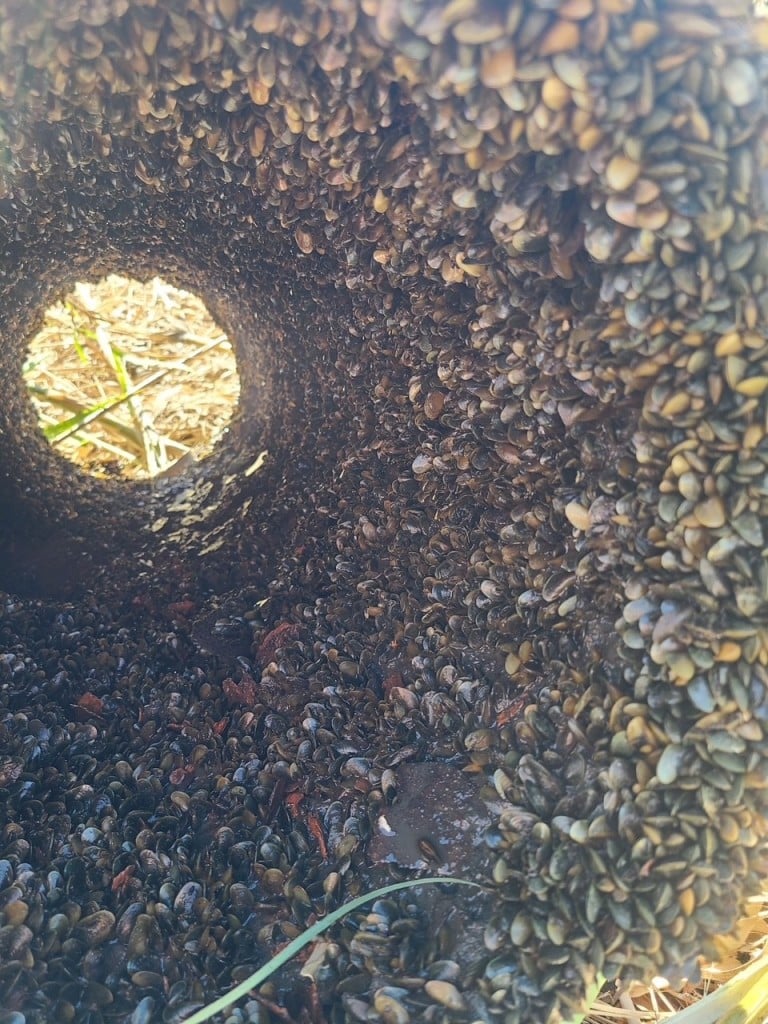
Invasive golden mussels that have been clogging pipelines throughout the state’s water systems over the past two years may also weaken concrete and cause water quality issues, according to several studies.
Westlands Water District Deputy General Manager Kelly Vandergon told the district’s board in September that a study in China showed golden mussel attachment could weaken cement.
Vandergon said the study showed that the way the mussel’s byssal threads attach to concrete “essentially loosens that upper surface, allowing water to penetrate deeper into the concrete structure.”
The mussels secrete byssal threads, thin strands with adhesive tips, from inside their shells.
Vandergon said the concrete issue is “one of the research projects we’re trying to develop for Prop 4 funding, which has not yet been made available by the state.”
Numerous water districts contending with golden mussel infestations are hoping to defray costs if the state releases money from Proposition 4, a $10 billion water bond passed in 2024.
Westlands is also requesting $1.8 million in funding from the Department of War to battle golden mussels in two pipelines the district uses to deliver water to the Lemoore Naval Air Station.
Golden mussels were first confirmed in the Sacramento-San Joaquin Delta in October 2024, likely deposited there in ballast water released from cargo ships.
Mussel damage to concrete is being looked at, according to a spokesperson with the Department of Water Resources.
Studies do show “…that colonized concrete can become more porous, absorb more water, and lose some of the minerals that contribute to its durability,” the spokesperson wrote in an email.
But that research is based on decades of mussel colonization, the spokesperson wrote.
“The research does not yet show how quickly these effects progress over many years or how concrete may be affected under California conditions,” the spokesperson wrote.
Golden mussels might also harm water quality by fostering the growth of potentially harmful bacteria when they decompose, according to a different study published in the Nov. 2022 issue of “Ecological Indicators.”
That study, also out of China, suggested dead mussel colonies “promoted the growth of pathogenic bacteria” and that mussels killed in water diversion projects “should be removed promptly to avoid impacts on water quality.”
Golden mussels might also disturb delicate ecosystems. The invasive species has already affected the normally murky waters of the delta, according to Mario Gardea, San Joaquin County supervisor.
“Visibility used to be three to four feet,” Gardea said of water in the delta. “And now, I’ve seen it eight to 10 feet in certain areas.”
Gardea is a former professional fisherman who owns a boat in Stockton, “ground zero” he said for the golden mussel infestation.
“This summer, I’ve noticed it to be the cleanest I’ve ever seen it.”
By clean, Gardea means free of microorganisms that typically cloud visibility.
“You get all these microorganisms that golden mussels eat,” Gardea said. “Well, so do the fish. And then bigger fish eat littler fish. Birds eat fish. It’s a delicate ecosystem.”
Gardea said drinking water would still be treated.
“Even if there is biomass, it still has to be treated,” Gardea said. “It’s not going into the consumer straight from the delta. We get biomass from animals and people and other things in the delta that has to be cleaned before it goes into somebody’s sink.”
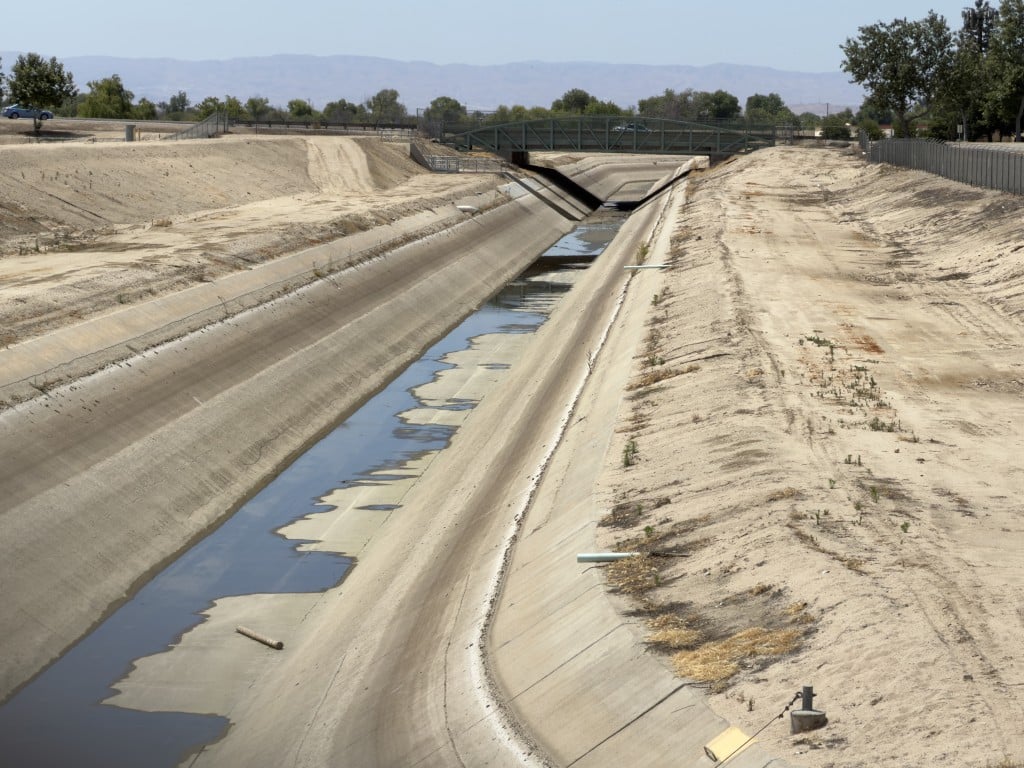
Golden mussels were discovered in agricultural water systems starting this time last year and have quickly added significant costs as water districts treat canals and pipes with copper solutions.
In Kern County, water district managers spent about $9 million fighting the mollusks, according to Stacey Kuwahara, Assistant County Administrative Officer, who spoke at a symposium on golden mussels in August. Kuwahara said she expects costs to reach $36 million a year – conservatively.