“Dewatering” key issue in environmental study of gravel mine proposal along Kings River
• Editor’s note: Allison Hunter covers Fresno County water issues for SJV Water through the California Local News Fellowship initiative.
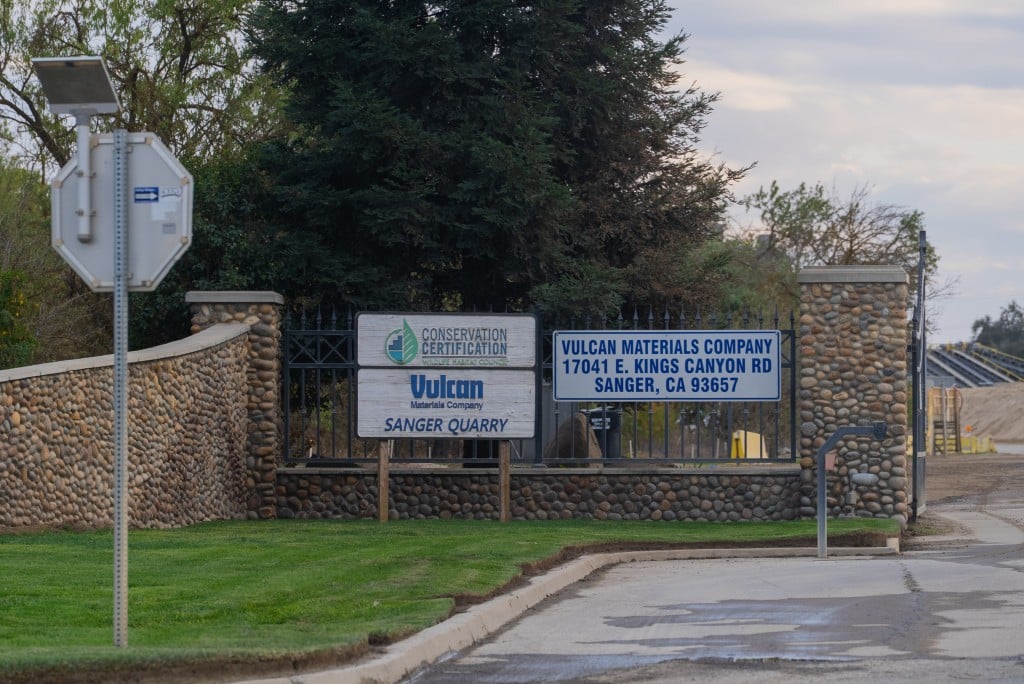
Residents and agencies concerned about a proposed change in how Vulcan Materials mines for gravel along the Kings River have until Monday, Nov. 30, to submit written comments to be included in an upcoming environmental study.
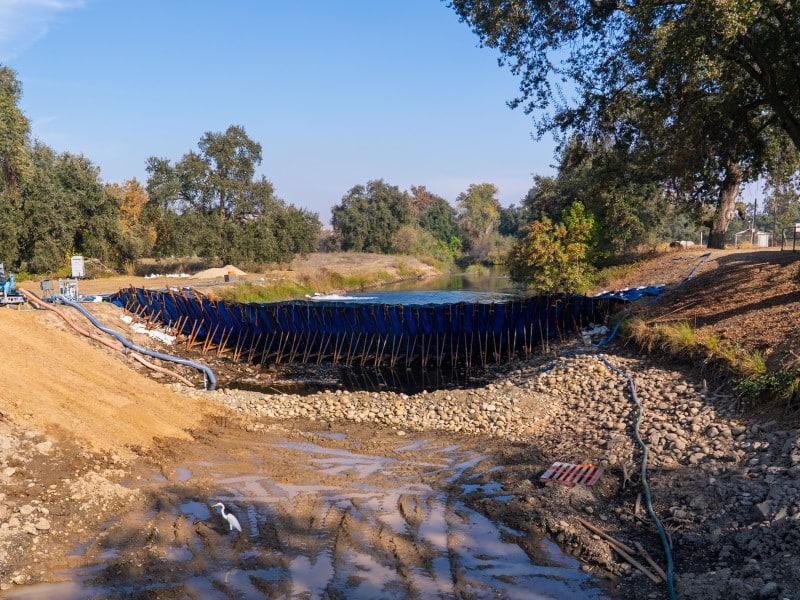
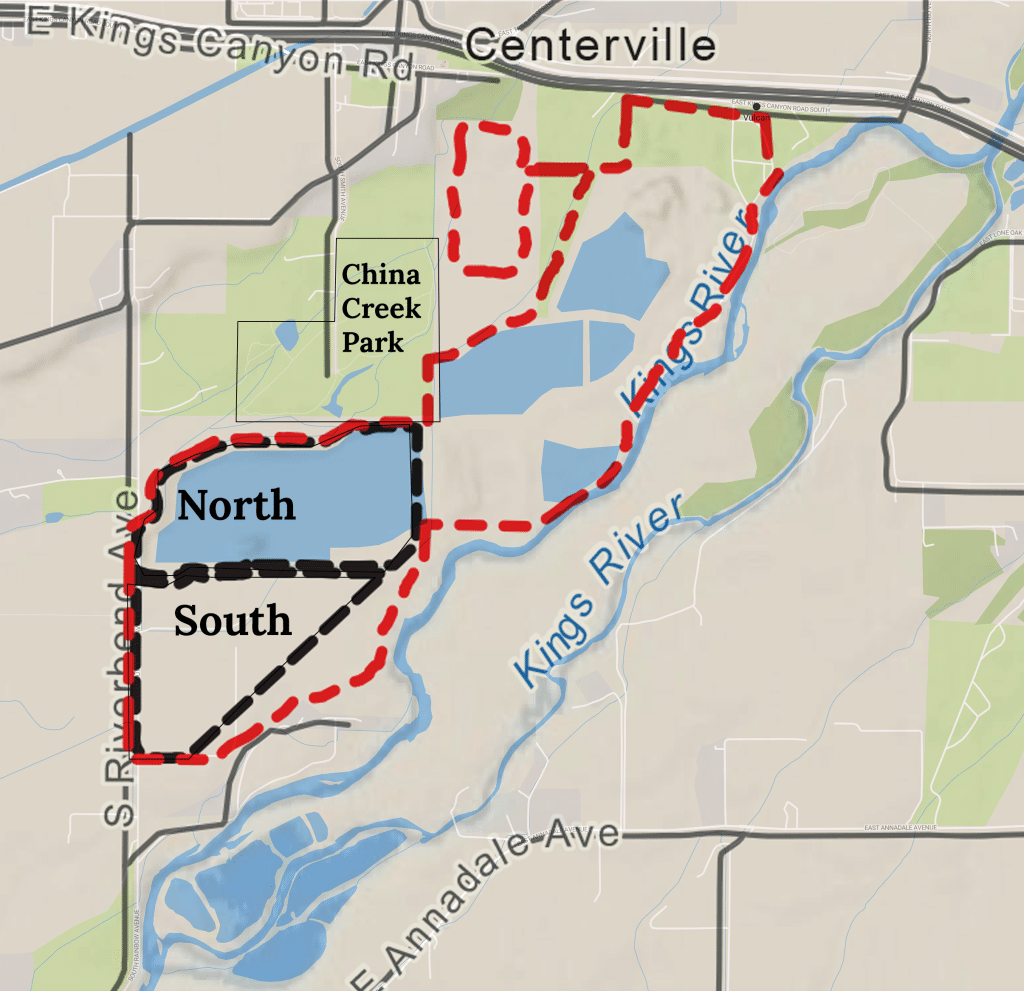
Plenty of concerns – from potentially drying up domestic wells to whether local tribes had been properly notified – were aired at a meeting about the proposal on Nov. 17. Vulcan is seeking to change its permit from “wet mining” to “dry mining” in order to gain access to deeper gravel deposits. To do that, it will need to dewater two pits along the river.
Dewatering will require the company to continuously pump water out of the pits. Residents fear that will create a “cone of depression” in the area that will suck water away from their domestic wells and drastically lower the water table at the nearby China Creek Park, potentially killing an ancient oak grove.
Dewatering is “probably the key issue for this project,” Bruce Steubing told attendees at the Nov. 17 meeting. Steubing is an environmental consultant for Benchmark, which is preparing an environmental impact report (EIR) on the permit change. Documents can be accessed on the county’s website.
Attendee Gil Rodriguez asked if Vulcan could “guarantee that lowering the groundwater level at the mine will not negatively affect residential wells within one or two miles of the project.”
Vulcan Project Manager Terry Marshall said, “We’re still in the evaluation phase, so we don’t know what the impacts will or will not be, so trying to commit to anything at this point’s a little premature.”
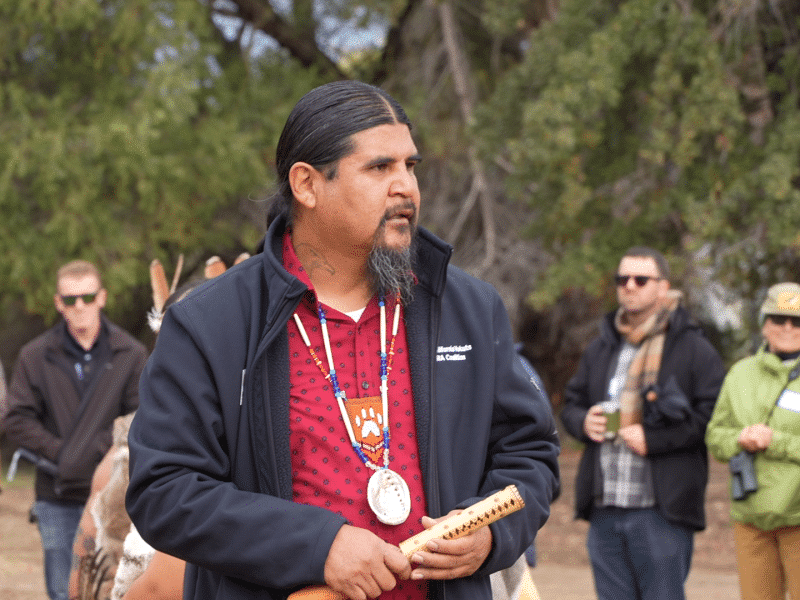
Rose Pisano, a Chukchansi tribal member and California Indian basket weaver of Madera County, said China Creek is “one of our main gathering spots” and that “dozens of tribes in the area actually go there to gather for their basketry.”
“We’ve seen this happen time and time again with pit dewatering and gravel mining,” Pisano said. Tribal members’ experience and knowledge “aren’t really considered or acknowledged.”
Another attendee, Sean Zweifler, asked whether tribes had been properly notified of Vulcan’s proposal as required by state law.
Steubing said the county had begun tribal consultation and sent letters.
Jeremy Shaw, a planner for the Department of Public Works and Planning, said he didn’t think any tribes had responded but he would “double check.”
Numerous attendees asked that the impact of Vulcan’s dewatering proposal on China Creek Park be studied.
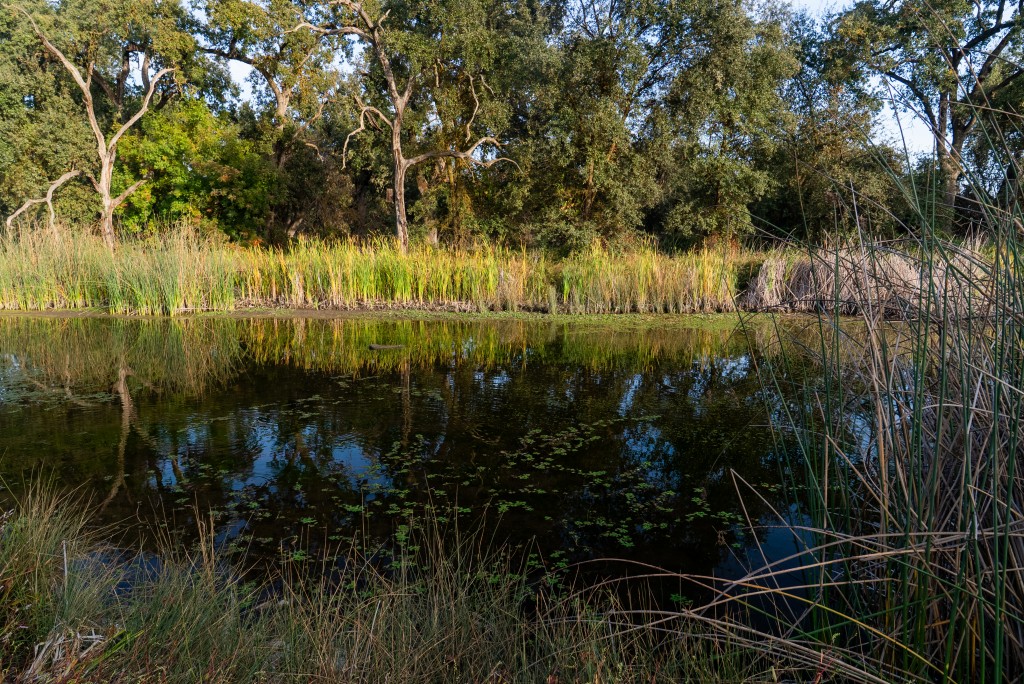
China Creek is an undeveloped, 120-acre piece of land owned by Fresno County that borders Vulcan’s north pit.
Jessie Kanter said the park is part of a Wildlife Conservation Board-funded restoration project and Fresno County signed an agreement to “maintain newly established habitat for 15 years after the grant period.”
Zweifler, with the California Native Plant Society, Sequoia Chapter, said at least one rare plant species grows within 200 feet of Vulcan’s property boundary and others are likely in the area.
Several attendees also questioned the need for more gravel, which news site Fresnoland has reported the valley already has in abundance. Fresnoland has quoted a California Geological Survey report that states the valley has 530 million tons of gravel permitted, more than twice its projected need over the next 50 years.
All of those issues, and more, will be looked at in the EIR, Steubing said.
Written comments may be emailed to Shaw at jshaw@FresnoCountyCA.gov.