Valley water managers push back on proposed new $50,000-$250,000 state fee
The state says it needs more money to police overpumped regions in the San Joaquin Valley and is considering a new fee that could cost water agencies between $50,000 to $250,000.
That fee would be charged to groundwater sustainability agencies seeking exemptions from state enforcement measures. It would apply to new exemption requests as well as to agencies seeking to extend exemptions that have already been granted.
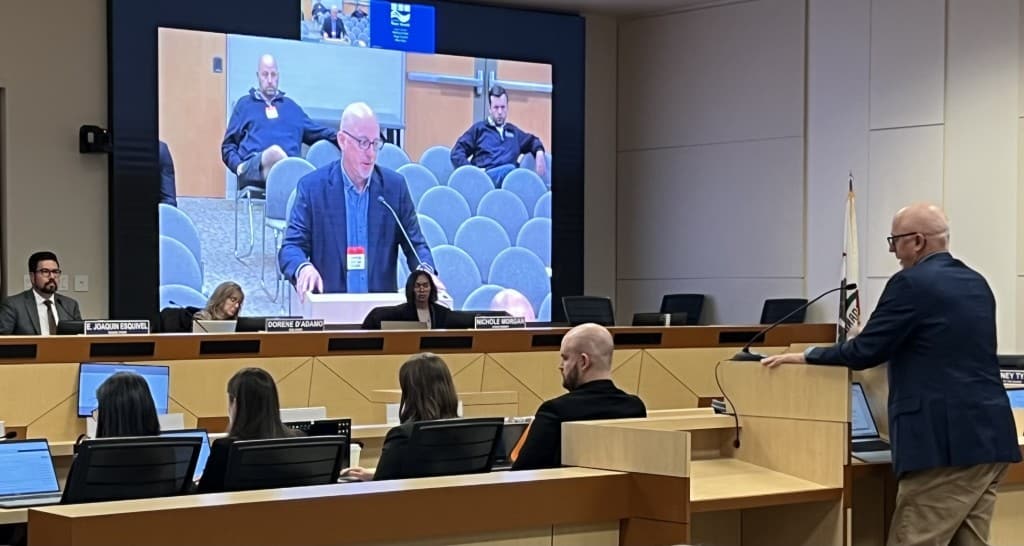
Southern Tulare County water managers challenged the proposed fee during a July 30 workshop, saying the Water Resources Control Board hasn’t given updated details on its costs and how that money, and other fees, would be spent.
“We’ve been invited to participate in this process, but there’s nothing for us to participate in if you don’t give us any budgets or any projections of fees,” Lower Tule and Pixley general manager Alex Peltzer said during the workshop. “If there’s an old budget, where is that? And what are the details of that?”
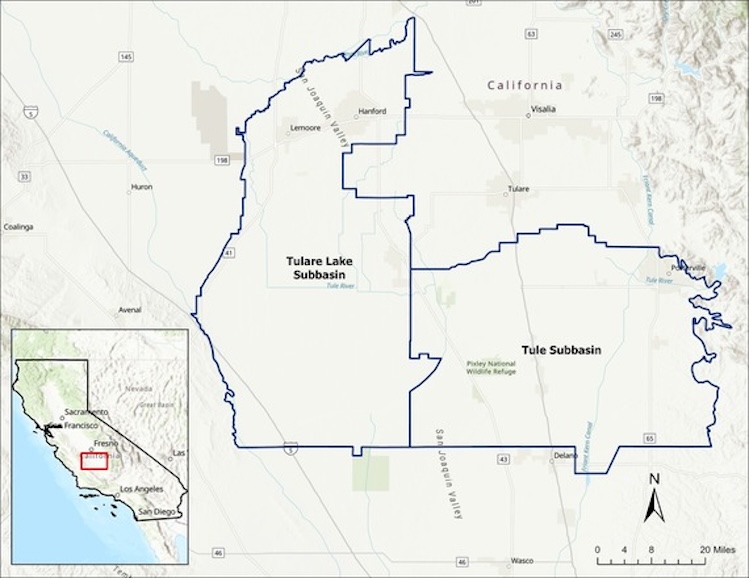
The most recent estimate for how much it costs to oversee faltering groundwater regions — $5.5 million a year — was released in 2024, when the Water Board placed both the Tulare Lake and Tule subbasins on probation for lacking adequate groundwater management plans.
Probation requires landowners to register wells at $300 each, report extractions and pay the state $20 per acre foot pumped. The state has said that money helps pay for oversight costs.
The new, proposed fee of between $50,000 and $250,000 would be in excess of those probationary fees. And, again, would only apply to agencies seeking a new exemption, or to maintain existing exemption, from those reporting and pumping fees.
The proposed fee will be heard by the Water Board at its Sept. 15 meeting.
At the July 30 workshop, state staff explained that it didn’t have a detailed, new budget to go along with the new proposed fee because it hasn’t begun collecting regular probationary fees yet, so doesn’t know how far that money will go to cover costs.
“But as that comes in, that will give us a pretty significant data point, said David Ceccarelli, a branch chief in the Division of Water Quality. “So, we have not changed the projection of what we’re trying to recover for these new proposals.”
Peltzer disagreed, noting the state has been receiving pumping reports.
“You have a volume of pumping that’s been reported and you have more experience with cost,” he said. “It doesn’t seem like a valid thing to move forward with a two-and-a half-year-old analysis (the 2024 budget).”
Vanessa Y. Escobedo, engineer with Kern-Tulare Water District GSA, said the proposed fee amounts to an unconstitutional tax under Proposition 26, which requires government entities to demonstrate a basis of costs.
Kern-Tulare was one of just two groundwater agencies in the Tule subbasin granted an exemption from probationary fees and reporting.
But Escobedo said this new exemption application fee would, essentially, undo that exemption and cost Kern-Tulare farmers three times as much.
That’s because Kern-Tulare growers pump about 437 acre-feet from 37 wells, making the standard probationary fees far less than paying $50,000-$250,000 to maintain the agnecy’s exempt status.
“With the significantly small amount of pumping that is happening within our area, it’s sending the wrong signal of someone that is doing good and managing the water sustainably and now having to pay a fee that’s almost the equivalent of what we’d be paying if we were fully under probation with no exclusion,” she said.
The exchanges highlighted water managers’ frustrations.
Especially in the Tule subbasin, where the state has begun moving to the next phase of enforcement, which could include imposing its own pumping plan, increasing pumping fees to $35 per acre foot and laying down a pumping moratorium along the Friant-Kern Canal. That plan could be enacted by early 2027.
Farmers in both the Tule and Tulare Lake subbasin were required to begin reporting their pumping by May 1.
An initial round of invoices for fees associated with that pumping was mailed Aug. 6, with the remainder to be sent throughout August and September, according to an announcement from the Water Board. Payment is due within 30 days.
Tulare Lake subbasin invoices are on hold pending the outcome of a merits hearing Oct. 6. The Kings County Farm Bureau, which sued the state, is seeking a preliminary injunction that could prevent the Water Board from collecting back pumping fees.
Also to be considered at the Sept. 15 Water Board meeting is a proposed change to the trigger date for late fees charged to farmers, from Feb. 1, 2027 to May 1, 2027.
Growers who pay their pumping bills late will be charged 25% of the total per month, up to a cap of three times the total amount.
Natalie Stork, director of the Office of Sustainable Groundwater Management, said during the July 30 workshop that staff are still interested in feedback on both proposals. Comments can be emailed to sgma@waterboards.ca.gov.