Groundwater agencies argue against new proposed state fees
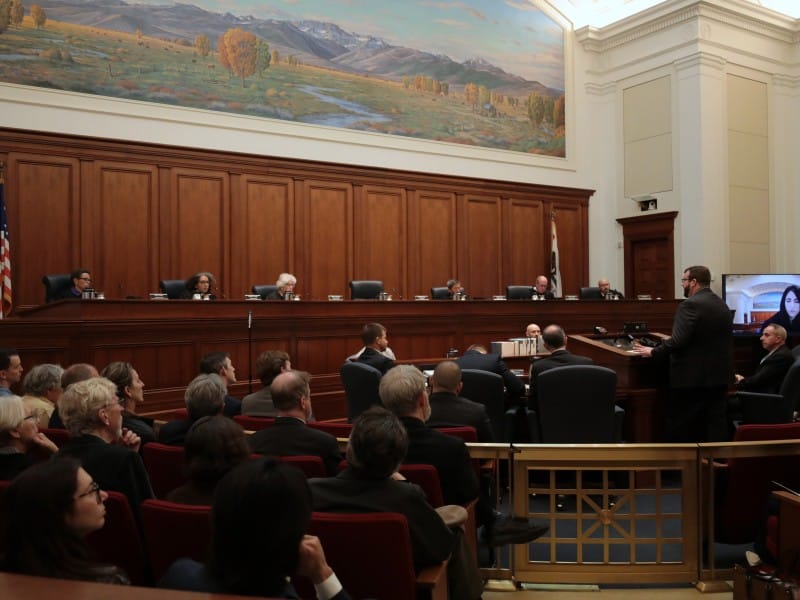
A proposed fee of between $50,000 and $250,000 charged to groundwater agencies that apply for a so-called “good guy” exemption will be discussed Thursday at 1 p.m. during a state Water Resources Control Board workshop.
The fee is part of a proposal made by Water Board staff to cover the cost of evaluating groundwater plans that agencies feel adequately protect aquifers from depletion. Groundwater basins must reach balance by 2040, per the Sustainable Groundwater Management Act (SGMA).
A “good guy” exemption would only be sought by individual groundwater agencies when a subbasin is placed on probation by the Water Board for having an inadequate plan. Probation comes with requirements that farmers meter and register wells at $300 each, and pay a $20-per-acre-foot fee to the state – on top of existing fees paid to groundwater agencies.
The exemption allows farmers in the exempted groundwater agency to escape the reporting and fee requirements.
This new application fee is being sought by Water Board staff because of the time required to review exemptions requests, which come with voluminous reports and data to prove they are in compliance with SGMA, according to staff.
The application fee proposal would also charge groundwater agencies $12,500 for annual reviews if an exemption is granted.
Two subbasins were placed on probation in 2024 including the Tulare Lake, which covers most of Kings County, and Tule, which covers the southern half of Tulare County’s flat lands. Numerous groundwater agencies within those subbasins did apply for exemptions, only two were granted in the Tule subbasin to the Kern-Tulare Water District and Delano-Earlimart Irrigation District groundwater sustainability agencies.
The proposed application fee baffled water managers, some of whom thought the move was an attempt to dissuade agencies from applying for exemptions in the future and unfairly penalized them for trying to prove they are working toward sustainability.
Two agencies voiced concern via comment letters, including Tri-County Water Authority GSA and Kern-Tulare . Both say the proposal amounts to an unconstitutional tax under Proposition 26, which requires the state to demonstrate a basis of costs.
Tri-County Water Authority GSA executive director Deanna Jackson said forcing “good actors” to pay a significant fee “flips the incentive structure of SGMA on its head and discourages local agencies from achieving the very sustainability goals the board seeks to enforce,” she wrote.
Jackson also said the Water Board is acting beyond its delegated authority. SGMA grants the Water Board permission to adopt fees solely to recover costs incurred for SGMA implementation.
Kern-Tulare Engineer Vanessa Y. Escobedo noted the proposed fee structure would force its farmers to pay three times as much to maintain its standing as a “good actor” than if they didn’t have the exemption. Its growers pumped just 437 acre-feet from 37 wells in 2025.
“When broken down, the $50,000 application fee alone effectively charges KTWD over $114 per acre-foot just for the administrative privilege of filing paperwork — a grossly disproportionate burden,” she wrote.
Also to be considered Thursday is a proposed change to the trigger date for late fees charged to farmers from Feb. 1, 2027 to May 1, 2027.
Growers who pay their pumping bills late will be charged 25% of the total per month, up to a cap of three times the total amount.
The public may provide comments on the proposed fee and deadline changes at the July 30 Water Rights Fund fees meeting but must first register by noon July 29 by emailing WaterRightsFees@waterboards.ca.gov. Include the subject line “Water Rights Fees Meeting” and the following information in the body of the email:
- Name
- Email address
- Who you represent (i.e., self, another person, an organization)
- Whether you intend to participate via videoconference or telephonically
- If calling in, please provide the last three digits of the phone number you will be calling from
The workshop is available online for those who want to watch or listen at https://video.calepa.ca.gov/.
The final proposal is scheduled for adoption at the Sept. 15 state water board meeting.