Project to reduce groundwater pumping near Friant-Kern Canal – damaged by excessive pumping – gets underway
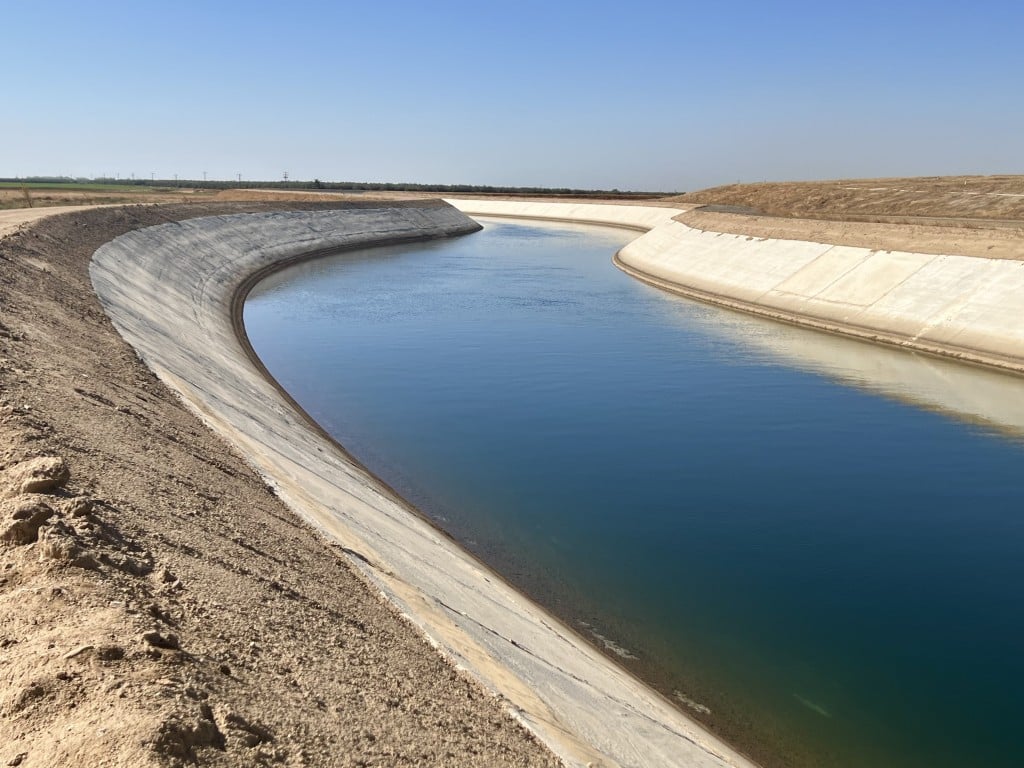
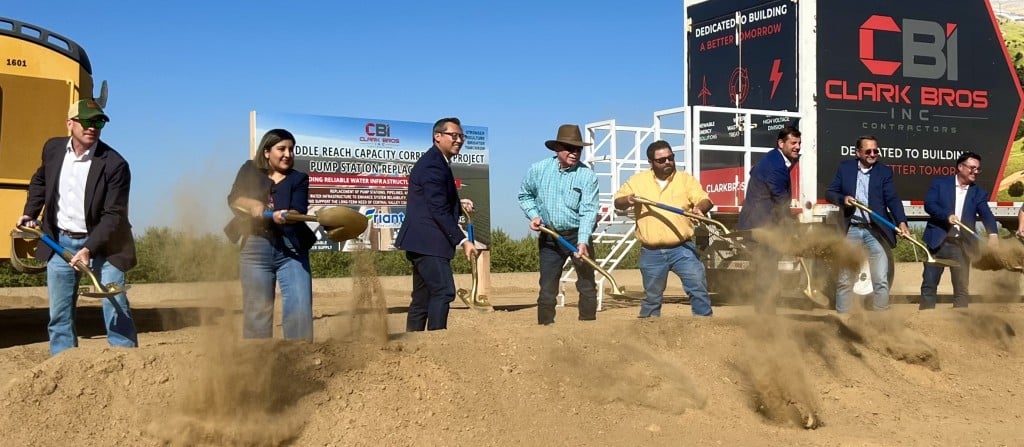
A groundbreaking ceremony in southern Tulare County last week signaled the start of another chapter in the long and expensive effort to fix the sinking Friant-Kern Canal.

Construction began on five new Friant Water Authority pump stations that will lift water out of the canal and into Tea Pot Dome Water District and Saucelito Irrigation District systems, reducing growers’ reliance on groundwater. The project is expected to cost $46 million and take two and a half years to complete.
More than $500 million – so far – in local, state and federal funding has been dedicated to fixing the canal, which has sunk along a 33-mile section from about Pixley to the Kern County line due to excessive groundwater pumping. Friant is looking for up to $400 million more to start the next phase of construction.
It’s unknown yet exactly where that funding will come from.
“If the federal government helped build this critical piece of infrastructure, why should farmers alone be left to shoulder the entire burden of repairing the damage that threatens the system of such importance?” Friant Water Authority Executive Director Johnny Amaral asked during the groundbreaking.
Amaral’s statement hit on a politically sensitive question of public pay for private gain.
In fact, voters rejected Proposition 3 in 2018, which included $750 million to fix the Friant-Kern Canal, largely because many voters questioned why taxpayers should pay to fix infrastructure that was damaged by farmers.
Amaral acknowledged the controversy over how pumping has damaged the canal, itself a fraught issue in the Tule subbasin, where the state is readying its own mandatory pumping plan that would bar pumping within two miles of the Friant-Kern Canal.
“We have been facing a hard truth,” he said of subsidence damage to the canal and a slew of lawsuits that were recently settled.
“It’s not an abstract engineering problem, and it’s not a misunderstood problem. Frankly, it’s a problem that we’re still grappling with here on the east side. We definitely had debates and differences but that is gone now.”
Friant has so far spent $326 million to build a brand new 10-mile section of canal alongside the old canal, which had sunk so badly the canal’s carrying capacity was cut by 60%, meaning water contractors south of the crimp could not get their full deliveries.
Up until March, Friant was still figuring out a repayment plan for a portion of the federal dollars included in that $326 million.
Then the Department of the Interior announced the same month that Friant would receive $200 million for subsidence corrections from a larger water infrastructure fund for western states.
Friant is expecting to begin the second phase of its reconstruction plan on the remaining 23 miles of damaged canal as it cobbles together the necessary money.
Friant had sued a local groundwater agency after it said the agency reneged on an agreement to have its farmers pay a certain amount in pumping fees toward canal repairs. It then tried to increase fees on several of its own contractor water districts to make up the costs, incurring more lawsuits.
Those suits have all been settled.
As the groundbreaking played out on the first day of the 2026-2027 water year, onlookers were hopeful the new pump stations would allow full water deliveries, plus extra during high flow years needed to replenish overpumped aquifers.
That hasn’t been possible in recent years after land beneath the canal collapsed from over pumping.
Steve Kisling, farmer and president of Saucelito Irrigation District, told a crowd of growers, water managers and elected officials that current and future generations of farmers will benefit from this project.
“My father and grandfather both farmed before the (canal) was built,” he said. “And they routinely reminded me how important and how valuable the surface water project and delivery system is,” he said. “Now our surface water supply and delivery system is more important than ever.”
Saucelito will get four pumps while Tea Pot Dome gets one. Another eight stations are planned downstream, part of Phase 2 of Friant’s overall plan to address subsidence impacts.
Matt Leider, president of Tea Pot Dome Water District, said he was thankful Friant kept its promise to build the pump station, which was delayed due to funding constraints. The raft of lawsuits also sparked friction among Friant contractors, which played out in a tense board meeting last May.
Tea Pot Dome has a well near the canal that it uses to send water throughout its 3,400-acre district. The state Water Resources Control Board’s proposed pumping moratorium near the canal means the new pump station will bring much-needed surface water into the district.
“Since SGMA was enacted, we’ve always been trying to figure out a way to not use that well,” he said. “We don’t want to hurt the very canal that brings us our supplies.”
Meanwhile, Friant Water Authority is preparing to advance Phase 2A, which includes construction of approximately 2.7 miles of parallel canal from the Tule River to Avenue 136, where it will tie in to the origin of the Phase 1 parallel canal. Construction bids open Oct. 23.