Kings River may have more than 1 million acre feet up for grabs
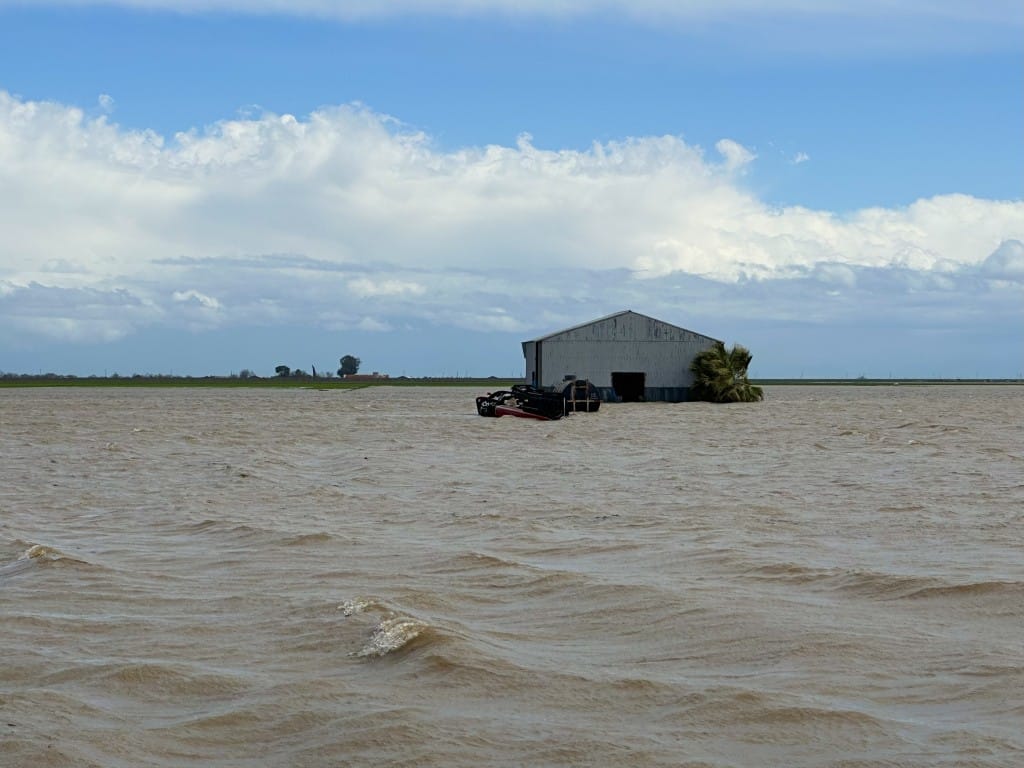
The state’s water rights office says there is excess water – up to 1.13 million acre feet – going unused on the Kings River, which could open the system to a flood of water seekers.
The Administrative Hearing Office (AHO) will hold a hearing Jan. 19, 2027 to delve into whether the Water Resources Control Board should revoke the 1967 “fully appropriated stream” designation on the Kings River.
If that happens, it would open the river to new water permit applications, according to the AHO’s hearing notice.
This all stems from a legal fight that started in 2017 when the the Semitropic Water Storage District in Kern County filed an application for Kings River flood flows.
Longtime Kings River districts, including the Consolidated, Alta and Fresno irrigation districts also filed a joint application. And the McMullin Area Groundwater Agency filed one a few years later.
Applicants had been battling it out through various AHO proceedings, with the last one held in 2024.
So, the recent AHO notice came as a bit of a surprise that applicants said they were carefully sorting through.
The AHO explained in its recent notice that the 1967 fully appropriated stream designation was made only 13 years after the Pine Flat Dam became operational and the Water Board had limited information about how massive Kings River flood flows can be.
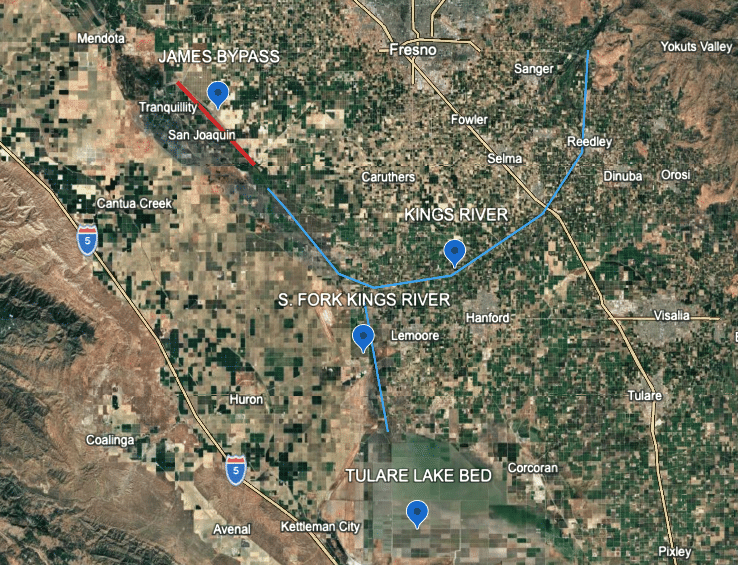
“Substantial amounts of Kings River water has left the watershed via the James Bypass and Fresno Slough since 1968,” the AHO hearing notice states. The James Bypass moves water north to the San Joaquin River where it eventually flows into the Sacramento-San Joaquin Delta.
In 1983, 2.3 million acre feet flowed through the James Bypass and 767,000 acre feet went through the bypass as recently as 2023, according to the AHO notice.
The Kings River also branches to the south into the old Tulare Lake bed where the lake bottom is intensively farmed and flood water can be a nuisance to a significant hazard.
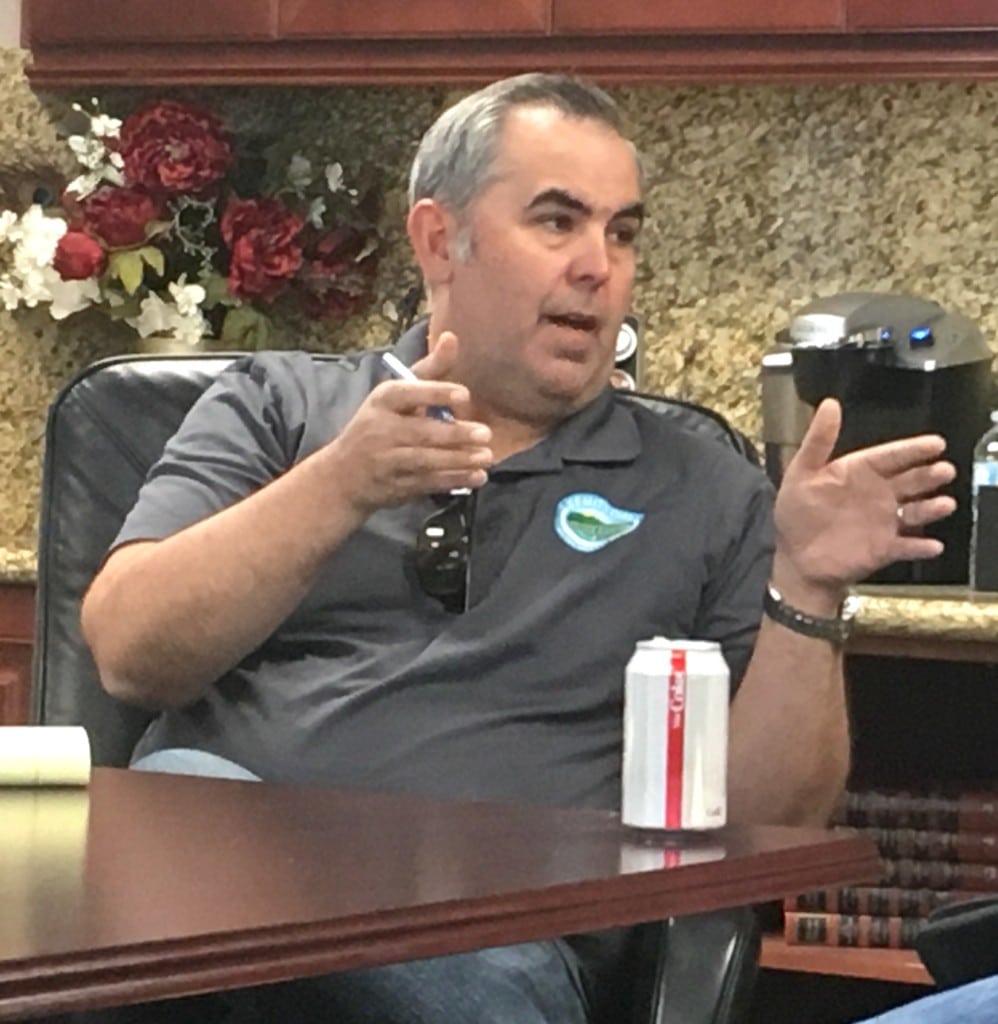
“Our application is to take 1,200 cfs (cubic feet per second) off the river when it’s in flood release, direct it into the California Aqueduct and bring it to Kern County, to Semitropic, where we would hold it in our flood water recharge project,” said Semitropic General Manager Jason Giantquinto. “So, that water would not be leaving the region.”
That’s not how the opposition sees it.
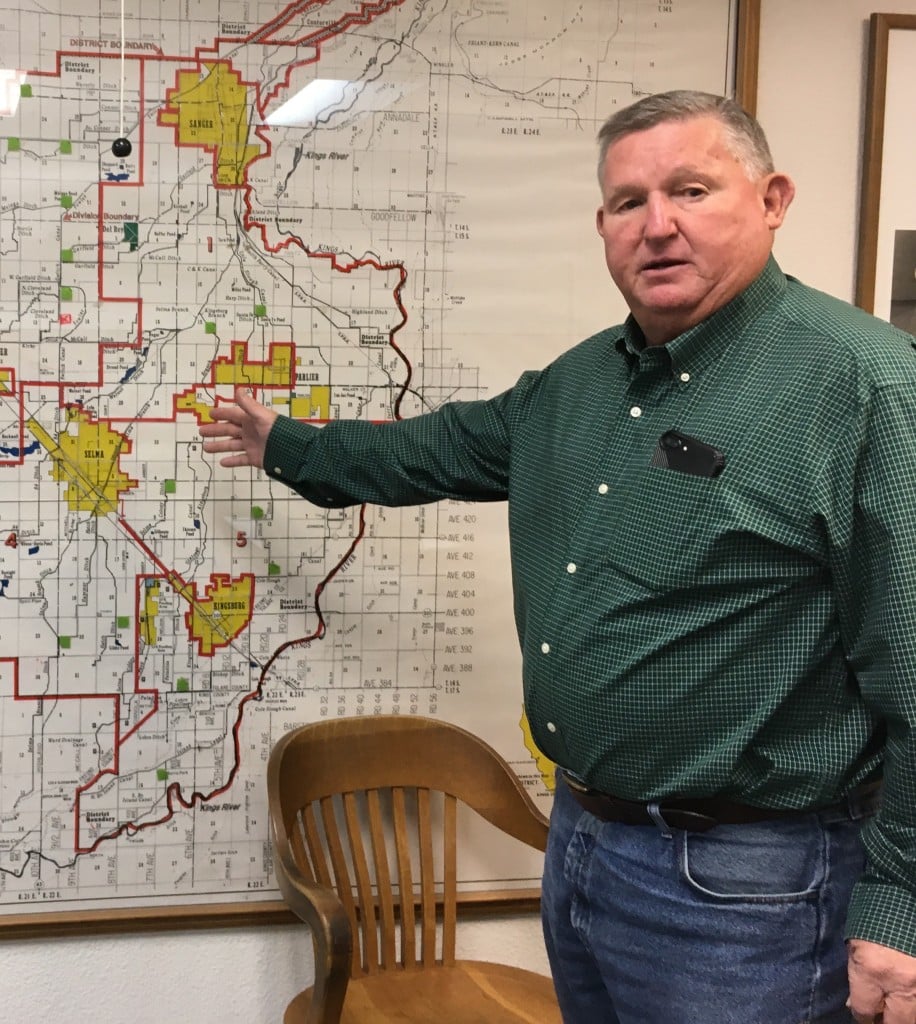
“We are going to continue our all-out defense of Kings River water rights on behalf of the whole basin,” said Phil Desatoff, General Manager of Consolidated Irrigation. “We’ve been delivering Kings River water to farms and communities up here since 1876 and that’s (flood flows) part of our water rights.”
He said local districts need that water for their own groundwater recharge, especially under the state’s new groundwater laws. Just since this conflict started, he said, districts have built several new recharge ponds.
“We have places to put that water and plans for a lot more,” Desatoff said. “It’s not just growers. We have a lot of disadvantaged communities that need that water, Sanger, Selma, Parlier, Fowler, the tiny little town of Del Rey – they all rely on groundwater.”
Both Desatoff and Gianquinto said there has been no negotiation nor move toward compromise from either side in the many years that this issue has been percolating.
But there have been some changes.
When it initially envisioned its Kings River project, Semitropic had wanted to build a reservoir on 19,700 acres in the western curve of the old Tulare Lake bed.
That reservoir would hold up to 30,000 acre feet of flood water and could be used by the state to bank excess Delta water, according to a 2015 article from The Bakersfield Californian.
Semitropic was hoping to use Proposition 1 funding to pay about half the project costs, estimated back then to be up to $500 million. In order to qualify for Prop. 1 money, storage projects have to benefit the Delta in some way.
Gianquinto said, at the time, the storage would allow flexibility to increase natural flows in the Delta. It was called the “Tulare Lake Storage and Floodwater Protection Project.”
But, he said recently, Semitropic didn’t get the Prop. 1 funding so has scaled back its concept to simply moving Kings River flood water directly through the aqueduct.
Semitropic still owns a project development easement on that land in the Tulare Lake bed, for which it paid Sandridge Partners L.P. $40 million.
Author