Longtime Alpaugh water manager retires
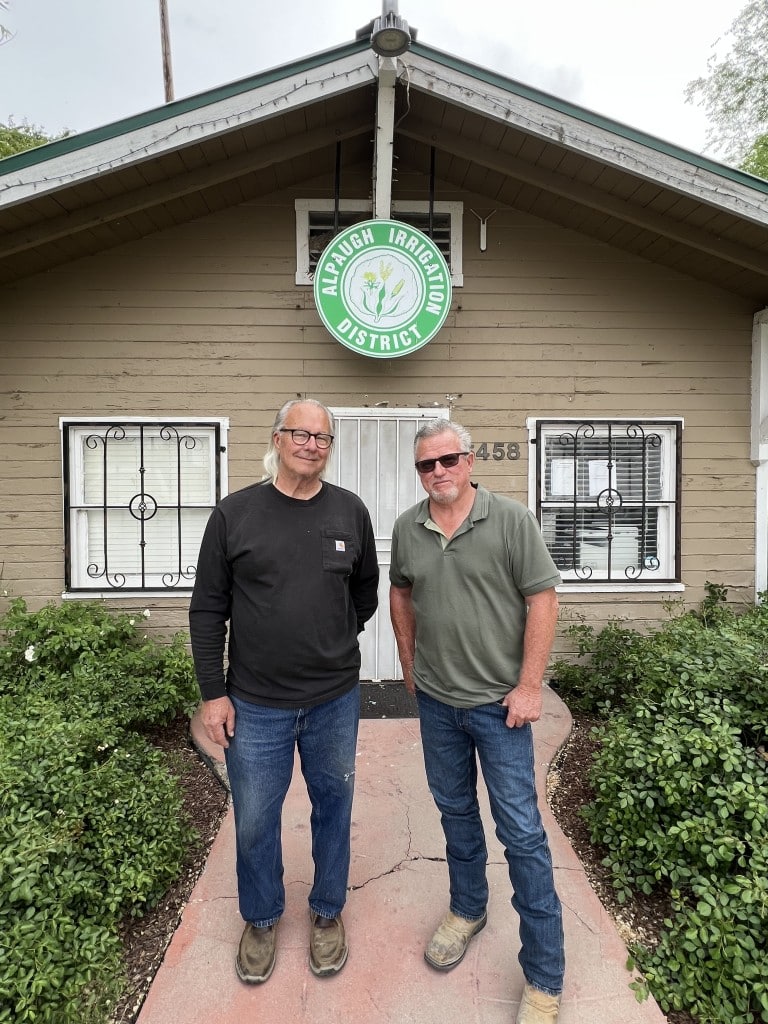
Bruce Howarth’s last day on the job at Alpaugh Irrigation District is April Fool’s Day, but one thing he doesn’t joke about is his admiration for the district and its landowners.
“It’s the best job I’ve ever had,” he said. “I love working with farmers.”
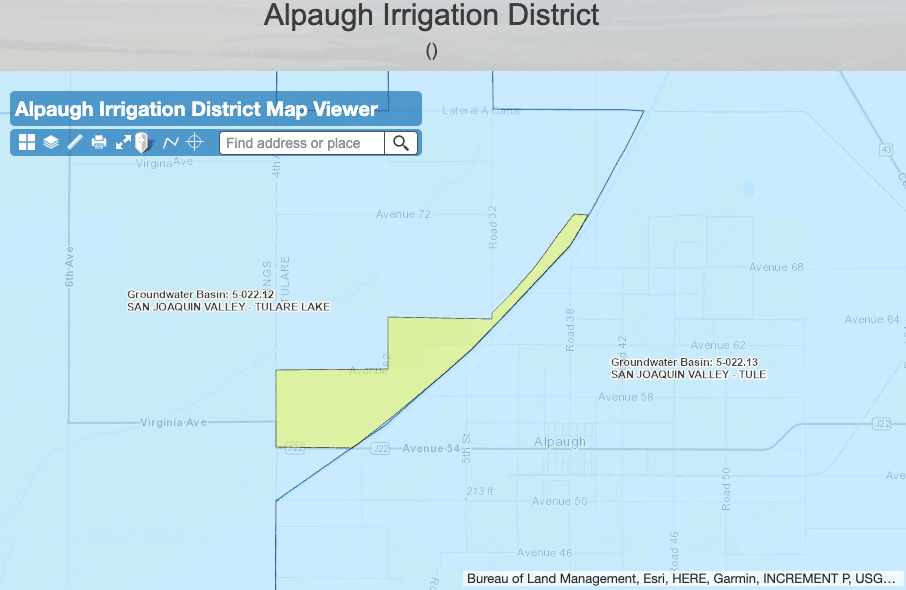
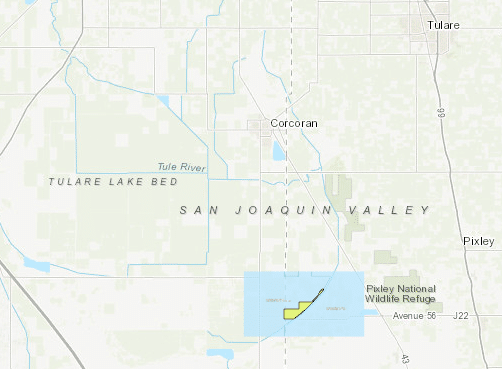
Howarth is retiring today after 12 years at the helm of the tiny district, which was founded in 1915 and covers about 10,000 acres on the far southwestern edge of Tulare County.
Alpaugh’s farmers cultivate mainly pistachios, pomegranates and row crops on land that historically is in the bottom of the Tulare Lake bed.
“Even though we’re pretty isolated, they’re committed to being sustainable and they’ve done well over the years.”
The average parcel is 75 acres, Howarth said, though large landowners such as John Vidovich also are part of the district.
“We have coffee with our neighbors every morning,” Howarth said. “We try to be good neighbors with everybody.”
Stepping in to fill the position is Mike Battles, who previously worked at Lower Tule River and Pixley irrigation districts. He has shadowed Howarth the last six months.
Howarth said he will never forget the two thorniest issues of his tenure: high speed rail line; and the Sustainable Groundwater Management Act (SGMA).
The pending rail line bisected the district for two and a half miles, wiping out one of the wells the district relied on to pump groundwater for its landowners.
Howarth and the Alpaugh district’s board of directors negotiated a $30 million settlement with the High Speed Rail Authority. Though Howarth scoffs at the idea the train will ever be built in his lifetime, he is proud of how the district dealt with the state.
“Our board held firm and wanted to be made whole,” he said. The district used the settlement money to build large scale recharge ponds to store flood water during wet years.
The district relies mainly on groundwater, but has a contract for surface supplies from Friant Water Authority.
Howarth said SGMA has been the bane of his career, draining district finances, saddling growers with more fees and regulations and frustrating district personnel.
A probationary designation from the state Water Resources Control Board in 2024 added yet more fees and regulations on growers, including mandatory well registration at $300 each, $20 per acre foot of water pumped and extraction reports.
Neighboring groundwater agencies have been locked in bitter feuds, mainly over subsidence (land sinking).
“The light at the end of the tunnel is the nuclear glow of a train from the state,” he said. “The (groundwater sustainability agencies) are so far apart and they have been for a long time. Where it all ends up, I wish I knew.”
Eric R. Quinley, general manager at Delano-Earlimart Irrigation District GSA, said while he and Howarth do not always agree, their professional relationship is grounded in mutual respect.
“Over the years, Bruce has been part of some very difficult conversations in the Tule Subbasin when it comes to addressing impacts of overdraft pumping, and that is not something everyone has been willing to take on,” Quinley wrote in an email.
“Bruce has also been a strong and reoccurring advocate for transparency of the decision making process in the Tule Subbasin. This has often taken the form of him reminding consultants and managers that Tule Subbasin should not make decisions in a ‘smoke filled room,’ as he puts it.”
Howarth said he has no plans to take on another career. He aims to spend time with his family and do a lot more trout and salmon fishing in retirement.
But he also has one regret.
“I could not stop the groundwater exports,” he said. Howarth was referring to massive pipelines built by Vidovich to allegedly funnel groundwater out of the Tule subbasin to land in Kern County during the 2012-2016 drought. It’s a charge Vidovich has alternately admitted to in a 2018 article by author Mark Arax, and denied in subsequent interviews.
“The impact I see from that is that he single-handedly redefined the (Tulare) lake,” Howarth said
Trudy Wischemann, a local newspaper columnist, writes often about Howarth and Alpaugh Irrigation District, noting how Howarth is a regular advocate for small farmers. She refers to him as a “brother warrior” in her most recent column.
“I meant this to be as personal a tribute as I could, because it’s a chance to laud his human qualities,” Wischenmann wrote in an email. “One of those human qualities is actually a pretty real humility, which makes it a little harder to point to all the good he’s done because it’s behind the scenes.”