Water a big question for proposed AI data center in eastern Kern desert
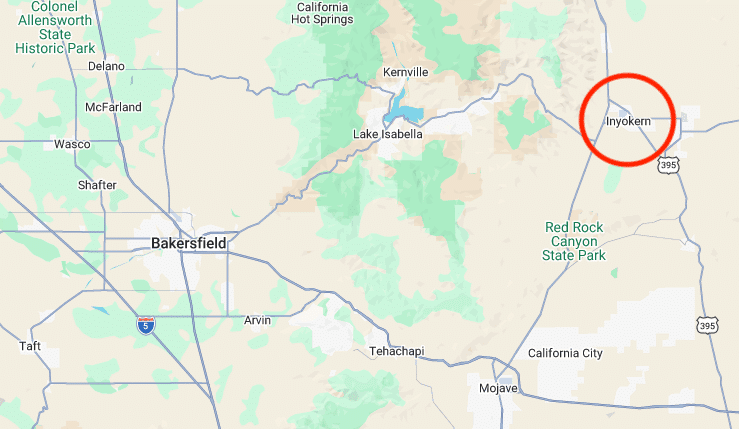
Assurances that a “highly efficient hybrid cooling system” will keep a proposed AI data center from sucking up all the water in the already overdrafted Indian Wells Valley fell flat with residents who’ve bombarded the state with negative comments on the proposal.
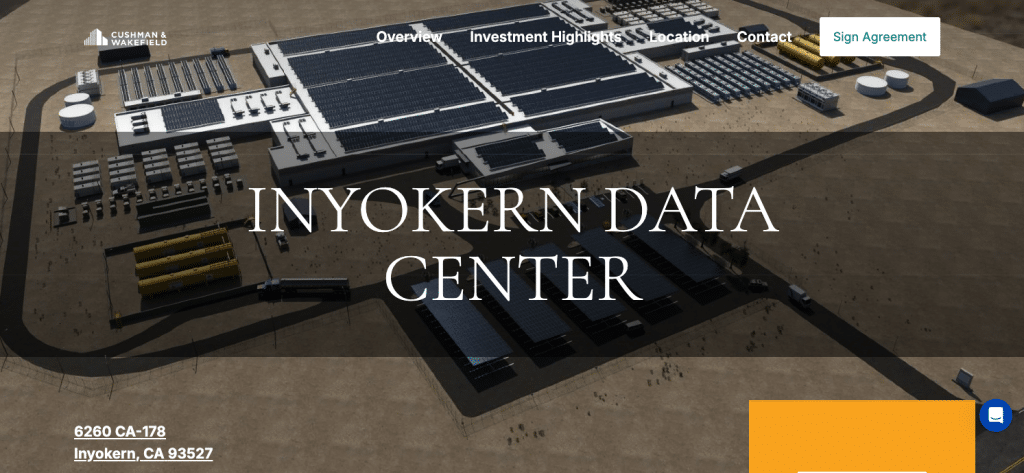
The proposed RB Inyokern Data Center being championed by R&L Capital, Inc. would only use up to 50 acre feet a year to keep its whirring data halls cool, according to an application filed with the California Energy Commission in late April.
A “will serve letter” issued to R&L Capital, Inc. by the Inyokern Community Services District commits to providing about that same amount.
But desert residents aren’t buying it.
– Energy Commission staff member
The California Energy Commission, “will conduct a full CEQA review that considers the potential impacts of the whole project, including issues like water use, land use, air quality, etc.”
A large number of the nearly 90 comments to the Energy Commission opposing the data center insist that: “A facility of this size, using evaporative cooling in desert conditions, can consume roughly 500,000 gallons of water per day, close to 8 percent of the basin’s entire sustainable annual yield, used by a single facility every day.”
That number of gallons equals about 500 acre feet per year, not 50.
Sorting out exactly how much water AI data centers consume isn’t easy.
According to a 2021 study published in Nature, a 1 megawatt data center typically uses 18.6 acre feet a year. At 99 megawatts, the proposed RB Inyokern data center could use up to 1,822 acre feet per year, per that study’s formula.
The amount of water varies based on the type of cooling tower used – standard evaporative cooling, much like a swamp cooler, or by spraying water into the air flow known as adiabatic economisers, according to the Nature study.
However, the proposed Inyokern data center would use a “dry cooling” method, according to an FAQ website that recently appeared. It would only rely on evaporative cooling “during peak temperatures,” the website states.
The website lists Robbie Barker, of Trona, as CEO of R&L Capital, Inc. An email and phone call to a Trona-based Robbie Barker seeking details on the cooling mechanisms and water use for the proposed data center were not returned.
The “dry cooling” method mentioned on the website isn’t explained, nor even mentioned in the main application filed with the Energy Commission.
A section of the application on the cooling system says heat dissipation will be achieved through “hybrid cooling towers and water-cooled chillers” using coils but doesn’t describe the “dry cooling” method mentioned in the FAQ website.
Residents commenting on the proposed data center called for the Energy Commission to do a detailed examination of the facility’s water use.
The process is a little confusing as the California Energy Commission doesn’t permit data centers, per se.
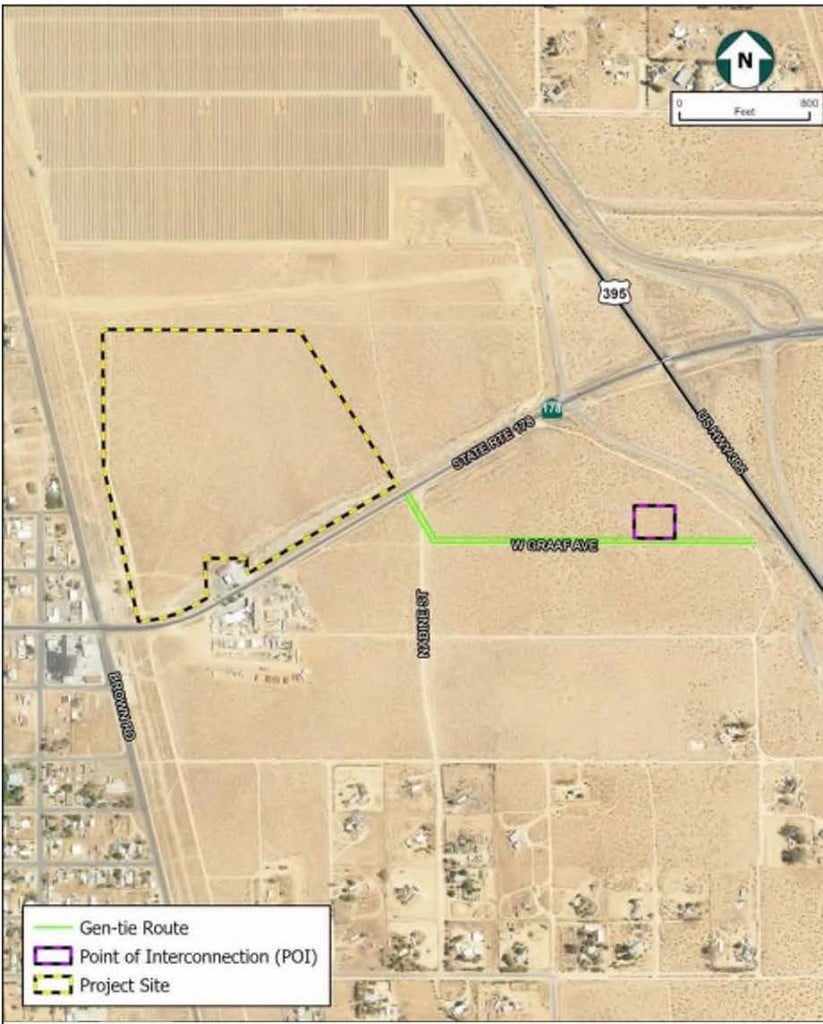
But it does have authority over thermal power plants generating 50 megawatts or more. In this case, RB Inyokern proposes to use 44 diesel generators to produce 99 megawatts as a backup to power that an investment website says it will get from Southern California Edison.
That makes it a power plant, bringing it under the Energy Commission’s authority. RB Inyokern has applied to the Energy Commission for a small power plant exemption.
As part of that process, the Energy Commission “will conduct a full CEQA review that considers the potential impacts of the whole project, including issues like water use, land use, air quality, etc.,” a staff member wrote in response to questions from SJV Water.
If an exemption is granted, RB Inyokern would still have to get permits from Kern County and the Indian Wells Valley Groundwater Authority.
Kern County Planning Director Craig Murphy did not return a call seeking information on whether any paperwork on the data center had been filed with the county.
Phillip Peters, a Kern County Supervisor and Chair of the groundwater authority, declined to comment on the pros or cons of the RB Inyokern proposal as nothing has officially been submitted to either board so far.
Even if the proposed RB Inyokern data center takes only 50 acre feet a year, it will likely be a major issue in a subbasin where some users are paying more than $2,000 per acre foot pumped and that is going through a highly contentious court adjudication.
Peters did say he anticipated a lively discussion of the RB Inyokern data center at the groundwater authority’s next meeting.
As part of its Water Supply Assessment, RB Inyokern also lists a groundwater well it intends to build on the site, though it doesn’t give specifications of depth or production capabilities for that well.
The Inyokern Community Services District states the well water would be used for emergencies and fire suppression but RB Inyokern’s Water Supply Assessment states the well would simply provide another source for the data center.
For unknown reasons, the RB Inyokern Water Supply Assessment doesn’t include the Indian Wells Valley groundwater plan, which was approved by the Department of Water Resources.
Instead, it includes the outdated 2022 version of the Kern subbasin groundwater plan, which was rejected by the state and has nothing to do with the Indian Wells Valley aquifer.
Author