Hanford-area groundwater agency moves forward with “necessary evil” fee elections
- Editor’s note: Monserrat Solis covers Kings County water issues for SJV Water through the California Local News Fellowship initiative.
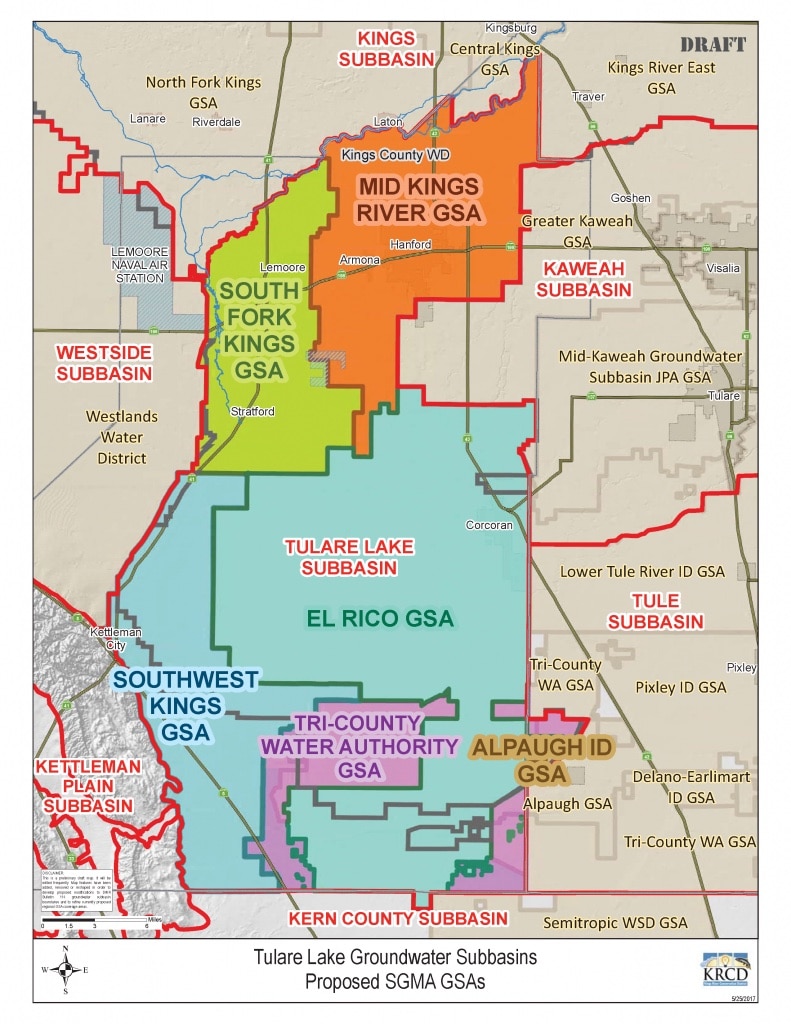
One Kings County groundwater agency is gearing up to ask its growers to pay land assessment and pumping fees in order to fund agency policies that it hopes will help the region avoid state intervention.
Mid-Kings Groundwater Sustainability Agency (GSA) approved two new potential fees during its July 28 meeting. One must be approved through a Proposition 218 election and would charge landowners $26.84 per acre of land. The board also approved a $19.24–per-acre-foot-feet fee under Proposition 26.
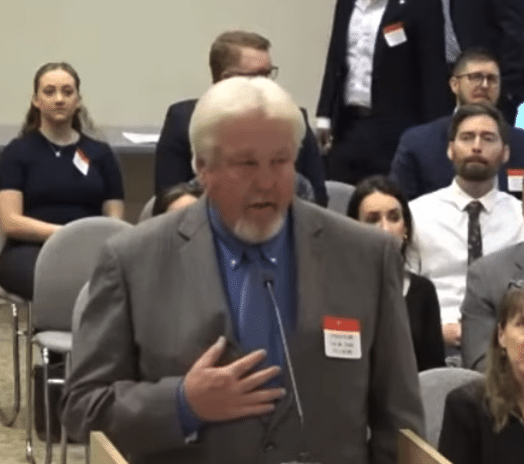
“I don’t like to do protests or rallies or vote myself an increase in taxes, but I find that this is a necessary part of evil here that we have to do this to stay in business,” Board member Doug Verboon said.
Voters in the GSA must approve both fees, which require public notices to give landowners sufficient time to weigh their options – and they’re pocketbooks.
Mid-Kings plans to host two workshops in August before holding its final public hearing for the elections Sept. 29, location and time pending.
Funds from the proposed Prop. 218 fees would pay to keep the GSA’s doors open including administration, staff and costs to revise its groundwater plan.
The Prop. 26 fees would pay for pumping-related impacts such as the GSA’s well program, which repairs domestic wells damaged due to excessive groundwater pumping and water quality and subsidence programs.
Mid-Kings is currently funded through the two agencies that make up the GSA: Kings County and the City of Hanford. The county pays 89% of the GSA’s bills, while the city pays the other 11%.
Once the GSA begins generating its own revenue, it will repay the city and county.
Although the board approved moving forward with the fee elections, board members were concerned it would financially push farmers over the edge.
“Farming is not doing good right now. And there’s a lot of people having a hard time,” Verboon said, noting commodity prices, including nuts, are down.
Board member Kimber Regan agreed.
“Everybody that I’ve spoken to feels the same way that I do: that it’s something that we don’t want to do and it’s just something that we feel like we have to do, otherwise the state’s going to come down on us harder and it’s going to be harder for the farmers,” she said.
Regan referred to the ongoing probationary status of the Tulare Lake subbasin, which covers most of Kings County.
The state Water Resources Control Board placed the region on probation in April 2024 for lacking an adequate groundwater plan.
Under the Sustainable Groundwater Management Act, which requires local entities bring aquifers into balance by 2040, the state mandates farmers meter wells, register them at $300 each, report extractions and pay $20 per acre foot pumped.
The state can also impose its own pumping plan, which is already being planned in the neighboring Tule subbasin.
The Water Board has already collected well data and extraction numbers from farmers in both regions.
While farmers in the Tule subbasin, which was placed on probation in September 2024, are expecting their pumping invoices imminently, those fees are tied up in legal actions in Tulare Lake.
The Kings County Farm Bureau, which sued the state, and the Water Board will convene in court Oct. 6 at 1:30 p.m. for a merits hearing.
In the Tule subbasin, the state is preparing to implement its only pumping plan as local water managers have failed to produce a new groundwater plan of their own that will meet SGMA’s goals of stemming subsidence and protecting domestic wells.
In the Tulare Lake subbasin, water managers are hoping to avoid that fate by writing a coordinated groundwater plan, which they failed to do in 2024.
Getting there isn’t cheap.
Four of the five GSAs in the Tulare Lake subbasin have agreed to work on a single groundwater management plan focused on coordination.
The subbasin will pay $614,204 for engineering services in order to develop a draft plan and submit it to the Water Board by March 2027. El Rico GSA will foot the bill, then bill each GSA based on acreage.
“We want to get this pushed along as quickly as we can so that we can get out of probation as quickly as we can, too,” Mid-Kings advisory group Chair, Garrett Gilcrease told the Mid-Kings board at the July 28 meeting.
- Republication or broadcast of SJV Water content is allowed with our reporter’s byline, SJV Water and the following tagline:
SJV Water is an independent, nonprofit news site covering water in the San Joaquin Valley, www.sjvwater.org. Email us at sjvwater@sjvwater.org