State Water Board needs to get up to speed on Kern’s new groundwater plan, speakers say
The state came to Kern County Thursday night and got an earful.
Water managers, farmers, residents and others told members of the Water Resources Control Board that they need to get up to date on the region’s new groundwater plan.
Frustration was evident among speakers who didn’t understand why Water Board staff would recommend the Kern subbasin be put on probation based on a plan from 2022 that is now “obsolete.”
Kern water managers submitted an entirely new plan at the end of May 2024. Water Board staff acknowledged they had only done a preliminary review of the new plan and that their probation recommendation was based almost entirely on the 2022 plan.
That didn’t go over well.
“The Kern subbasin deserves to have the new plan thoroughly reviewed before the state rushes toward intervention,” said Jenny Holtermann, a local almond farmer and Executive Director of the Water Association of Kern County. She was among at least 100 people who attended the nearly three-hour-long workshop at Hodel’s.
Ignoring the new plan was “…an attempt to eliminate local control, contrary to state regulations,” Holtermann added.
Probation is the first step under the Sustainable Groundwater Management Act (SGMA) toward a possible state pumping take over. SGMA, passed in 2014, is intended to bring severely overdrafted aquifers back into balance by 2040.
Under probation, all water users who pump more than 500 acre feet a year would have to meter and register their wells at $300 each, report their extractions and pay $20 per acre foot pumped. That includes municipal drinking water systems, such as California Water Service and the City of Bakersfield, said Natalie Stork, assistant director of the Water Board’s SGMA office.
Though Water Board staff based their probation recommendation mostly on the 2022 plan, they said the 2024 plan still had problems.
In particular, they noted that the lowest allowable groundwater levels, known as minimum thresholds, were, in some cases lower than those allowed in the 2022 plan. In some cases the limits were set 100 feet below the 2022 plan, said Jeevan Jayakody, a senior engineering geologist with the Water Board’s SGMA Office.
Kern water managers disputed that, saying minimum thresholds were, on average, 20 feet higher than the old plan and that Water Board staff had drawn its conclusions on flawed data.
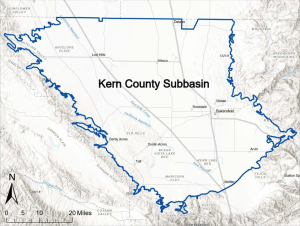
In fact, the subbasin’s technical group sent a 10-page memo to the Water Board on Tuesday stating that “several maps and figures presented are not accurate and are extremely misleading.” The memo included groundwater depths for every monitoring well used in the Kern subbasin.
Water Board staff acknowledged receipt of the information but did not alter their presentation Thursday.
At the end of the workshop Water Board chair Joaquin Esquivel addressed the crowd saying that the Water Board had no interest in “collecting groundwater basins.”
“As I said at the top of this workshop, we’re here to listen. We heard you loud and clear and we will evaluate the 2024 (groundwater sustainability plan.)”
The public has until Sept. 23 to comment on the Water Board’s probation recommendation. The Kern subbasin’s probationary hearing before the board is scheduled for Feb. 20, 2025.
Author