Kern River advocates urge full study on water impacts of Kernville power plant

The state Water Resources Control Board is mulling whether to do a full, or abridged study on the impacts of removing water from the upper Kern River to run the Kernville power plant.
Southern California Edison’s Kern River 3 (KR3) plant is up for relicensing from the Federal Energy Regulatory Commission (FERC) and it needs a water quality permit from the state as part of that process.
The Water Board could do a full environmental impact analysis or negative declaration, which is less robust, to support its decision on whether to issue the permit and is seeking comments from the public by 5 p.m. Friday, Nov. 20, about which approach is more appropriate.
Kern River Boaters and other river advocates are urging the Water Board to opt for a full environmental analysis. The group has also set up a page on its website www.freethekern.com to assist others in sending comments to the Water Board.
Advocates have long maintained that Edison takes too much water out of the 16-mile stretch of river from Fairview Dam to the plant at Kernville, leaving it less habitable for fish – especially the Kern River rainbow trout, a species of concern – and all but unusable for recreation in lower water years.

The utility’s proposed flow regime under the new license would only make matters worse, the group has said.
Edison must adhere to “minimum instream flows” as part of its license. It is proposing to maintain the current instream flow amounts of 40 cubic feet per second (CFS) in winter up to 130 CFS later in the year.
However, it is proposing to shift some of that water from July/August to May/June. River advocates say that doesn’t make sense as runoff is higher in the late spring anyway and cold-water fish need those flows even more during the heat of the summer.
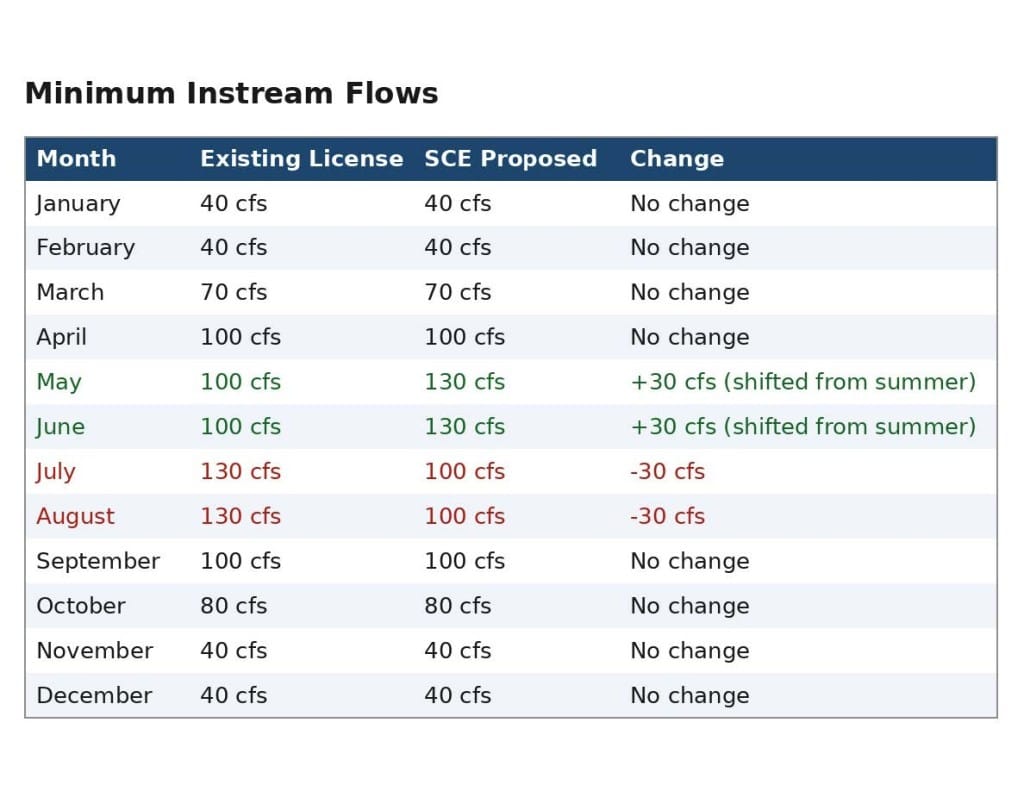
“(Edison’s) own application says (shifting flows) would likely leave the water warmer and lower in oxygen, and calls that minor,” Kern River Boater’s representative Brett Duxbury wrote in a text. “Edison’s own meters already show oxygen in that stretch is below the state standard in summer. Its own fish surveys below the dam found 118 to 238 rainbow trout per acre in 1998 and 2 or 3 in 2023.”
Kern River Boaters and the Kern River Fly Fishers Council have proposed minimum instream flows of 195 CFS in winter to 335 CFS in summer. Considering the unimpaired flow of the river is 800 CFS on average, they have said previously those higher minimum flow standards would benefit the river and still allow Edison enough water for power generation.
They are asking the Water Board to study the impacts of the higher flows against the flows proposed by Edison.
For those wishing to comment, the Water Board is seeking emails at: WR401program@waterboards.ca.gov with “Kern River No. 3 Informal CEQA Consultation” in the subject line by Friday, Nov. 20.
Meanwhile, the FERC process is continuing and will open for public comments once the agency deems Edison’s applicaiton is ready for environmental analysis.
This license will guide operations at the power plant for the next 50 years.

Author