“Over our dead bodies” likely response to Arizona proposal to harvest California rivers to fill its water gap
- Bob Christie covers Arizona political and other news for Capitol Media Services, a Phoenix-based independent service whose stories are published by multiple Arizona newspapers and radio stations. He previously worked for nearly two decades as a Phoenix-based journalist with The Associated Press, and spent ten years as a reporter and editor at The Bakersfield Californian.
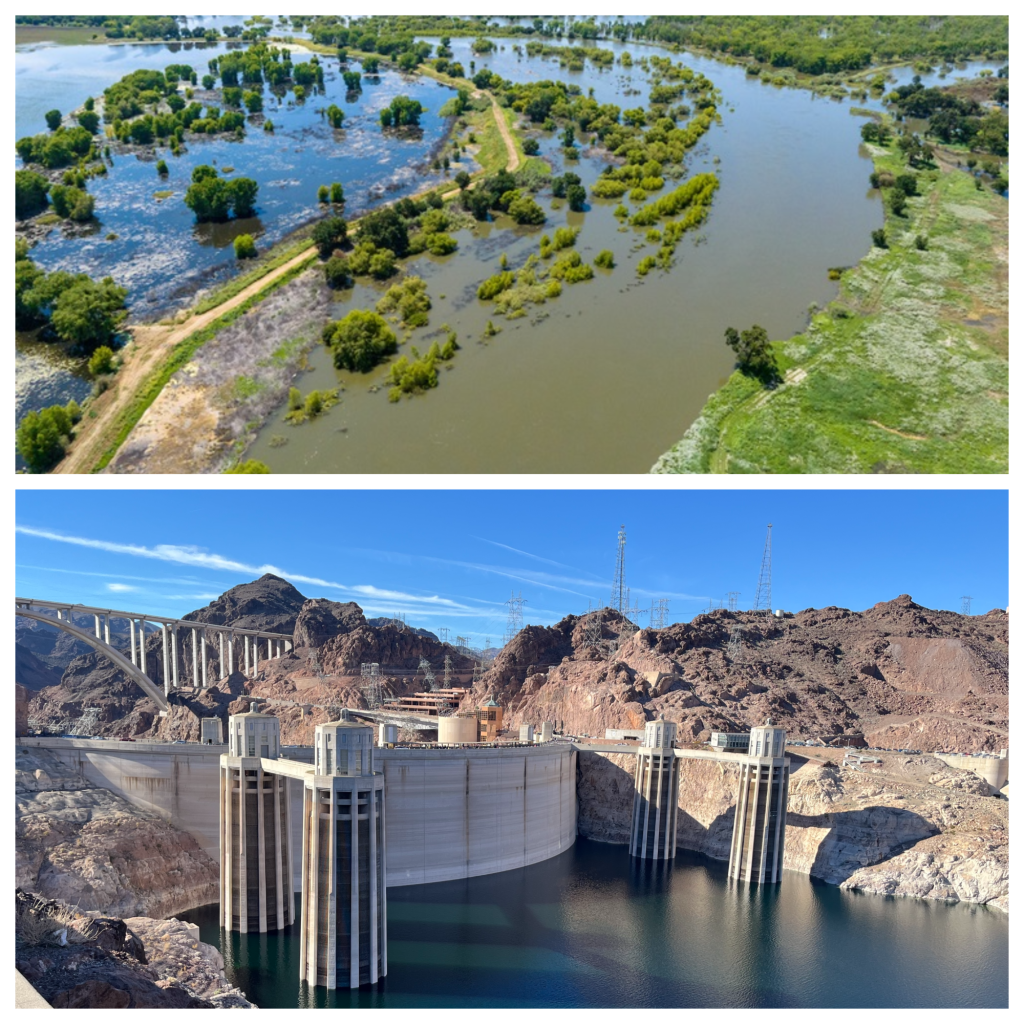
Top: A flooding San Joaquin River in 2023. SOURCE: California Department of Water Resources.
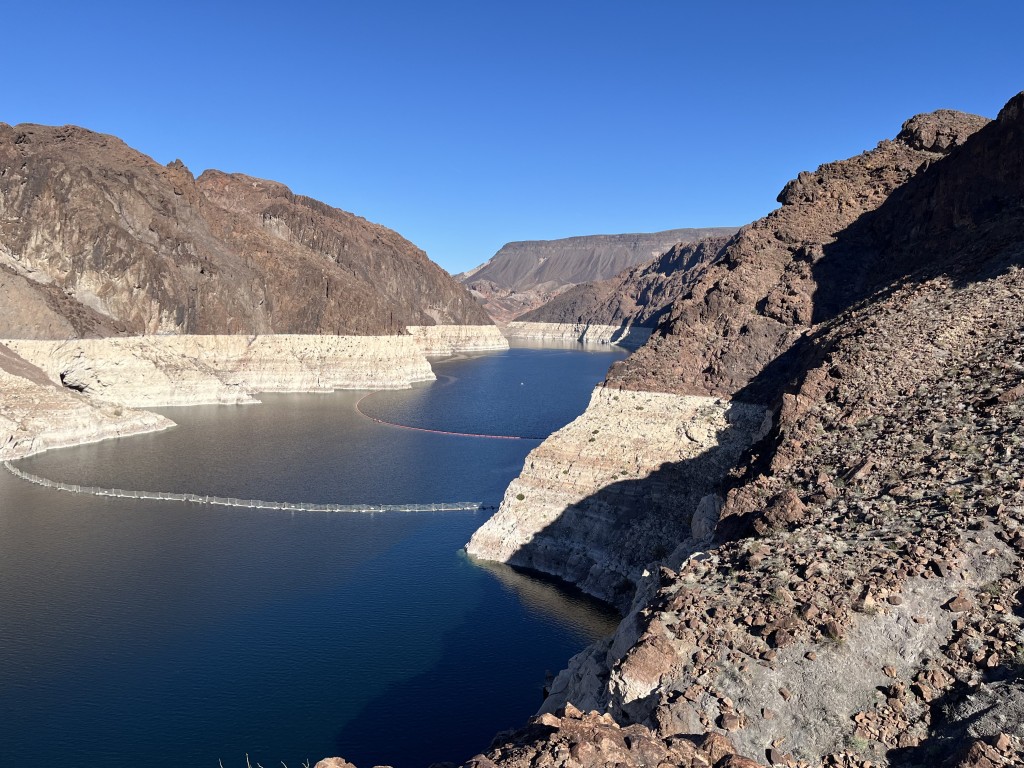
Bottom: Lake Mead behind Hoover Dam in Arizona. SOURCE: SJV Water
A nascent proposal by Arizona to fill the water gap from its dwindling Colorado River and groundwater supplies by reaching into California’s rivers likely won’t go over well in the Golden State.
“Over our dead bodies,” was the response envisioned by the leader of one of the southern San Joaquin Valley’s most powerful water boards.

The proposal is one of two ambitious projects involving California that are being explored in a private-public partnership between Arizona’s Water Infrastructure Finance Authority (WIFA) and Canadian company EPCOR.
EPCOR has proposed capturing excess water from the San Joaquin and Sacramento rivers in flood years, banking it somewhere in the southern San Joaquin Valley and delivering 100,000 acre feet a year to southern California water agencies for urban use.
In exchange, Arizona would take a like amount of Colorado River water before it runs to California.
“I may be completely wrong, but I see the political maelstrom of ‘Oh wait a sec, you’re going to take water off the Sacramento or San Joaquin that is critically needed in the Central Valley for Sustainable Groundwater Management Act, and move it to Arizona?’” said Eric Averett, general manager of the Kern County Water Agency, the second largest contractor in the state for water from the Sacramento-San Joaquin Delta.
Averett summed up the likely response from California water managers as: “Over our dead bodies.”
Kern is in a critically overdrafted groundwater region, as is the rest of the San Joaquin Valley, and must bring its aquifers into balance by 2040 per California’s groundwater law known as SGMA passed in 2014.
Not enough “excess” to go around
Valley water managers are already scrapping for every drop of unused water – particularly from infrequent flood waters on California’s rivers.
In fact, a coalition group known as the Water Blueprint for the San Joaquin Valley has had a plan in the works for at least six years to capture excess flows from the Sacramento-San Joaquin Delta. The Kern County Water Agency agreed at its July meeting to help fund the Blueprint’s strategy.
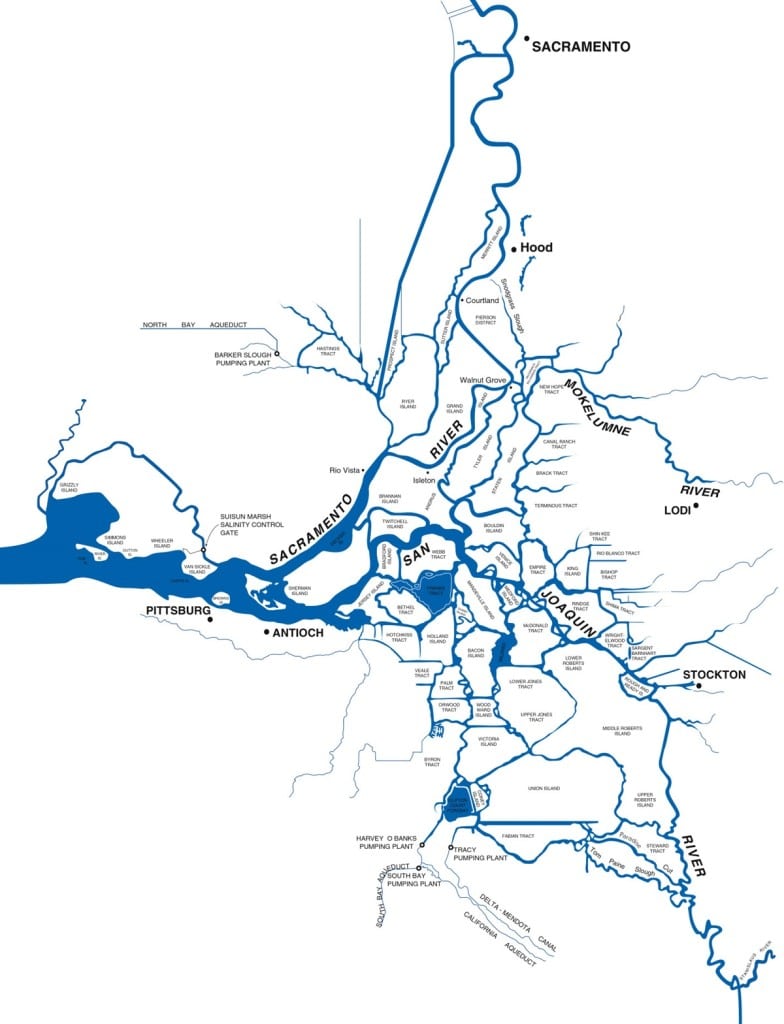
The California Water Resources Control Board is processing “many pending applications on central and northern California rivers, where a party is working through the requirements to try to obtain a permit,” according to a staff statement provided by a board spokeswoman. No details were immediately available.
“I would never say anything’s laughable because with enough resources and commitment people are able to do some amazing things,” Averett said of the EPCOR proposal in an interview with Capital Media Services. “But you have to acknowledge that the process requires a number of steps that take, in this case, years and maybe even decades to put it in place.”
At the least, he said, the proposal is “a very low probability, high cost project.”
The second project under study by EPCOR is a “toilet-to-tap” system to treat wastewater from the San Diego area to drinking-water standards. The treated water, primarily derived from sewage from Tijuana, Mexico, would be sent back to Mexico for municipal use.
In exchange, Arizona would receive rights to as much as 100,000 acre-feet annually of Mexico’s Colorado River water supply
That proposal struck Averett as “creative and doable.”
“That is actually what I would define as creative, good water management, and that also may be the low-hanging fruit.”
Hunting for new water
Both proposals are just at the idea stage, but Arizona’s WIFA did authorize paying EPCOR $7.3 million to flesh them out as Arizona is looking at an even bigger water gap after recent federal cuts to its Colorado River share.
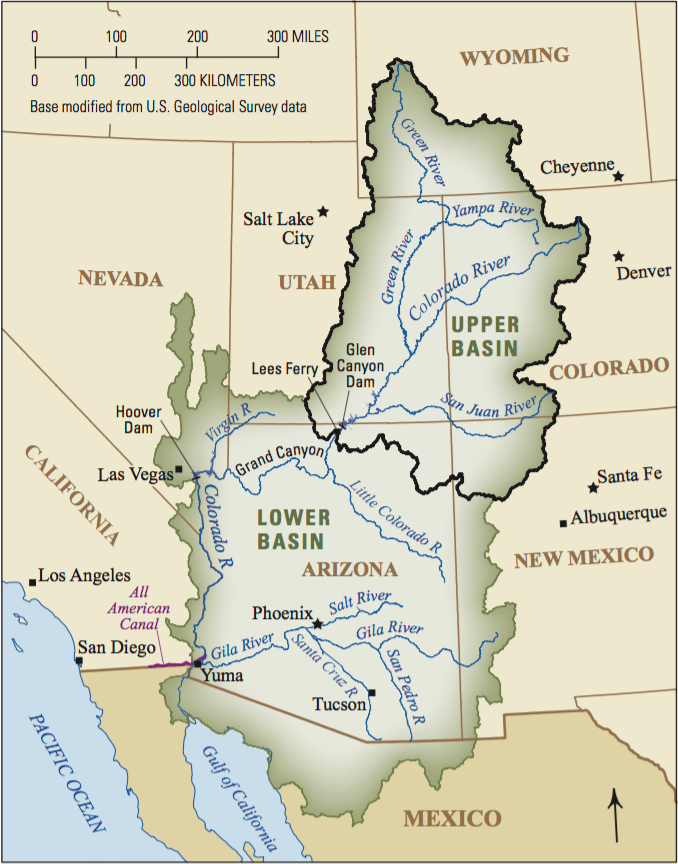
Arizona is normally entitled to 2.8 million acre feet a year of Colorado River water but has been taking cuts in recent years as river flows dwindle and was down to about 2.3 million acre feet.
Federal officials who oversee the river mandated additional cuts on Aug. 21 that will drop Arizona’s take to a little more than 2 million acre feet next year.
That has sent WIFA on the hunt for new water.
WIFA was once an obscure state agency funding local water projects mainly with federal money. It was revamped in 2022 with a mission of finding new water supplies, the majority of which must be imported into the state. Even before the Colorado River cuts, Arizona was seeking water to make up for a groundwater shortfall.
WIFA is weighing a host of other importation proposals, including desalination plants, in addition to the two California proposals OK-ed for initial study last week.
California, meanwhile, is facing similar shortages, including a smaller cut to its Colorado River supplies. And Sacramento recently passed a law requiring the state to develop 9 million acre feet per year of new water supplies.
Big water years could bring big water
Still, EPCOR is convinced there’s water to be harvested from California’s rivers.
The company’s proposal says it can tap excess flows during flood years using an expedited permitting system enacted in California after recent flooding and use it for groundwater recharge. In the past 20 years, the proposal said, five years yielded flood levels that could be tapped.
Their proposal said as much as 14.4 million acre-feet of excess water was potentially available from the two rivers during the 2023 high-water year, although not all of it could be diverted.
During a presentation to Arizona’s WIFA board, an EPCOR representative said the company had had initial talks with California state and local officials about its proposals, although it did not identify the entities. WIFA board staff later said they had also spoken with staff at the California Water Board and Department of Water Resources.
Staff with both those agencies either said they were unaware of the proposal or declined comment.
Averett listed a host of logistical, regulatory and other pitfalls facing such a project tapping the rivers, including finding partners to ship and store water underground, and locating an entity to take it for eventual use and swap it for Colorado River rights.
“Kind of delusional”
Then there’s environmental opposition.
“If you define ‘excess water’ as well, in some years, water flows out of the delta in excess of the minimum salinity control standards and other water quality standards, … then yeah, there’s excess water,” said Ron Stork, a senior policy analyst with Friends of the River, a river preservation group. “The question is, how do you capture the excess water?”

Competition is the other big issue, Stork said.
“Arizona is not the only people who are scrambling for water,” he said, noting that the southern San Joaquin Valley alone has a 2 million acre-foot per year overdraft that must be addressed. He also pointed to California’s “utterly unattainable” goal of finding 9 million acre-feet more per year of water.
WIFA board members envisioned the same competition for excess river water, but said they could find willing partners for their storage plans because they will pay for the projects and a partner would end up with more water.
Gary Bobker, Friends of the River’s lead policy analyst and spokesman, was just as blunt as his colleague.
“The point is that the state of California considers itself to be facing severe water supply deficits for all purposes,” Bobker said. “And the idea that you start banking water in California to ship it off to other states just seems kind of delusional.”