“It will go quick” – $171 million in one-time funding cobbled together to save state’s drinking water program
An all-hands-on-deck effort saved one of the state’s most effective drinking water programs, at least for next year. But what happens after that?
The SAFER program, which had received $130 million annually to provide emergency water and long-term solutions for families whose wells go dry, was set to be cut by nearly half until an unlikely coalition of social justice, farmer and water manager groups rallied to save it.
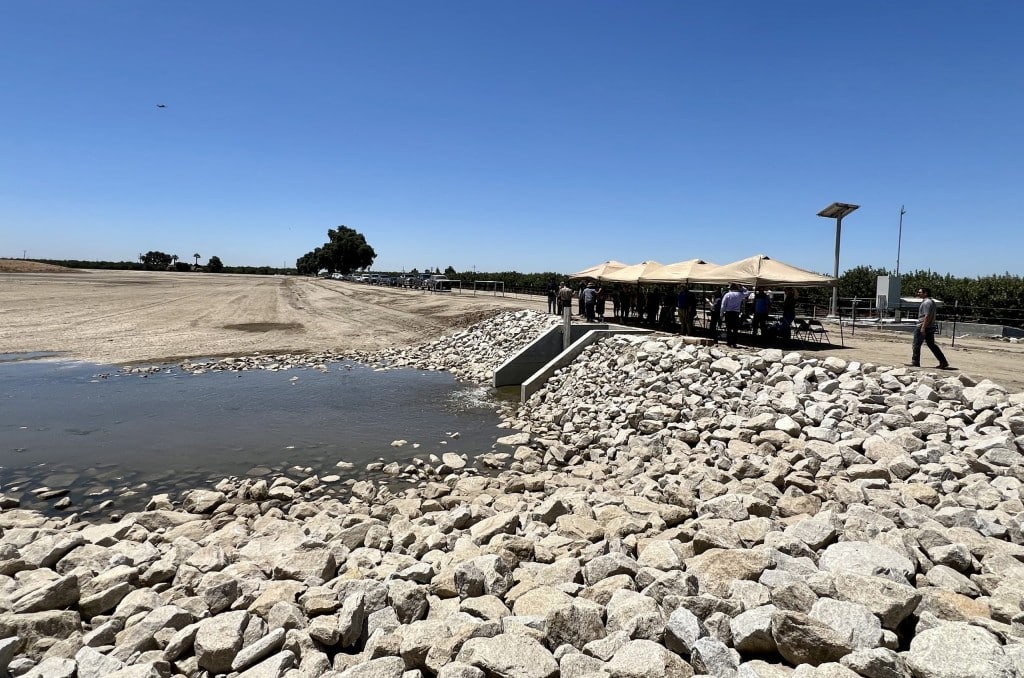
On Oct. 8, about 40 people gathered on the dusty bank of a Tulare County recharge basin to celebrate that win, which resulted in one-time funding of $171 million for SAFER in the 2027-28 fiscal year.
About $71 million of that will come from the state’s greenhouse gas reduction fund and the rest is Proposition 4 money.
Even with that money secured, those gathered at the recharge basin recognized SAFER’s uncertain future and the need for San Joaquin Valley communities to seek resilience beyond SAFER.
“The objective is not to become better at delivering emergency drinking water,” said Eric R. Quinley, general manager at Delano-Earlimart Irrigation District, at the Oct. 8 event.
A permanent funding solution for SAFER must be found as long-term solutions are identified and sustainable groundwater management practices are implemented, he said.
“The objective is to build communities where emergency drinking water is no longer necessary. The objective is sustainability, not only for ag but for everyone who drinks water.”
In that vein, the event’s location, the Okieville Recharge Basin, was key.
The basin was built just upstream from the tiny community of Okieville in Tulare County, where residents have suffered dry wells off and on for years due to drought and over pumping. As water is recharged in the basin, it will replenish the aquifer for farmers and Okieville wells.
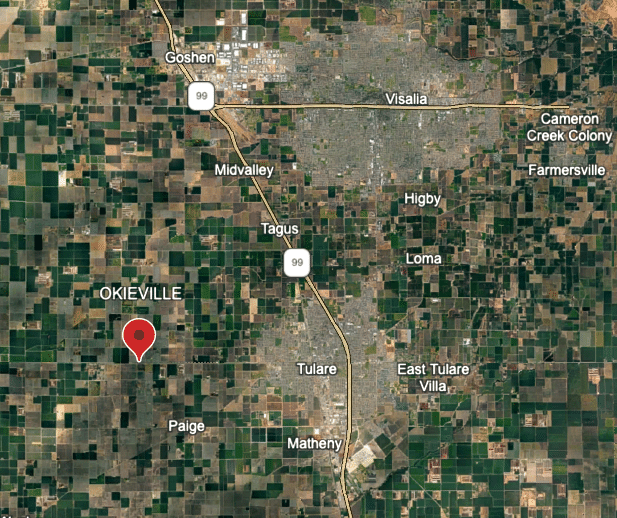
It took a decade of work between farmers, nonprofits, such as Self-Help Enterprises, and water agencies to build the 1,400-acre-foot basin using money from Proposition 68.
But the work isn’t over.
The Tulare Irrigation District is hoping to secure SAFER money to leverage federal funding so it can help provide Okieville residents the “ultimate resilience portfolio,” according to Tulare ID General Manager Aaron Fukuda. That includes a new well, a back-up well, generators and a storage tank for fire flows.
“This is how it happens,” Fukuda said. “Locals working with nonprofits and the state to help communities. We need to leverage SAFER funding to bring anxiety levels down so when they turn on the faucet, the water will be there.”
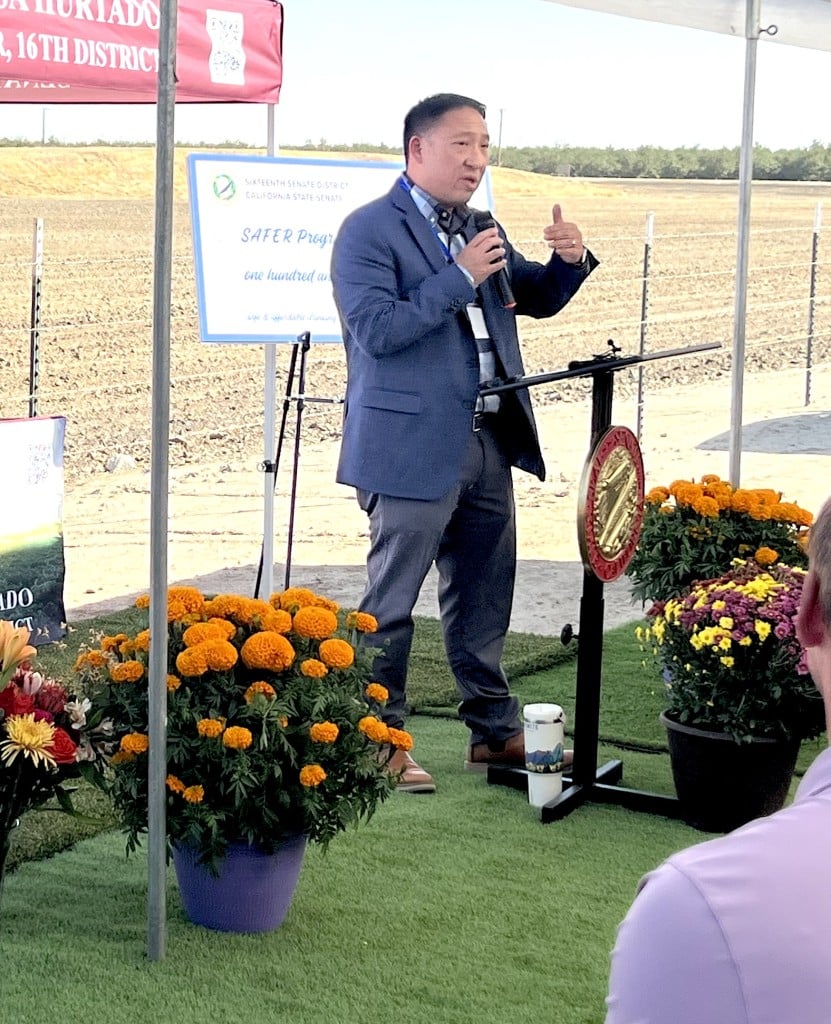
State Sen. Melissa Hurtado, who helped get the 2027-28 SAFER funding package across the finish line, said the group won this battle but the fight for clean drinking water will continue.
“What good is recognizing the Human Right to Water if we’re not willing to provide the resources to make it a reality?” she asked, referencing the “Human Right to Water Act” passed by the Legislature in 2012.
Money is the bridge that makes that concept a reality, as proven by SAFER. Since it was created in 2019, the program has provided $900 million in grants giving more than a million Californians access to clean drinking water by helping communities drill new wells, consolidate with larger systems and making sure residents have clean, emergency water, if needed.
State figures indicate there are still another 1,052 water systems that are failing and in need of permanent solutions.
Allensworth resident Sherry Hunter said she was shocked to learn SAFER funding had been in jeopardy earlier this year.
SAFER funds helped her small, southern Tulare County community pay for a new well and a 500,000 gallon storage tank.
“My community almost died because of a lack of water,” she said. “It’s hard to imagine them not being there when we needed them.”
Of the $171 million in next year’s kitty, she predicted: “A lot of communities will be vying for that money. It will go quick.”