State board denies requests by Tulare County farmers to be exempted from up to $12 million in pumping fees
The Water Resources Control Board voted to go forward with sanctions against some Tulare County farmers – including up to $12 million in pumping fees – after they failed to show they had made enough progress toward stemming subsidence, among other issues.
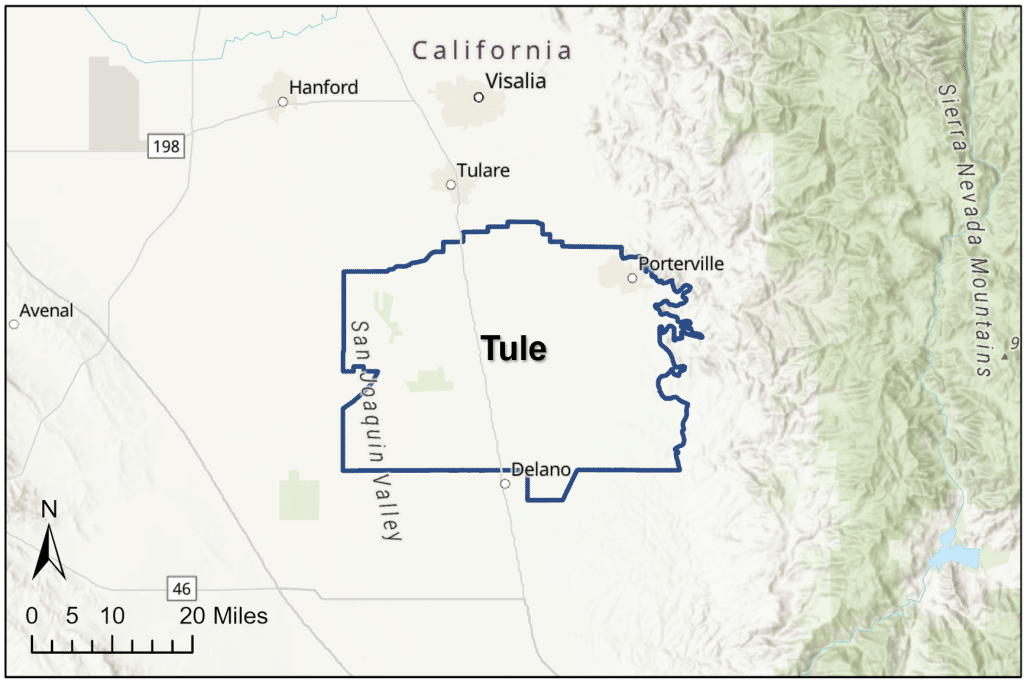
More than 20 farmers from the Tule subbasin, which covers the southern half of Tulare County’s flatlands, appeared at the Water Board’s April 21 hearing on the issue.
They made technical, tearful and even angry pleas that they be exempted from the sanctions, including the fees and a requirement that they report to the state how much they pump beginning May 1.
But, after a nearly five-hour hearing, the Water Board voted unanimously to deny the exemption requests.
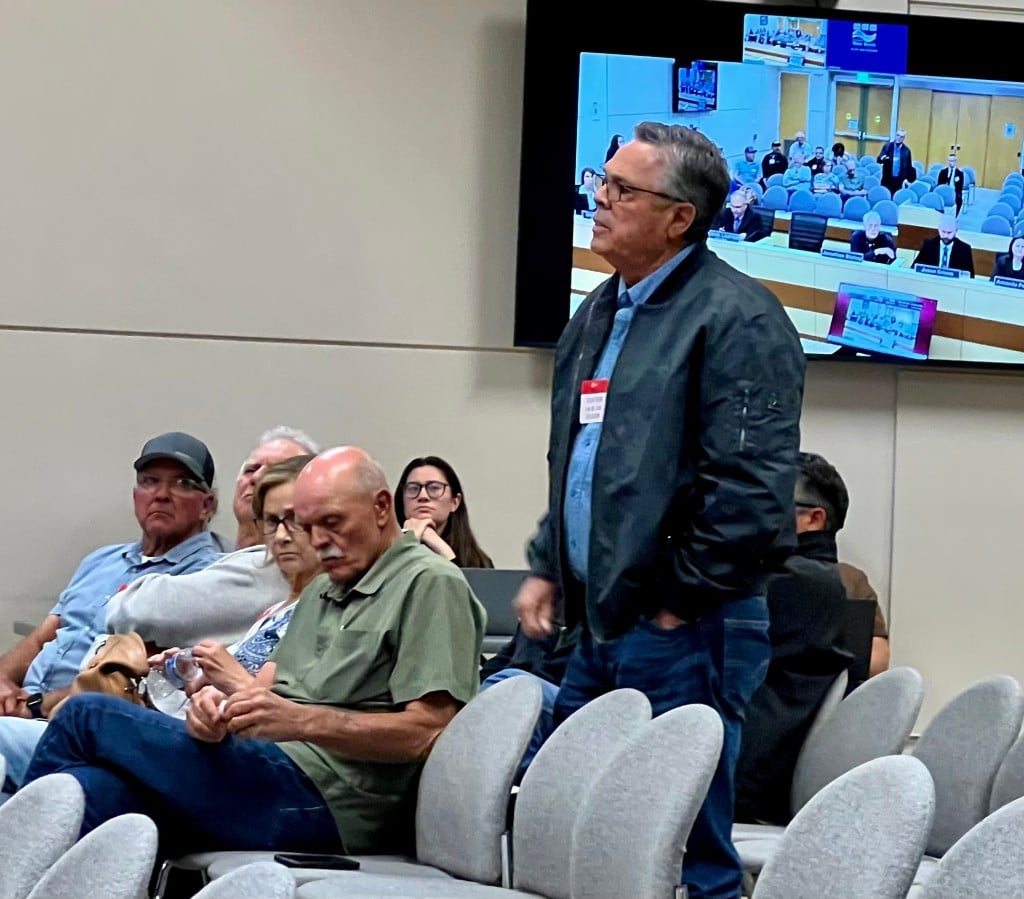
That prompted an angry outburst from farmer Jim Morehead who demanded to know why the Water Board needed $12 million in fees when it has stated that oversight of the Tule subbasin will cost only $6 million.
“Give us something here,” Morehead said, interrupting the Water Board discussion during the vote. “Why are we being scrutinized and demonized?”
He said Tule farmers are doing their part, adding that he has fallowed 60% of his land to reduce groundwater pumping.
Water Board Chair E. Joaquin Esquivel assured Morehead that the point of fees was not to make money. The fees are supposed to cover the Water Board’s extra costs associated with overseeing the subbasin.
“The board will not be overcollecting millions on you,” Esquivel said.
The Water Board did agree to revisit the fees – $20 per acre foot pumped and $300 per well – in September to consider whether they should be lowered. It lowered the pumping fee from $40 per acre foot to $20 in response to farmer protests back in 2024.
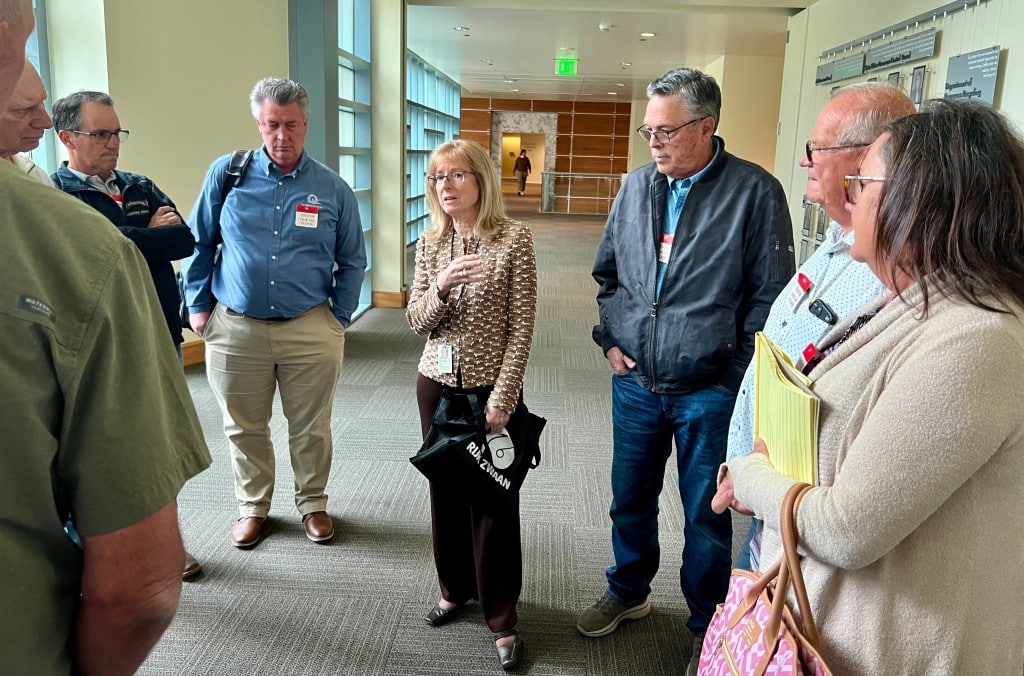
But the fees caused significant consternation among farmers who traveled to Sacramento to speak personally to the Water Board.
“I think we are valuable and we are part of the solution,” farmer Pam Sola said. “We have been complying with local rules and we cannot afford the fees that come with probation.”
She tearfully said the fees will jeopardize her family’s plan to hand down its 125-year-old farm to younger generations.
The Water Board placed the Tule subbasin on probation in 2024 for lacking a coordinated groundwater management plan that would stop rampant subsidence, or land sinking, as required under the Sustainable Groundwater Management Act (SGMA).
Probation comes with fees and reporting requirements. It is also the first step toward the state writing its own pumping plan for the region, something the state will now begin even as the groundwater agencies are working on a revamped local plan.
Some Water Board members were encouraged to learn that 11 of the Tule subbasin’s 13 groundwater agencies have agreed to write a single groundwater plan, as opposed to peppering the state with individual plans.
“It’s to the point where you can sit down, put pen to paper and work through the issues to get a coordinated plan ready so our staff can review it,” said Water Board member Nichole Morgan. “I really want all of you out of probation.”
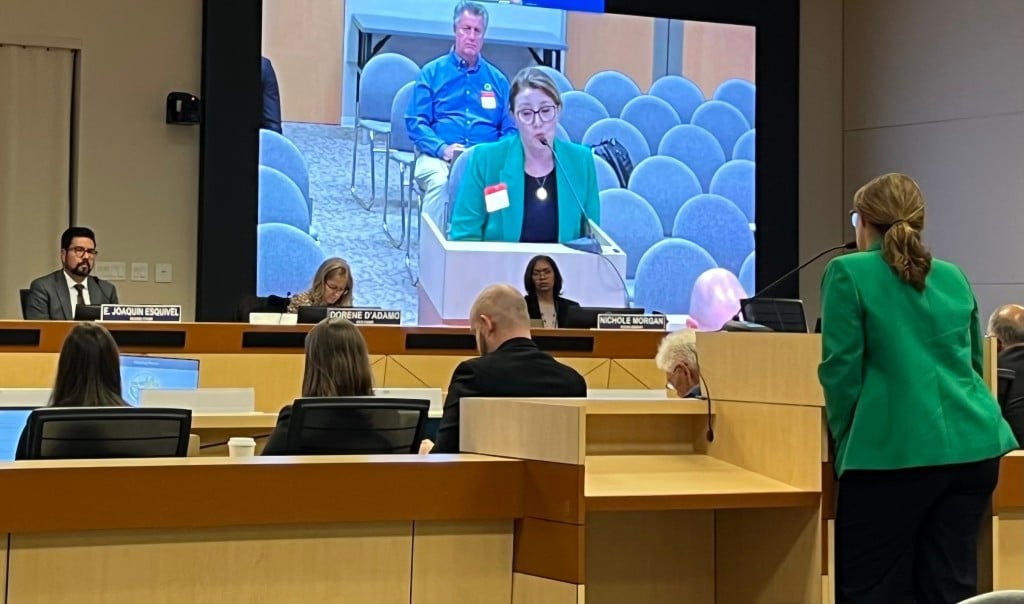
Getting to that point will be more difficult without focus by Water Board staff, said Water Board member Laurel Firestone.
“This subbasin is one of the very hardest hit in what the consequences of SGMA mean for local families and daily lives. I think it deserves the focus of our staff and not being spread thin.”
That means far more personal communication than has happened thus far, said Attorney Jennifer Spaletta, who represents the Lower Tule and Pixley groundwater agencies.
She took Water Board staff to task for issuing a report recommending fee exemptions be denied that she said contained faulty information that could have been cleared up with a phone call.
That prompted a frustrated response from Water Board Vice Chair Dorene D’Adamo.
“Pick up the phone. We gotta pick up the phone when it seems that something is not adding up,” D’Adamo said.
She, and other Water Board members, agreed, though, that Tule’s exemption requests took the focus off the ultimate goal of getting the region out of probation.
“You’re fighting for your communities, and unfortunately, what that did is distract our staff, who had to spend time going through the requests and preparing the report (recommending the requests be denied) so you have a record,” said D’Adamo. “Is it a perfect record? No. There’s lots of things that need to be corrected, and I think that’s what the technical conversations are going to be.”
Tule water managers took issue with Water Board staff’s interpretation of “critical head,” or the groundwater level needed to prevent fine-grained, or clay, soils from compacting.
The Water Board staff report stated groundwater levels would need to be raised by 175 feet in some areas, which local water managers said is unrealistic. And the same critical head standard wasn’t used for already-approved plans in other regions that also have subsidence.
Water Board members also wondered if previous fee/reporting exemptions granted to two Tule subbasin groundwater agencies, Delano-Earlimart and Kern-Tulare, may have backfired by prompting more exemption requests and igniting an internal subbasin battle.
“Our intentions of trying to provide incentives has kind of backfired, and has really exacerbated the energy put into fragmentation,” Firestone said, referring to the fact that Tule groundwater agencies splintered in the wake of the Water Board’s probation designation.