Responses to ballooning mussel invasion range from full-on combat to getting ready to make a plan
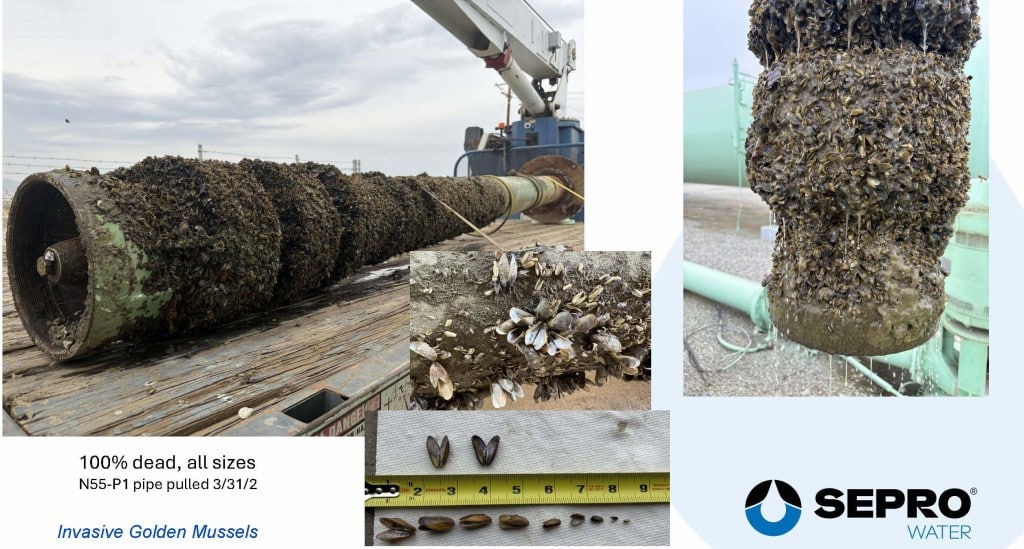
The Arvin-Edison Water Storage District found invasive golden mussels in its system last December, quickly approved a $2.5 million budget and by the first week of April had already completed a 30-day treatment.
Results, so far, appear to be “complete mortality,” according to Resource Manager Sam Blue.
“Our board has been very aggressive on this issue,” Blue said of Arvin-Edison. “They understood how critical it was to beat the curve before it got out of control.”
Time is of the essence as golden mussel breeding ramps up with the temperature. The mussels are tiny but cling to equipment and inside pipes, building on each other until pipes are clogged and equipment fails.
“It’s a scary deal,” Blue said. “There’s a lot of talk about this summer being really bad. They’re established now and they’re starting to breed.”
Meanwhile, at its April 23 meeting, the Kern County Water Agency approved spending $350,000 to hire a consultant to develop a mussel treatment plan.
This comes more than a month after KCWA staff notified the board that they had already been battling an ongoing, significant infestation in a key piece of the county’s water infrastructure, the Cross Valley Canal.
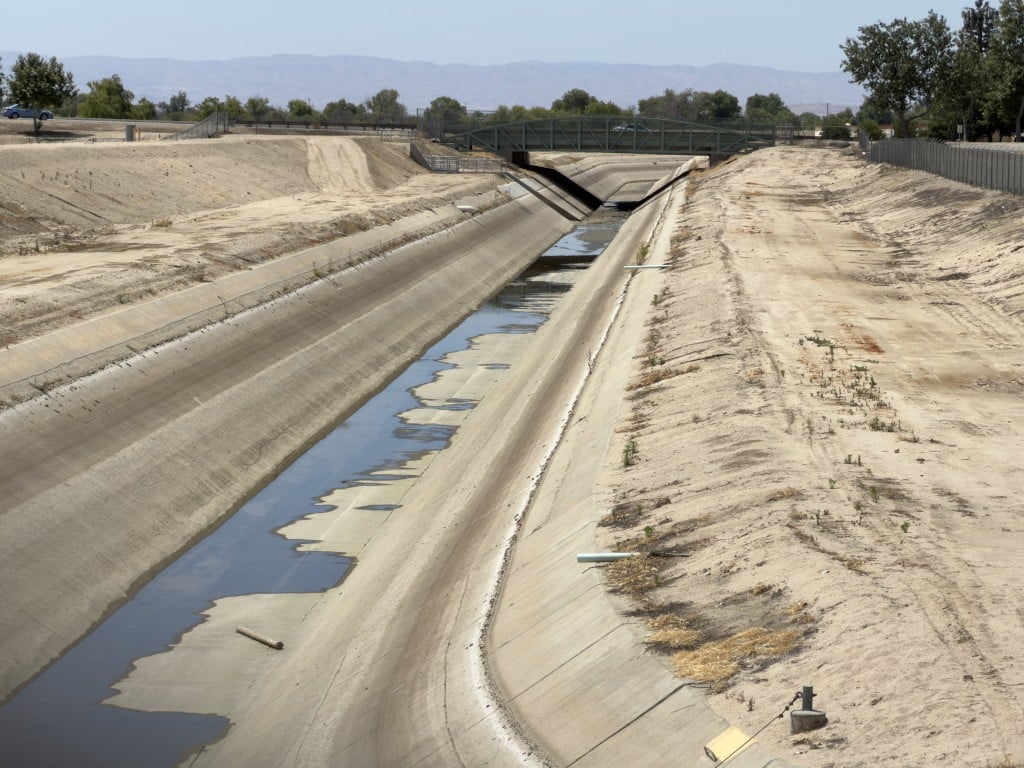
KCWA staff reported at the board’s March 26 meeting that golden mussels were rapidly spreading through the canal, which brings state water from the Sacramento-San Joaquin Delta to agricultural and municipal districts throughout the county.
The delta is ground zero of the mussel invasion.
Agency staff have had to dewater six sections of the Cross Valley Canal to dry and then scrape out the mussels.
There is also now an “extensive” infestation of equipment used by KCWA’s Improvement District No. 4 (ID-4) after just a short exposure to water from the delta, ID-4 Manager Wes Shryock reported at the April 23 meeting.
ID-4 supplies water to several east Bakersfield municipal agencies through the Henry C. Garnett Water Purification Plant.
Mussels have not been found in the treatment plant, according to KCWA.
“(Golden mussels) have been identified in the raw water pump station that takes raw water to the treatment plant,” the agency wrote in an email.
A task force assembled by KCWA earlier this year is working on a “draft preliminary mitigation plan” that the Division of Drinking Water must approve before action can be taken on the ID-4 water, KCWA wrote.
How the mussels are eradicated from drinking water could be extremely important, and different from how ag tackles the problem, said KCWA director Bill Wulff who quoted a research paper looking at methods used in China, where the golden mussels are believed to have originated.
“When the (mussels) decompose, bacteria can attack and produce pathogens into the water, including cholera,” Wulff said of what the paper found.
“It’s a prime example of unintended consequences.”
At the City of Bakersfield’s Water Board meeting April 15, staff reported they hadn’t found any mussels in the Kern River, though some delta water had been in the river.
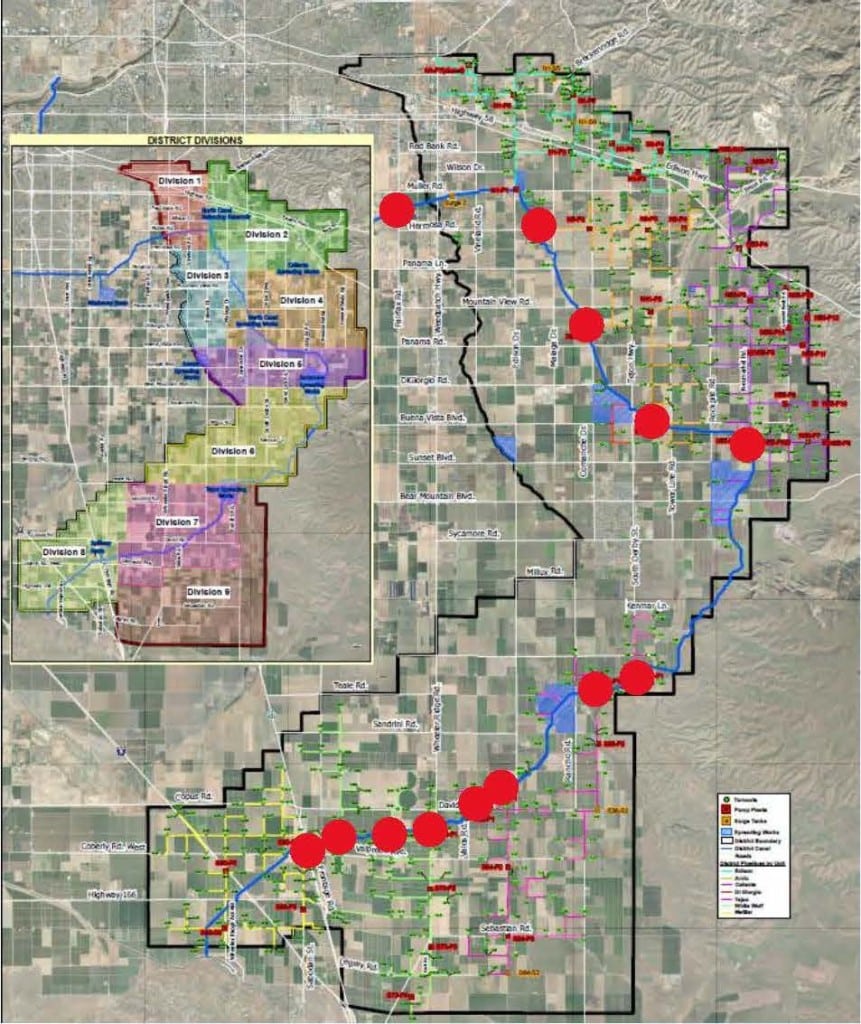
Daniel Maldonado, Assistant Water Resources Director for Bakersfield, said if mussels are found, the city would collaborate with agricultural districts on next steps.
“There is a lot of collaboration going on and a lot of ideas being tossed around,” Arvin-Edison’s Blue said. “But we weren’t going to wait around for task forces. We needed to move forward.”
Arvin-Edison has more than 45 miles of canals, several recharge basins and 170 miles of pipelines that deliver water to farmers. It’s a vast system and some parts are remote and difficult to access.
The district worked with SePRO to treat just about the entire system. The district poured 42,000 gallons of a copper-based chemical called Natrix CA, which is approved by the California Department of Fish and Wildlife, into its system every day for 30 days. They began seeing results quickly, according to a presentation Blue made to the Arvin-Edison board at its April 14 meeting.
But the effort wasn’t cheap and ended up costing the district $2.8 million. Depending on how the district proceeds, one massive treatment per year, or multiple treatments, and whether it’s a high- or low-water year, costs could range from $288,000 up to $10.68 million a year, according to the presentation.
“There is a risk in doing one massive treatment a year because these guys breed multiple times,” Blue said.
The risk appears, at this point, to have paid off, killing adults and veligers, juvenile golden mussels – all life cycles, Blue said.
To test the efficacy of the treatment, the district used two sets of caged mussels, one upstream of the treatment and one downstream. Where there was no treatment, all the mussels survived, in the treated water, he said, they found 100% mortality.
“We are confident in these copper products but they are expensive and it was labor intensive so we’re open to other solutions and there is a lot of research going on right now.”
In the meantime, he said the district is closely monitoring its system for any re-emergence of golden mussels.
Author