Tulare County water agencies to spend $80,000 on PR campaign aimed at state funding to help farmers
Everyone likes a “feel good” story and farmers in part of Tulare County are hoping their stories make legislators feel good enough to fork over more public funding to help them comply with the state’s groundwater laws.
The boards of the Lower Tule and Pixley groundwater sustainability agencies voted March 10 and 12, respectively, to spend another $30,000 – on top of $50,000 already spent – for a Sacramento public relations firm to continue a campaign launched in October showing how farmers have worked to reduce pumping in the critically overdrafted region.
The goal is to become a sort of happy “earworm” for legislators as they ponder how to spend Proposition 4 funding and to avoid cuts in the Governor’s budget revise coming up in May, according to Eric Limas, manager of both Lower Tule and Pixley GSAs and water districts.
“We want to really hammer this over the next couple of months while that’s happening,” Limas said at the Pixley GSA meeting.
Proposition 4 is a 2024 $10 billion bond measure aimed at protecting natural resources, with $6.3 billion dedicated to water supply, drought and flood projects.
Limas said he wants legislators to understand the stakes farmers are facing and “feel comfortable” with projects growers have already undertaken to reduce pumping and help vulnerable communities. The goal is to frame Tule subbasin farmers as part of the “solution.”
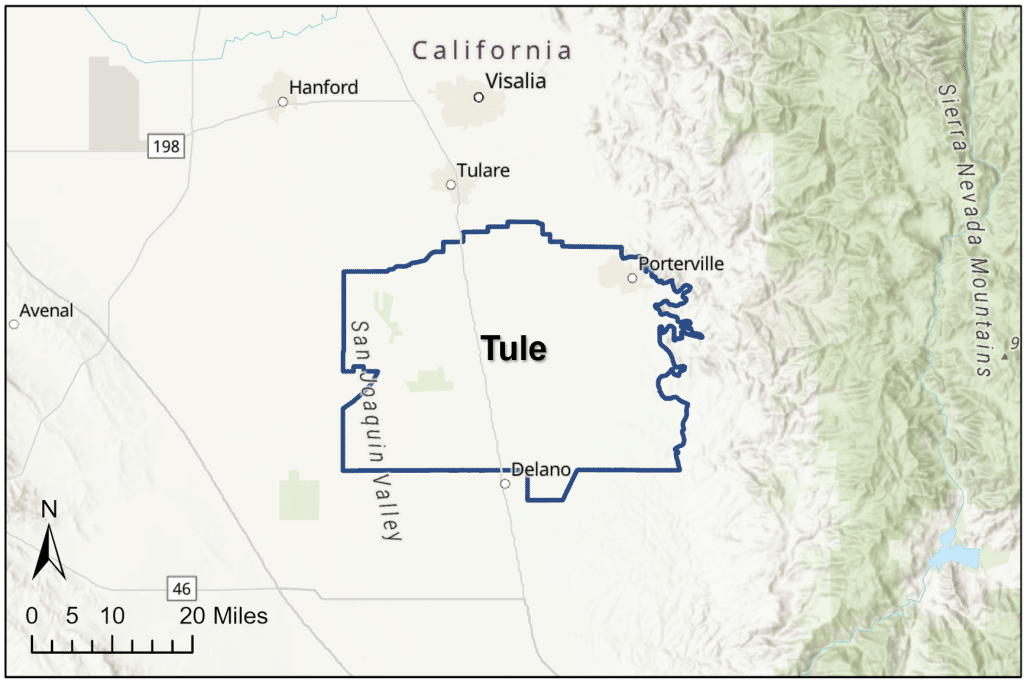
Looming in the background is also a state deadline of May 1 for area farmers to begin reporting groundwater extractions and paying fees to the Water Resources Control Board after the Tule subbasin was placed on probation in 2024 by the Water Board for lacking an adequate groundwater plan.
The primary issue continues to be rampant subsidence that has sunk portions of the Friant-Kern Canal and continues to plague the region.
Disagreements between Tule subbasin groundwater agencies over how to handle subsidence was one of the reasons Pixley and Lower Tule launched their PR offensive.
“The time to play in the sandbox with other GSAs in the subbasin is likely over,” Anja Raudabaugh, chief executive officer of Western United Dairies, told the agencies back in October.
She encouraged them to hire Calkin Public Affairs to tell their own story and give lawmakers “cover” to fund more land retirement programs, such as LandFlex.
“You have stepped up to handle the subsidence issue. It’s time to make your own knives and sharpen them,” she said. “Otherwise you’re going to be left behind.”
That first phase of the campaign resulted in a series of stories and short videos that are posted on Lower Tule’s website.
The pieces highlight the agencies’ efforts to help the community of Teviston with drinking water and includes videos of local farmers sharing how they are adjusting their operations to comply with the state’s mandate that they use less groundwater.
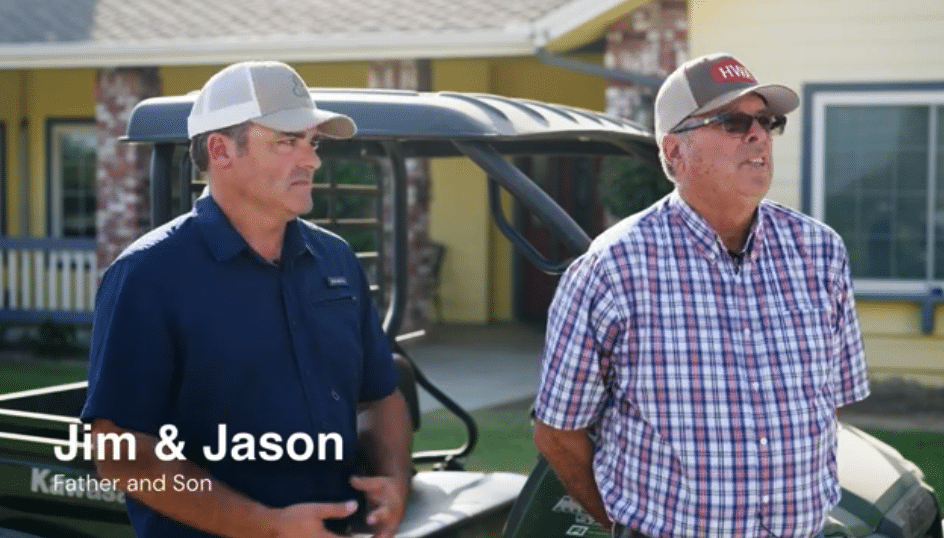
In one video, farmers Jim and Jason Morehead walk through nut orchards slated for a community solar project.
“Whatever it needs to be, we’re willing to listen because that’s what it’s going to take,” Jim Morehead says.
In Pixley GSA alone, approximately 20,000 out of 60,000 acres of land will need to come out of production to comply with SGMA, which requires aquifers to be balanced by 2040.
The Calkin campaign also identifies specific media outlets, such as the Los Angeles Times, SJV Water, the San Francisco Chronicle, CalMatters and other statewide publications where these stories and sources could be “planted” to promote a narrative that Tule subbasin farmers are part of the solution, not the problem.
“These are intentionally to be directed around folks in Sacramento, and policymakers, advisors that work for these folks to really direct the message to them and get it in front of them,” said Lower Tule and Pixley Resources Manager Travis Millwee.
With the second injection of funds, ads will appear on social media platforms such as Facebook and YouTube, where viewers can click a link and read more about the GSAs. Direct outreach to specific reporters, including the Chronicle’s Kurtis Alexander and the LA Times’ Ian James also will occur.
Both boards will receive a metrics report on how effective the campaign has been in May.