Volunteers needed to plant native grasses at Tule preserve
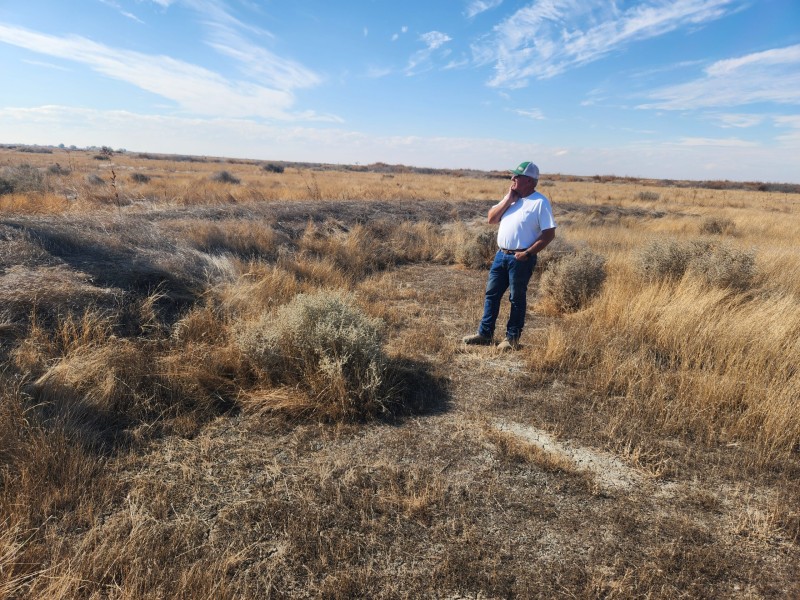
People who aren’t afraid to get their hands or boots dirty are needed Friday, Jan. 10 to plant native grasses across 20 acres of fallowed land in southern Tulare County.
The Tule Basin Land & Water Conservation Trust is organizing the Capinero Creek Restoration Volunteer Day from 10 a.m. to 2 p.m., when volunteers can transplant a variety of alkali scrub seedlings native to the area that should attract threatened or endangered species such as kangaroo rats, blunt nose leopard lizards and the San Joaquin kit fox.
The property is a former dairy next to the Pixley National Wildlife Refuge. It got its name from the adjacent seasonal creek, a tributary of the Tule River.
The trust needs about 20 to 30 people to help, said Executive Director Susan Long.
“I will provide a history of the project and describe the work that has been completed as well as what is planned for the future,” she said.
The project is a good example of land repurposing shepherded by the trust that will become more common throughout the San Joaquin Valley as the region adapts to groundwater restrictions under the Sustainable Groundwater Management Act (SGMA), which mandates aquifers be brought into balance by 2040.
The trust’s goal is to take less productive land and save its associated groundwater for both farming and the ecosystem.
The project site is located within the Pixley Groundwater Sustainability Agency (GSA), one of several GSAs the trust is working with in the Tule subbasin, which is critically overdrafted. The subbasin was placed on probation in September by the state Water Resources Control Board for lacking an adequate groundwater management plan.
Landowners will begin tracking their groundwater use Jan. 1 per probationary rules. They also must meter and register their wells at $300 each and pay $20 per acre foot pumped. While landowners and water managers navigate probation, the trust continues moving forward with its various projects and programs aimed at lessening the blow to the region.
This month’s planting project was years in the making.
The trust was formed in 2020 by area farmers and water managers, and received a $10 million grant from the Bureau of Reclamation to acquire five parcels of land that make up the Capinero Creek Project.
The grant also funds the restoration work; the trust just needs some manual labor from the public to get 20 acres of Phase I of the restoration completed.
The seedlings will be evaluated over the course of the next year and will aid in making management decisions for Phase II, Long explained. Trust managers will be looking at invasive species such as weeds, planting success or failure and habitat usage.
Since its founding, the trust has expanded to three staff members and has big plans for 2025, Long said.
“Exciting endeavors for 2025 include further developing our partnership with Tachi Yokuts to develop areas for tribal resources as well as working with local landowners to continue to identify and pursue solutions that will aid landowners as they adapt to SGMA regulations,” Longs said.
For more information on volunteering, click here: https://volunteersignup.org/KFHCP/7915556
- Republication or broadcast of SJV Water content is allowed with our reporter’s byline, SJV Water and the following tagline:SJV Water is an independent, nonprofit news site covering water in the San Joaquin Valley,www.sjvwater.org. Email us at sjvwater@sjvwater.org