Volunteers learn to foster trout eggs in anticipation of releasing fry into the Kings River
- Editor’s note: Monserrat Solis covers Kings County water issues for SJV Water through the California Local News Fellowship initiative.
A handful of volunteers gathered in a remote shed near the Pine Flat Dam recently to learn how to become trout “mamas,” so to speak.
Lori Werner, an environmental resource analyst for the Kings River Fisheries Management Program, met with four volunteers Jan. 24 to show them how to care for 140,000 rainbow trout eggs until they hatch into fry that will be released into the river.
Werner showed them how to record water temperature, clean, feed and monitor the trout eggs.
“It’s not rocket science,” Werner told the group. “It’s actually remarkable how much they change while we have them.
The trout eggs are kept in jars for up to two weeks before being placed into four narrow, metal channels, called raceways, inside the shed. For the next four weeks, the eggs hatch and move around in the raceways until released into the river. The fry can grow up to 1.5 inches long, Werner said.
Program staff and volunteers are tasked with removing dead fry and unhatched eggs – usually with a turkey baster – keeping the raceways clean. Normally, volunteers are needed on the weekends and holidays during the incubation period.

Another important step volunteers must follow is to note the water temperature of the raceways into a notebook during every visit. The ideal water temperature for fry is 45 to 55 degrees, Werner said.
“These guys are pretty sensitive,” Werner said. “We try not to introduce new things to the water.”
The trout fry, which are native to the Kings River, are also highly sensitive to UV light.
Up to 70% of the eggs are estimated to survive the incubating process and into the river, Werner said.
The program is a joint effort between the Kings River Conservation District, Kings River Water Association and California Department of Fish and Wildlife, (CDFW), which aims to improve and enhance the lower Kings River and its fish habitat.
The Conservation District and the Association contribute $50,000 annually towards the program, Werner said.
All three agencies commit staff time to assist the program in events such as the trout release, which is a popular annual event.
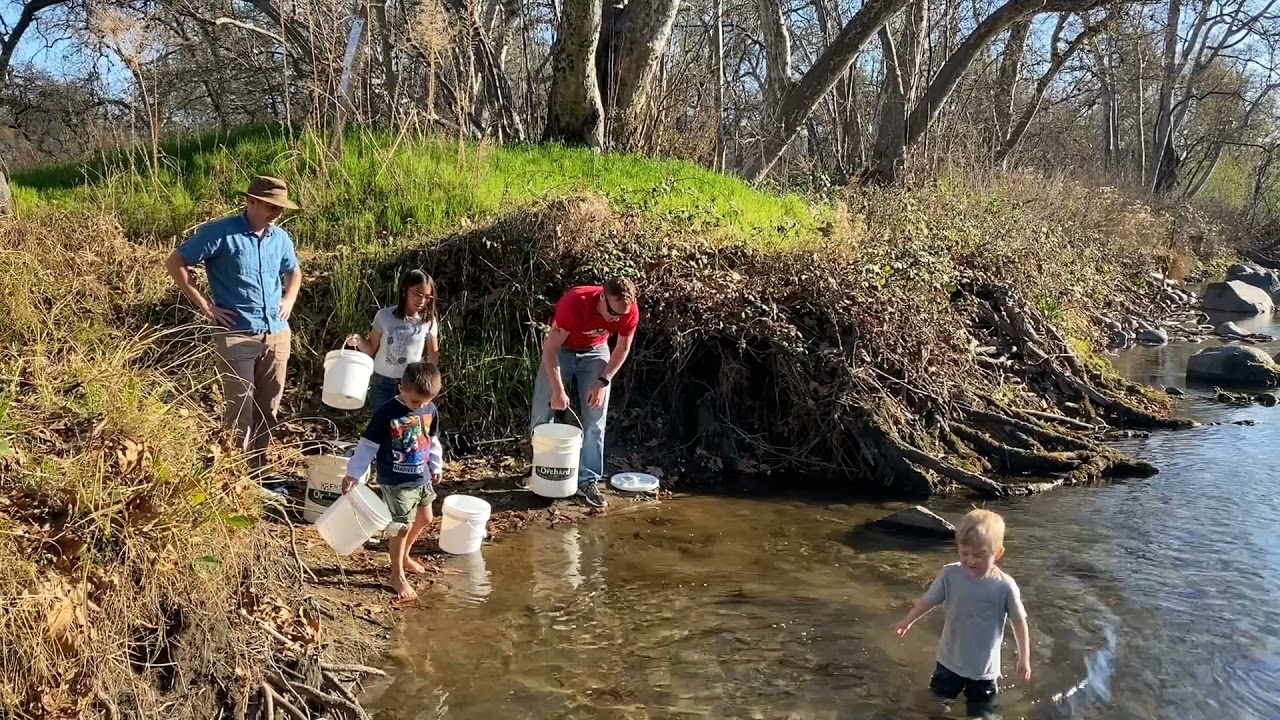
A grant from the Kings River Conservancy funds the trout release, Werner said. Each egg cost $28 per 1,000 eggs.
Other volunteer opportunities include a monthly river cleanup and a fish population survey held in the fall.
The program will hold a second incubating and release cycle in April. The exact date and sign up will be updated on the program’s website.
Volunteers are needed to help release the current batch of fry on Feb. 20 at 2 p.m. The release will be between the Army Crops of Engineers bridge below Pine Flat Dam and Avocado Lake.
Volunteers must be able to transport two to three five-gallon buckets in their cars and carry 20-pound buckets.
To learn more about volunteering, check the program’s website.
- Republication or broadcast of SJV Water content is allowed with our reporter’s byline, SJV Water and the following tagline:
SJV Water is an independent, nonprofit news site covering water in the San Joaquin Valley, www.sjvwater.org. Email us at sjvwater@sjvwater.org