Small pumpers excluded from state sanctions prompting backlash and allegations that some may try to game the system
Though the state put groundwater pumping in Kings and Tulare counties under greater scrutiny in 2024, it gave some pumpers a pass on Tuesday, April 7, from having to report extractions and pay fees to the state.
That prompted complaints of fairness from some groundwater sustainability agencies (GSAs) and concerns from others that some pumpers may be gaming the system.
Kings County supervisor asks for more time to work on groundwater plans saying managers were “betrayed” by state staff
By Monserrat Solis
- Editor’s note: Monserrat Solis covers Kings County water issues for SJV Water through the California Local News Fellowship initiative.
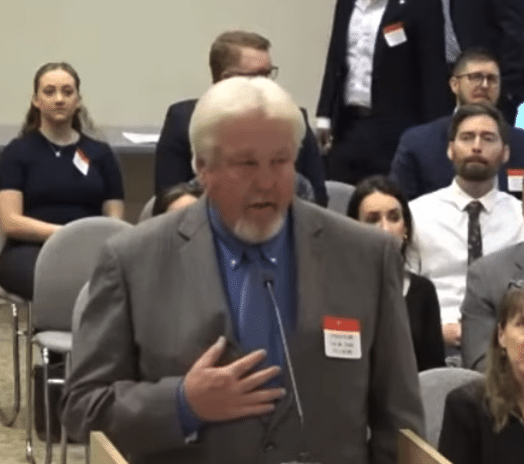
Kings County Supervisor Doug Verboon traveled to Sacramento on Tuesday, April 7, to plead for an additional year to work on groundwater plans in the region saying local managers were “betrayed” when the state refused to meet with them for a year while a legal issue played out.
He said local agencies, including the Mid-Kings River Groundwater Sustainability Agency (GSA), need that time to, among other actions, hold Proposition 218 elections to raise funding so they can implement plans to decrease pumping, increase recharge and fund domestic well protection programs.
“We feel we were kind of betrayed a little because we were promised that we’d have working staff for two years to work with us,” Verboon told the Water Resources Control Board.
Instead, Water Board staff ceased speaking to, or meeting with, groundwater managers in the Tulare Lake subbasin, which covers most of Kings County, for more than a year starting in 2024.
The silent treatment was prompted by a lawsuit filed against the Water Board by the Kings County Farm Bureau after the Water Board placed the region on probation in April 2024.
Under probation, farmers must meter and register wells at $300 each, report extractions to the state and pay the state $20 per acre foot pumped. The Farm Bureau, which obtained a preliminary injunction holding off those sanctions, alleged the Water Board exceeded its authority under the Sustainable Groundwater Management Act (SGMA).
The injunction was overturned in late 2025 but Water Board staff quickly set a deadline of May 1, 2026 for Kings County farmers to begin reporting extractions and paying the pumping fees.
But Water Board staff didn’t begin meeting with local water managers until earlier this year.
Kings water managers have previously said the lengthy ghosting by Water Board staff was especially unfair since the GSAs weren’t party to the lawsuit and the lack of communication came at a critical time as they were working to revamp their groundwater plans.
In that time, most Kings County GSAs have implemented their own pumping allocation, well registration and reporting policies.
“Give us a year and we’ll prove to you that we’re doing the right thing,” Verboon said on Tuesday at the Water Board meeting.
But, he warned, it will be difficult to maintain momentum if GSAs are competing with the state for landowner fees.
“We’re not going to be able to get a 218 passed to fund (projects) ourselves if the state is taking $20 an acre foot out of our county,” he said.
Water Board members did not directly respond to Verboon’s request because that issue was not on the agenda for the April 7 meeting. For the Water Board to make a decision, the request would need to be added to a future agenda.
“It is unclear if the verbal comments at yesterday’s board meeting were a request for an exclusion (from probation reporting and fee requirements) or a request for an additional delay of the (May 1) reporting deadline,” Water Board spokesman Edward Ortiz wrote in the email about Verboon’s comments.
- Republication or broadcast of SJV Water content is allowed with our reporter’s byline, SJV Water and the following tagline:
SJV Water is an independent, nonprofit news site covering water in the San Joaquin Valley, www.sjvwater.org. Email us at sjvwater@sjvwater.org
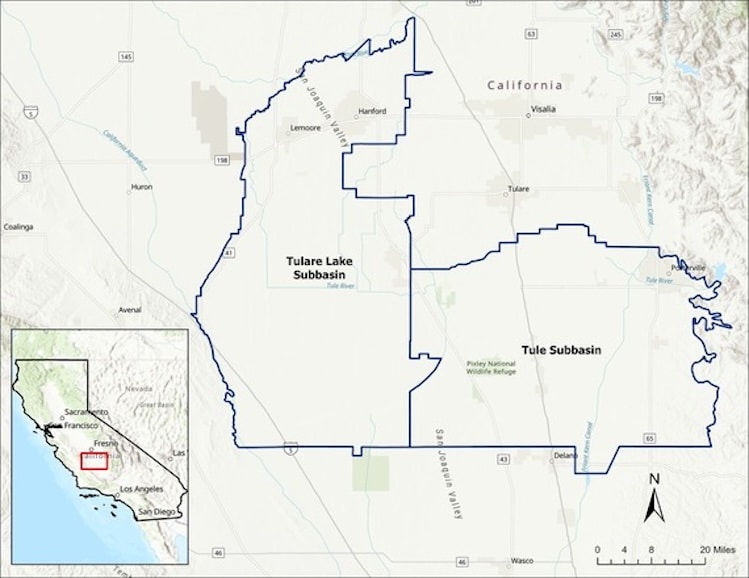
The Water Resources Control Board voted to exclude “small pumpers,” defined as 20 acre feet or less per year, from reporting and $20-per-acre-foot fee mandates required under probation in the Tule and Tulare Lake subbasins, which include most of Kings County and the southern half of Tulare County’s flatlands.
The one caveat is that small pumpers within two miles of the Friant-Kern Canal – badly damaged by subsidence – must still report extractions and pay the fees.
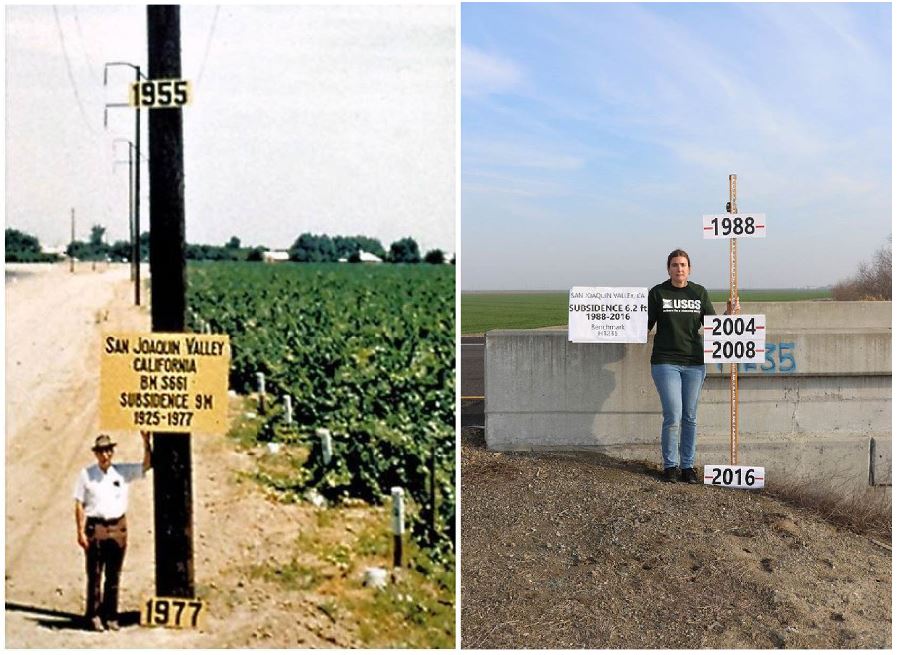
Both regions were placed on probation in 2024 for lacking groundwater plans that would slow subsidence and protect domestic wells, among other deficiencies.
Water Board staff determined that while small pumpers make up between 44% and 49% of all pumpers in each subbasin, they only account for a little more than 1% of total extractions.
So, there may be a lot of them, but they have a minimal impact on aquifers, according to the staff proposal.
Water Board staff also noted many small pumpers lack reliable broadband access and resources, face language barriers and would be disproportionately affected by probationary fees and reporting.
“I think we’re all concerned about the impact on small farms in particular,” said Board member Dorene D’Adamo. “And when we were out in the region, we heard about their frustrations. We also have to consider the impact that this would have on our resources if we needed to enforce for those who don’t comply. Based on all those factors, I’m convinced this is the right thing to do.”
Before the vote, Kings County Supervisor and Mid-Kings River GSA board member Doug Verboon said two Tulare Lake subbasin GSAs have very few residents, or “ranchettes” that would qualify as small pumpers. Exempting pumpers in those areas from reporting requirements could allow them to hide groundwater movements out of the county, Verboon alleged.
“There’s nothing. There’s no one. There’s nothing out here,” Verboon said of lands in the Tri-County Water Authority and Southwest Kings GSA. “I’m suspicious of those two GSAs.”
His comments seemed to resonate with one board member.
“I would not want our resolution, or our exclusion, to be viewed as in support of activities that are currently ongoing, where it may seem that there is being found a loophole,” Board member Nichole Morgan said.
Nonetheless, the board unanimously approved the small pumper exclusion.
Tri-County’s Executive Director Deanna Jackson later wrote in an email to SJV Water that she was disappointed in Verboon’s comments, which she called erroneous, noting that the GSA’s meetings are open to the public and available on Zoom
Southwest Kings GSA board member Craig Andrew did not respond to requests for comment.
In the Tule subbasin, some GSAs were upset that some, specific small pumpers near the Friant-Kern Canal would not be subject to the Water Board’s caveat requiring them to report extractions because those pumpers are in the Delano-Earlimart Irrigation District GSA, which, along with Kern-Tulare Water District GSA, was excluded entirely from the mandates back in 2024.
That pumping data is needed so the subbasin can produce a coordinated groundwater plan, according to a comment letter from the Terra Bella, Saucelito and Porterville irrigation district GSAs.
Most of the Tule GSAs, with the exception of Delano-Earlimart and Kern-Tulare, agreed in March to submit a single, revamped groundwater plan to the state.
“We could really use that information in terms of monitoring for projects and management actions to protect the canal under that single plan,” Ashley Walker, an attorney with Nossaman LLP, told the board.
Board member Laurel Firestone agreed.
“When we chose to do exclusions for certain GSAs, there was a clear commitment from those GSAs to provide data,” she said. “And so I want to make sure we are requesting data we need from all GSAs, whether they’re exempted or not.”
Eric R. Quinley, manager of Delano-Earlimart was frustrated by his fellow GSA managers’ comments.
“It is a sad commentary on the Tule Subbasin that after all this time accomplishing so little, some GSAs continue to spend their efforts questioning the professional judgement of (Water Board) staff and the water management of GSAs with demonstrated sustainability rather than taking practical steps to implement SGMA,” said Quinley wrote in an email about the Water Board meeting.
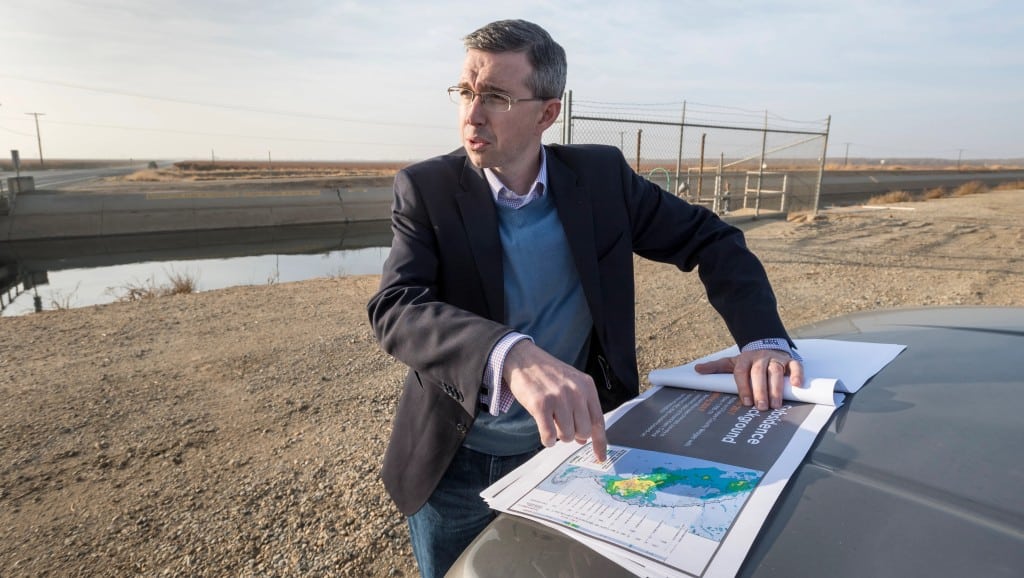
Other Tule subbasin GSAs requested reporting and fee exclusions but Water Board staff have recommended the board deny them all, largely because they haven’t shown a likelihood their plans would slow rampant subsidence in the area that has already severely damaged the Friant-Kern Canal, according to the staff report.
The Water Board will take up that recommendation at its April 21 meeting.
Staff has not made a recommendation on exclusion requests from GSAs in the Tulare Lake subbasin, which also suffers severe subsidence from over pumping.