Slew of lawsuits between Friant Water Authority and its own members settled in one fell swoop
Friant Water Authority announced conclusions to an array of lawsuits that had been a burr for the agency and its members after a lengthy closed session Thursday, March 26.
That includes a 2024 lawsuit by Friant and Arvin-Edison Water Storage District against the now mostly defunct Eastern Tule Groundwater Sustainability Agency (GSA) over how much the GSA had agreed to pay for repairs to the sinking Friant-Kern Canal.
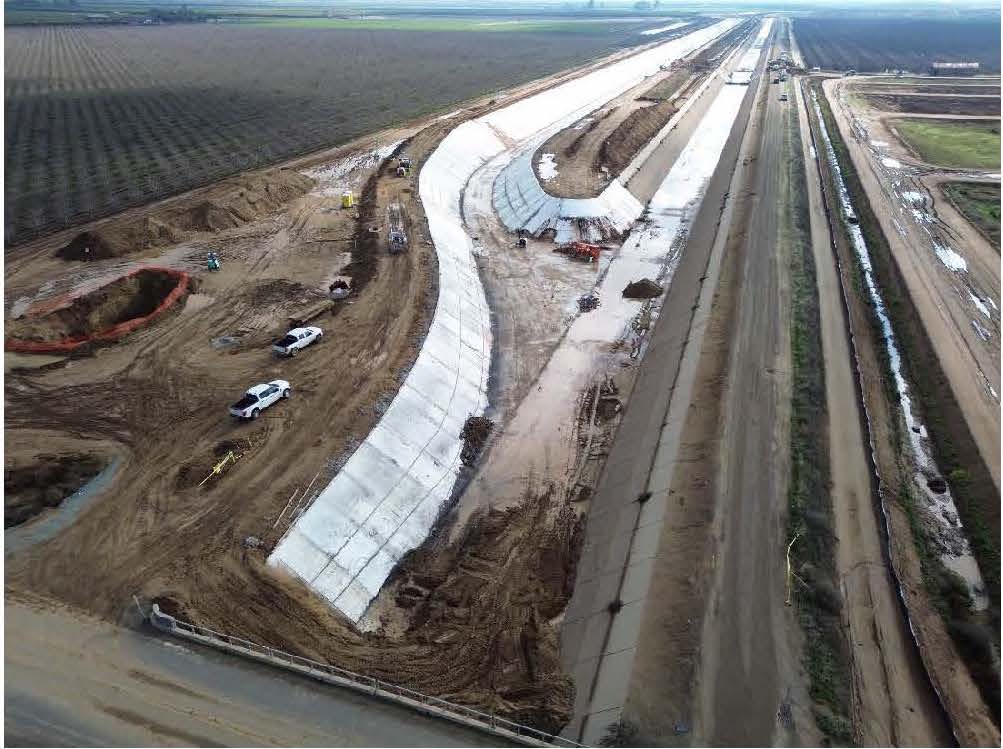
The canal had sunk over 33 miles from about Pixley to the Kern County line due to excessive groundwater pumping that caused the ground to collapse. Repairs on just one 10-mile section have cost $326 million so far.
It was that 2024 lawsuit that unleashed a waterfall of other lawsuits within the Friant “family,” leading to accusations of Brown Act violations, extortion and even delayed infrastructure upgrades.
That’s all settled now, according to a statement by Friant.
“Friant Water Authority and the participating Friant contractors (Porterville, Saucelito and Terra Bella irrigation districts) have agreed to resolve their pending litigation and to work collaboratively toward a new cost recovery methodology for the (Friant-Kern Canal),” the statement reads.
Saucelito board president Steve Kisling said he is grateful to be working in a positive direction and credited Friant’s new Chief Executive Officer Johnny Amaral with bringing a collaborative approach to disagreements.
“We put a policy we could not agree with aside and we are going to work very hard over the next year to replace it with something that is agreeable to everyone and not so divisive,” he said after the meeting Thursday.
He did not want to say how much each district could still need to pay toward the Friant-Kern Canal repairs, but added that “the fact that the Eastern Tule lawsuit has been settled is helpful.”
Friant attorney Julie Gantenbein laid out the settlement deals.
- The Eastern Tule GSA settlement will terminate the previous 2021 agreement with Friant and lays out new pumping penalties to help pay for damage to the canal caused by subsidence. In exchange, Eastern Tule will not issue any groundwater credits or allocations to farmers for Water Year 2026. It also will pay all penalties that are due to Friant. All litigation is dismissed, but the court has the right to enforce the agreement, which will be released after all parties have signed off.
- Four other cases filed by the Porterville, Saucelito and Terra Bella irrigation districts against Friant after the authority tried to force them to make up a $90 million shortfall in repair costs to the Friant-Kern Canal are “dismissed with prejudice.” Those districts had made up the majority of the Eastern Tule GSA and had a hand in GSA policies that Friant said created the shortfall. In exchange, Friant will negotiate a new cost recovery method with those districts. An ad hoc committee with three board members will be formed and lead that effort by the April 30 board meeting.
Pump stations
The Friant board resolved another intertwined issue by moving forward with the bid process for five pump stations along the newest portion of the canal, four for Saucelito and one for Tea Pot Dome Water District. The stations had been stalled because of a lack of non-federal funding and the various lawsuits.
At its May 22, 2025 meeting, the Friant board approved seeking bids to help the districts fulfill water deliveries to landowners, but with strings attached. Those included resolution of all outstanding disputes related to the canal repair cost recovery methodology, sufficient cash-on-hand and certainty on funding sources.
The announcement on March 17 that Friant would receive $200 million from President Donald Trump’s “Big Beautiful Bill” put the project into overdrive.
“We have had a flurry of activity after that announcement,” Friant chief financial officer Wilson Orvis told the board. “We are being asked to move quickly and we want to move quickly.” He said a bid solicitation will go out March 30 and he is hopeful a groundbreaking can take place as early as June for the two-year construction project.
The pump stations are a critical piece of infrastructure to avoid groundwater pumping near the canal, said Matt Leider, a Friant director and board president of Tea Pot Dome.
Tea Pot Dome has a well near the canal, which it uses to supplement water for its farmers. The pump station will allow it to take surface water instead.
“We want to be a good actor along the canal and do not want to run that well.”
Saucelito, Tea Pot Dome and other districts still get water from the canal, but the pump stations are key to delivering full contracted amounts plus extra water during high flow years that districts need to replenish overpumped aquifers.
That hasn’t been possible in recent years as excessive groundwater pumping caused the ground to collapse beneath the canal, creating a 33-mile long slump in the structure that cut its carrying capacity by more than 60%.
Meanwhile, Friant is gearing up to start construction on the second phase of repairs to the canal. The board approved a motion to identify which components of Phase 2 will most effectively address subsidence and can be funded with the remaining One Big Beautiful Bill funds.
In other Friant news:
• The board approved the employment agreement for Amaral. He will earn a base salary of $400,000 through December 2026, with annual increases based on satisfactory performance of mutually agreed upon goals. In addition, Amaral also will receive 20 vacation and 13 sick days per year. He will receive a new small to mid-size sport utility vehicle for business and personal use, and 100% coverage of health insurance premiums for himself and any dependents.
• Friant’s new monthly board meeting location is the Hilton Garden Inn, 8715 W. Hillsdale Ave. in Visalia
• Friant has contracted with consulting firm Dudek for $408,000 to implement its golden mussels control plan. Golden mussels are an invasive species that have spread throughout the state’s water systems.
Senior water resources engineer Katie Duncan said Friant working with California State Parks and boat inspections will begin at Millerton Lake, the main source of Friant-Kern and Madera canal water.
Initial tests show that water chemistry in Millerton and other eastside reservoirs is low-risk to golden mussel infestations. Four mobile decontamination stations could be deployed for boaters. Friant representatives also will attend Kern County’s golden mussel task force meeting next week.