San Joaquin Valley farmers will have water certainty – if they can make it through the next few years, panelists say
Water supply certainty is in the future for San Joaquin Valley growers, according to three water experts who spoke at California Citrus Mutual’s Citrus Showcase Wednesday in Visalia.
But it’s at least five to eight years out, acknowledged Paul Gosselin, Deputy Director for Sustainable Water Management at the Department of Water Resources.
About 70 people attended the annual event, held in the heart of California’s citrus belt where farmers are already having to let some orchards die as they can no longer pump enough groundwater to keep them alive under restrictions brought on by the Sustainable Groundwater Management Act (SGMA).
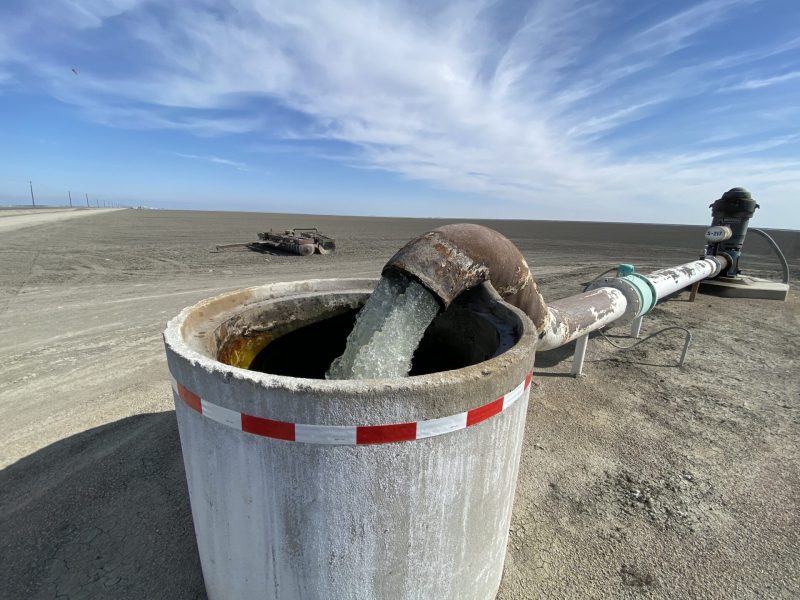
SGMA mandates that local groundwater sustainability agencies (GSAs) bring overdrafted aquifers into balance by 2040. To do that, many GSAs have had to severely restrict pumping allotments for farmers.
Estimates are that up to 600,000 acres in Kings, Tulare and Kern counties will have to be fallowed in order to achieve SGMA’s goals.
“We are going to have some challenges to enhance basin conditions and minimize the disruption,” Gosselin said. “But I think once we get into implementation, there will be a lot more certainty in understanding what the water supply picture looks like year to year, even in droughts. There is going to be alignment with what surface water is available, through allocations, and then what groundwater conditions are, and that will hopefully bring one variable into a clearer picture.”
Gosselin was joined by Friant Water Authority chief executive officer Johnny Amaral and Austin Ewell, executive director of Water Blueprint for the San Joaquin Valley.
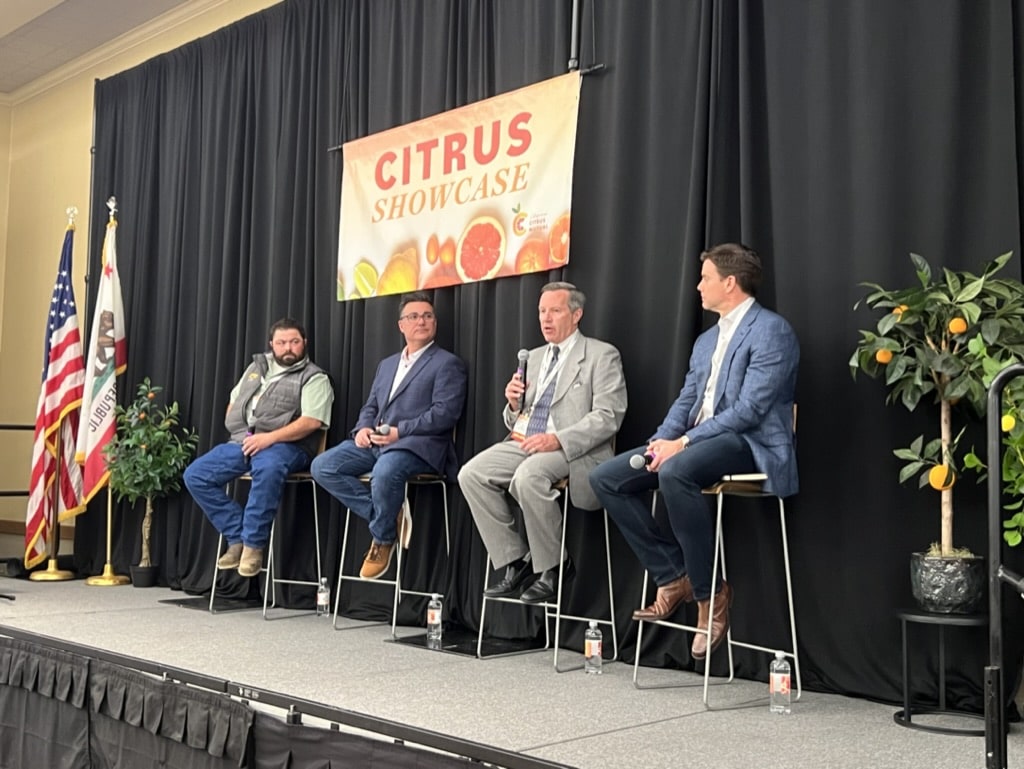
Wednesday’s hour-long discussion hit multiple points from subsidence impacts to new statewide partnerships.
Moderator Matt Leider, a Citrus Mutual board member and Friant director, said “the rubber is starting to meet the road” with SGMA implementation. He referred to actions now being taken to reduce pumping and increase water storage as the planning stage of SGMA is finished for most regions.
One of the thorniest issues under SGMA has been what to do about the so-called “white lands.” Those are areas outside of water district boundaries (so they are white on color-coded maps) that don’t get any imported surface water so rely exclusively on groundwater.
Leider wanted to know from the panelists what options white land farmers have going forward.
The best hope, panelists agreed, is regional and statewide partnerships that can import and recharge more groundwater. That, though, must be paired with regulatory overhaul as current regulations limit how water is allowed to move in California.
Ewell encouraged more north-south collaborations. SJV Water recently wrote about one such partnership called the Great Valley Farm Water Partnership.
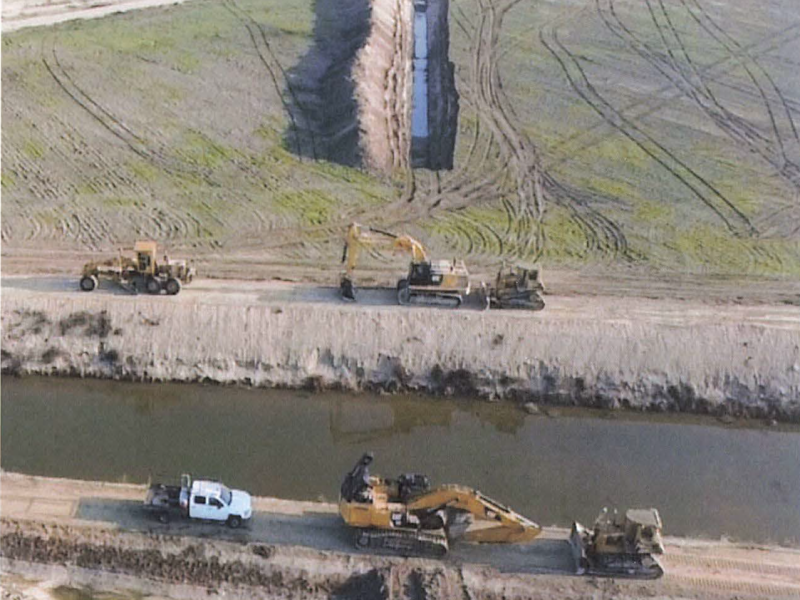
The white lands issue is especially acute in the Tule subbasin, which covers the southern half of Tulare County’s flatlands. Farmers there have pumped so much groundwater the ground beneath the Friant-Kern Canal has sunk for a 33-mile stretch. Friant Water Authority has had to spend $330 million on repairs – so far.
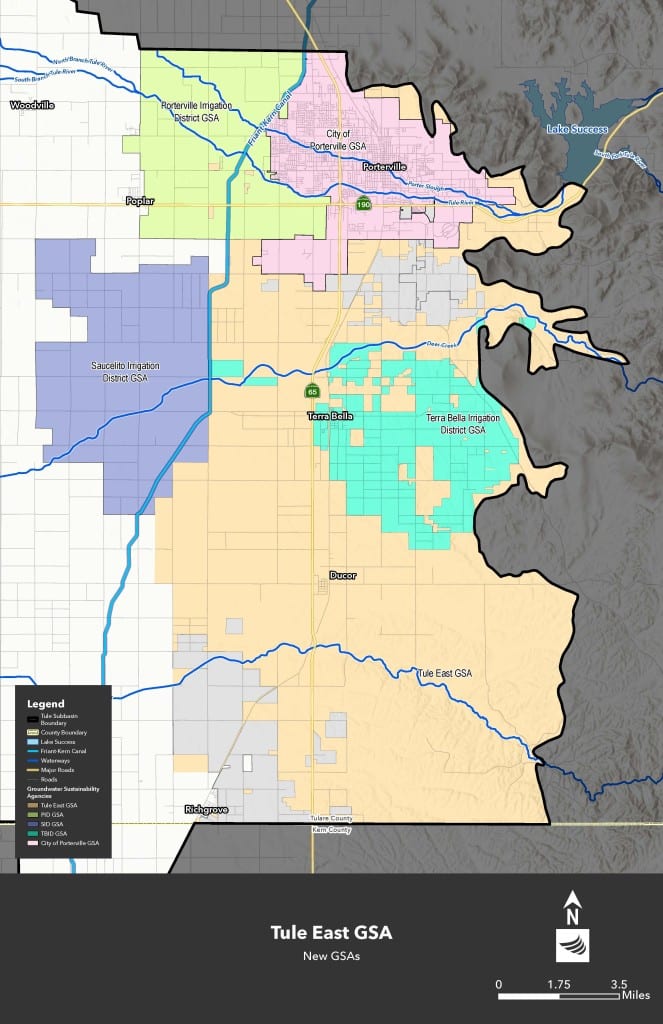
“They’re in a tough spot and we have to act quickly,” Amaral said of white land farmers in the Tule subbasin. “They don’t have the ability to physically take water off the canal. They don’t have the permits, they don’t have the approvals and they don’t have a contract for water.
“We would like them to have deals to put surface water on because the alternative to that is pretty quick and steady land retirement, and the economic impact that comes with that is pretty significant. It’s not a small footprint of land that’s irrigated with only groundwater.”
Amaral said Friant is working with both Ducor and Hope water districts in the Tule subbasin to secure surface water supplies and both districts are studying the feasibility of building infrastructure to move water to their landowners.
That segued into a discussion of Senate Bill 72, which updated the California Water Plan with a goal of identifying and salvaging nine million acre feet of water to increase water security, Gosselin said.
“If we do nothing, we will lose nine million acre-feet due to evaporation,” he said.
But that water has to come from somewhere, and land fallowing is part of the equation.
“Unfortunately, farmers and landowners are making really tough decisions,” Amaral said. “Either to walk, move, sell, take trees out, or take other crops out. But the sooner we can get to the point where we can more comfortably rely on how water moves in California, the sooner we can stop that trend.”
DWR’s Gosselin acknowledged that water regulations do need to be updated, including more flexibility for farmers and water districts to capture flood water on the fly.
The state’s slow and antiquated process for issuing permits to grab that water came into sharp relief during the 2023 floods.
“I have spent a lot of time banging my head against the wall to figure out how to advance some of the opportunities we have for recharge because we are not where we need to be, even though we’ve made a lot of progress,” he said.
He encouraged growers to take the time to engage with local and state agencies on these issues.
“We need you in the room,” Gosselin said.
Grower and agricultural realtor Boomer Murray said the panel discussion was insightful, but that farmers need faster relief from what he called stifling water regulations.
“It’s a slow process for growers to recognize because of our dependence on water,” he said. “On top of other challenges like the cost of inputs and labor, water is one of the many regulatory walls we face as farmers at the local level.”