Return of more than 17,000 acres to Tule River Indian Tribe begins “healing”
Government shutdown slows long running quest by Tule River Indian Tribe for rights to its namesake river
The Tule River River Indian Tribe’s 54-year-long quest to secure rights to the South Fork of the Tule River, which runs through its reservation, has stalled thanks to the current government shutdown.
A bill to secure those rights and ratify a 2007 agreement was introduced by California Senators Alex Padilla and Adam Schiff earlier this year. It had advanced from the Committee on Indian Affairs in March 2025 and was placed on the Senate’s legislative calendar in May.
But that’s as far as it got. With Congress out of session during the shutdown, it’s unknown when the bill will be picked up again.
If passed, the bill would secure an annual supply of 5,828 acre feet of surface water from the South Fork of the Tule River for the reservation’s domestic water system, which serves more than 400 homes and all of its administration buildings.
Water security on the reservation has been sketchy for decades and was discussed during an Oct. 29 land dedication ceremony.
Former Tribal chairman Neil Peyron said that in1922, the federal government gave away the tribe’s riparian rights to the South Fork of the Tule River. The tribe does use water from the river when it’s flowing. But without rights to store the water, it can’t maintain enough for residential needs when it starts drying up.
“Somewhere on the reservation during the months of May, June, July, August and September, we run out of water,” Peyron said.
Residents must travel to stations where water is trucked in so they can bathe and get bottled water to cook.
Critical services, including the reservation’s elementary school, justice center and government offices, are forced to close during water shortages.
“Chairman (Lester “Shine”) Nieto is still fighting that fight for the water settlement, and we will have a bill coming out as soon as the government opens back up,” Peyron said.
The bill also authorizes the transfer of more than 10,000 acres of federal land in Sequoia National Forest into a trust so the tribe would be able to manage the headwaters of the Tule River.
That would allow the tribe to build a reservoir to store water, bringing a permanent solution to those who live on the reservation.
The Tule River Indian Tribe began efforts to secure its federally reserved water rights in 1971. The tribe studied possible storage options and entered into an agreement with the Tule River Association and the South Tule Independent Ditch Company. This was known as the 2007 Settlement Agreement.
The proposed legislation would ratify that agreement and is supported by both surface water entities.
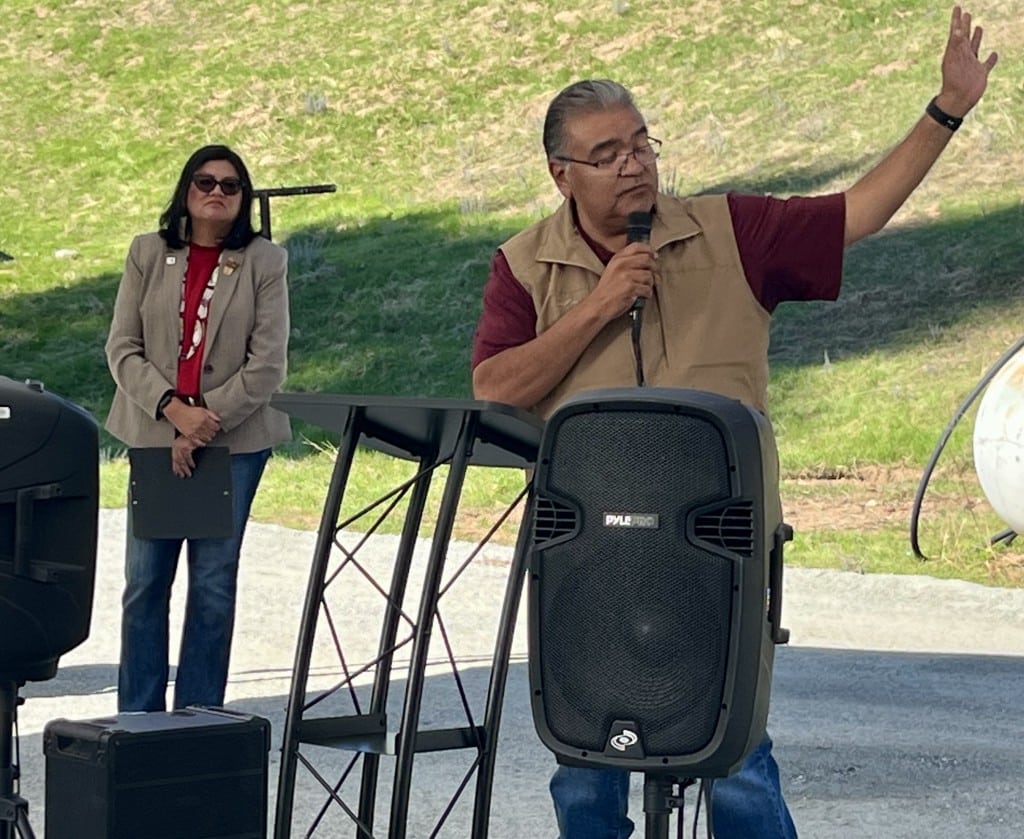
At a ceremony Oct. 29 marking the return of 17,030 acres of Tule River Indian Tribe lands, tribal members talked about the larger benefit of reclaiming their ancestral ground, including flood protection.
Tribal plans include restoring the headwaters of Deer Creek high in the Sierra Nevada, which could provide greater protection for the southern Tulare County communities of Terra Bella, Earlimart, Allensworth and Alpaugh on the San Joaquin Valley floor.
“This project goes beyond the tribe,” said tribal council member Charmaine McDarment. “All these communities will gain safer water supplies, reduced flood risks and restored ecosystems. This is environmental justice in action, healing lands and communities, including ours.”
The event, held under a canopy of sycamores and blue oaks, marked the largest ancestral land return to date in the San Joaquin Valley foothills.
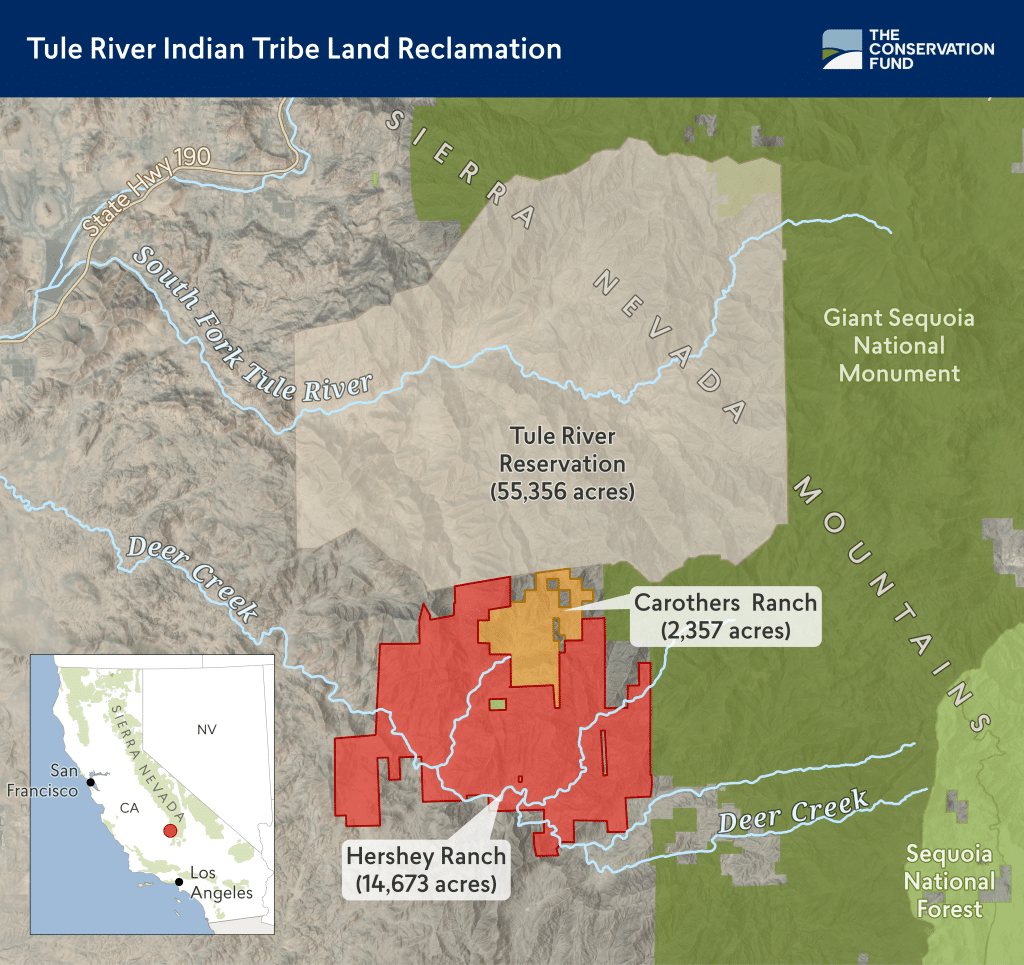
The land is a combination of the 14,673 acre Hershey Ranch and the 2,357 acre Carothers Ranch. Its addition will grow the Tule River Indian Tribe’s reservation to more than 72,000 acres.
“Return of our ancient lands is so much more than a land purchase,” said McDarment. “It is a restoration of our sovereignty, culture and stewardship. We are fulfilling the prayers of our ancestors and building a future for generations to come.”
Uniting the former ranches, now known as the Yowlumni Hills, creates a corridor between the Tule River Indian tribe’s reservation and the Giant Sequoia National Monument, and includes the middle fork of Deer Creek, one of the last undammed waterways in the southern Sierra Nevada.
During the 2023 floods, Deer Creek busted its banks in several areas on the valley floor, including where it intersects with the Friant-Kern Canal. A section of the canal that was under construction was overrun with water and mud. The creek was also breached further west, threatening Allensworth and Alpaugh.
McDarment said the Deer Creek restoration will include man-made structures inspired by beaver dams, which will naturally help slow the water as it heads toward the valley.
Restoration along Deer Creek will improve groundwater recharge, protect sensitive cultural areas and creek crossings, McDarment said.
It will also support the return of wildlife, including beavers, the Yowlumni wolf pack, Tule elk and California condors. Last week, a herd of mostly female Tule elk were released on the reservation, and in 2024, beavers were reintroduced into the South Fork of the Tule River, which runs through the reservation.
Yowlumni Hills was once a fall refuge for the Yokuts people who followed the area’s seasonal resources from the valley to the foothills.
“Tribes have been stewards of land since time immemorial,” said Geneva E.B. Thompson, deputy secretary for tribal affairs at the Natural Resources Agency. “Returning land is the best way to heal historical wounds. All of California will benefit if we get back to traditional stewardship.”
Identifying and purchasing the two ranches was accomplished in 2024 through a mix of partnerships between the tribe, the California Natural Resources Agency, the Wildlife Conservation Board, The Conservation Fund and the California Department of Fish and Wildlife. It was funded through the Tribal Nature-Based Solutions grant program, which builds on Gov. Gavin Newsom’s “30X30” initiative for state entities to work with tribes to return ancestral lands, helping to conserve 30 percent of the state’s lands and coastal waters by 2030.
The former cattle ranches are a stunning swath of woodlands and riparian habitat of rolling hills and savannah. They are the former homelands of both the Yokuts and the Tübatulabal, who still live in the Kern River Valley area and reclaimed 1,240 acres of their ancestral lands in 2023.
The Tule River Indian Tribe land restoration is the third largest in California, according to a tribal representative. In 2023, the Hoopa Valley Tribe reclaimed 10,393 acres and earlier this summer, the Yurok Tribe regained more than 47,000 acres. Both tribes are in far northern California.