MEETING NOTES: Golden mussels found in more Kern systems, topping ag district’s worries
Meetings:
Wheeler Ridge-Maricopa Water Storage District Board of Directors
Arvin-Edison Water Storage District
Agenda packets:
Jan. 14, Wheeler Ridge-Maricopa: CLICK HERE
Jan. 13, Arvin Edison: CLICK HERE
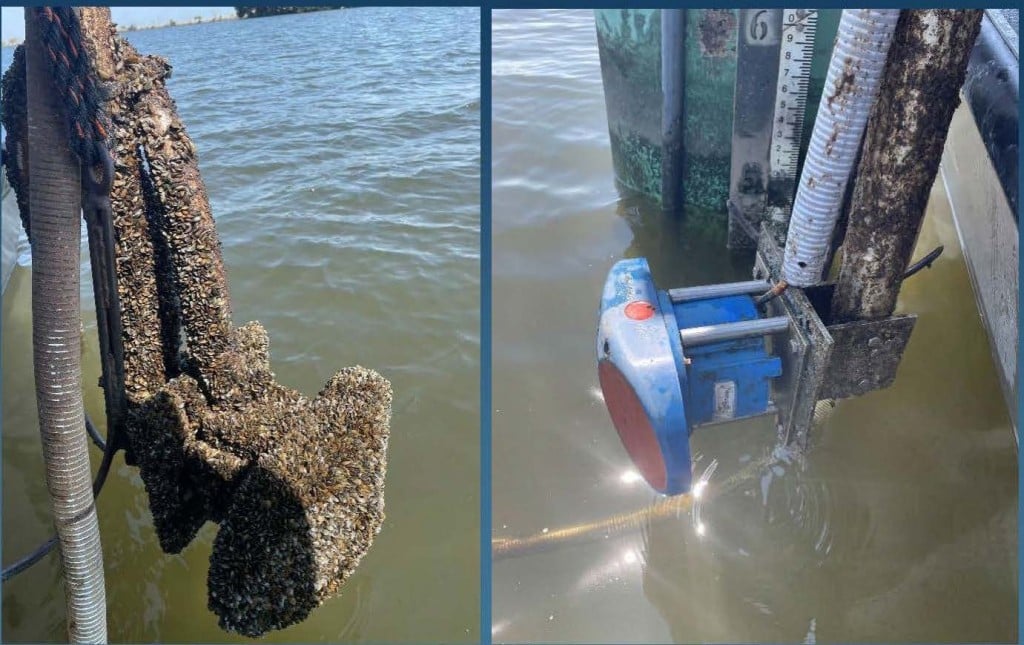
Invasive golden mussels have now been found in the Wheeler Ridge-Maricopa Water Storage District system, Engineer Manager Sheridan Nicholas reported at the board’s Jan. 14 meeting.
This was the first detection for the district.
The high number of mussels found just since the start of 2026 was a cause of great concern for board members who asked if the mollusks were coming from ballast water dumped into the Sacramento-San Joaquin Delta from ships delivering cargo from overseas.
Yes, Nicholas said.
Ballast water is use to stabilize ships before they take on cargo, so they pick it up in one port and dump it in another.
Nicholas told the board that he had informed the Kern County Water Agency about the mussel discoveries and urged that board to create a region-wide task force as many districts are finding the equipment- and pipe-clogging critters but fighting it individually.
At the Kern County Water Agency’s Jan. 22 meeting, staff confirmed they are creating a task force to include local water districts as well as others that receive water through the Central Valley Project that extends to Millerton Lake.
Wheeler Ridge Board Member Johnathan Reiter asked if the task force could look into who is going to pay for the clean-up.
“If it is ballast water, which is regulated, then somebody wasn’t properly enforcing the regulations. Maybe there is insurance money or something? Something that says that we are not going to be on the hook for paying for this,” Reiter said.
During the Jan. 13 Arvin-Edison meeting, Resource Manager Samuel Blue reported he is still gathering information on how to get rid of the mussels and is working with several state agencies.
Though he said representatives of the Department of Water Resources have told him in emails their focus is simply to clean clogged equipment, not eradicate the mussels.
Jeevan Muhar, Arvin-Edison’s general manager, along with other water district managers, has said previously that the mussels are far more dangerous to local water delivery systems, which operate smaller pipes and canals that can more easily and quickly be damaged by the mussels than massive state facilities, such as the California Aqueduct.
Arvin-Edison Board President Edwin Camp urged staff to use all available resources to find and engage an expert on the mussels.
Blue said the best solution he’s found, so far, is putting copper sulfate into the water. He is looking at two treatment proposals for this and expects to test them out in mid-February or March.
Director Catherine Fanucchi asked if using copper products would possibly affect aluminium pipes or crops.
Blue said it shouldn’t pose a threat, but he’s continuing to do research. Muhar added that copper treatments are all labeled safe for crops.
Fanucchi said it was still important that they look at potential effects of copper against aluminum over time.
Directors also asked about treatment frequencies.
More frequent treatments would be needed at first, tapering off to a few times a year, Blue said. But he emphasized the district is still testing that out.
Arvin-Edison would be the first water district to implement a massive treatment program for golden mussels.