Longtime Kern County farm family fears change in groundwater status will lead to greater pollution
The groundwater in parts of western Kern County is salty and, generally, considered a bit crummy, longtime farmer Brad Kroeker admits.
But that doesn’t mean it should be abandoned to wholesale pollution as Kroeker believes will happen if a “de-designation” recently approved by the Central Valley Regional Water Quality Control Board gains final approval from the state Water Resources Control Board.
The regional board voted 5-1 at its Dec. 12, 2025 meeting to “de-designate” groundwater for municipal and agricultural uses under a six-square-mile area north of McKittrick.
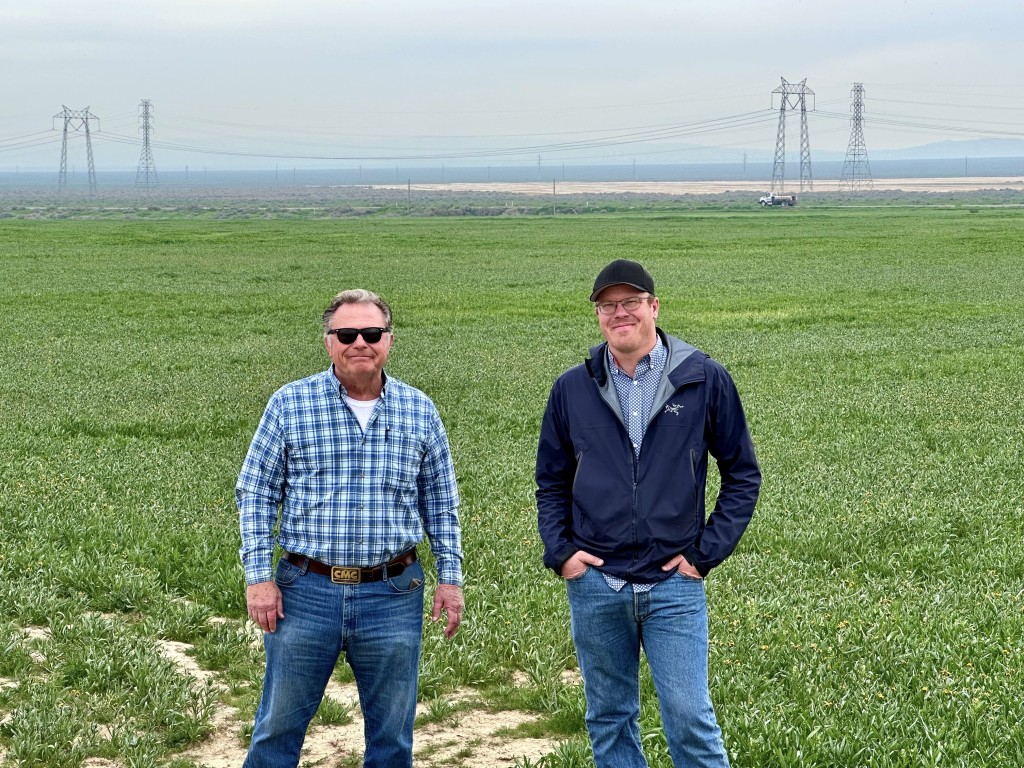
“I went up to argue against it, but we were the only ones who spoke against it,” said Kroeker, a partner in Starrh and Starrh Farms which has farm land in, and adjacent to, the de-designation area. “I don’t think anyone else even knew it was happening.”
Defining “usable”
The de-designation action was the end result of a lawsuit filed against the regional board by Valley Water Management Company, which has operated two large, unlined oilfield produced water percolation ponds in the area since the 1960s. One of those ponds has been dormant since 2021.
The court sided with Valley Water, ordering the regional board to evaluate whether groundwater in the area meets standards for municipal and agricultural uses.
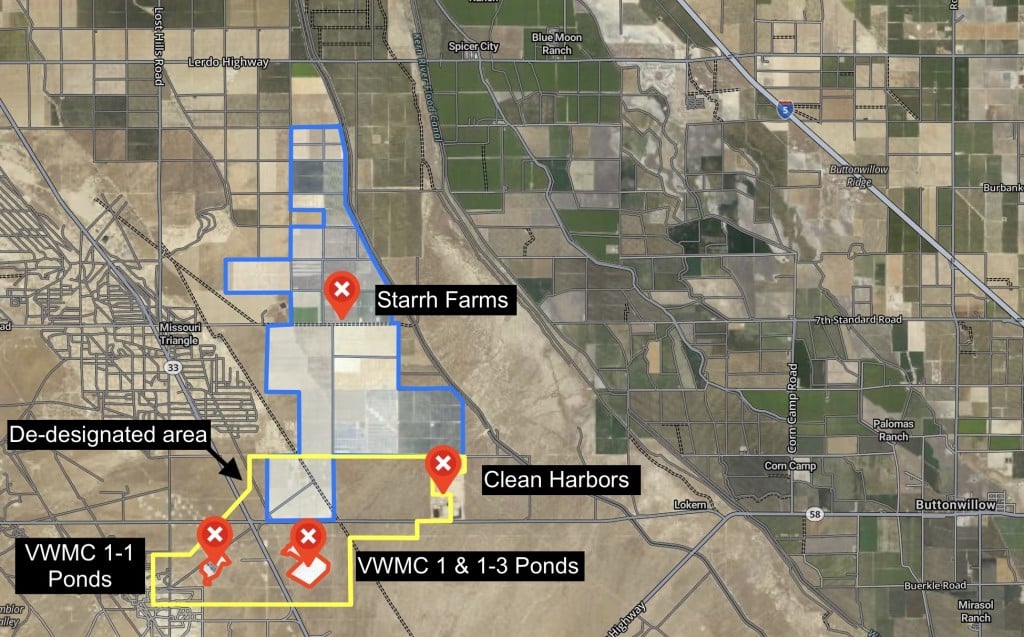
Short answer: No, it doesn’t, except for a chunk of land near the hazardous waste facility Clean Harbors where groundwater may be useful for ag, according to a report by the regional board.
Patrick Pulupa, executive director of the regional board, told KBAK 23 in late December that groundwater in that area has never met standards for drinking or ag uses.
The issue is high salts and other minerals. Drinking water needs to be under 3,000 milligrams per liter (mg/l) of total dissolved solids (TDS) while the regional board defined usable ag water as being under 5,000 mg/l TDS.
Kroeker disputes Pulupa’s view that the groundwater was never usable. It has been, and still is by Starrh and Starrh, he said. He noted pistachio trees can tolerate higher salt content and that his family also blends groundwater with cleaner surface water during drought years for other crops.
But if the state lifts existing protections, he fears Valley Water will restart its dormant disposal pond and possibly apply for permits to expand its operations destroying what usable groundwater exists.
For its part, Valley Water wouldn’t say what its plans are.
“Until and unless a (Basin Plan Amendment designating groundwater uses) is approved, Valley Water cannot speculate as to any effects such may have on Valley Water’s operations,” wrote Jean Pledger, an attorney whose firm represents Valley Water, in an email.
Regional board staff said Valley Water hasn’t applied for any new permits nor sought to renew or alter any existing permits. Though the company hasn’t discharged wastewater into one of its ponds for several years, Alex Olsen, a geologist with the regional board, said both ponds have active permits.
Adam Laputz, Assistant Executive Officer of the regional board, said once the de-designation amendment is sent to the Water Board for final approval, the public will have another opportunity to comment.
He did not have a timeline for when that would happen.
Headed for Buttonwillow
This issue is playing out as Kern County is ramping up oil drilling permits after a three-year hiatus when permits were halted pending the outcome of a lawsuit over the county’s permitting environmental impact report.
More drilling will mean more oilfield produced water that must be disposed of either by injecting it back into the ground, or dumping it into percolation ponds. Most companies inject produced water these days, but some still use ponds, which is cheaper.ƒ
If Valley Water restarts or increases its pond disposal, Kroeker fears that could make marginal groundwater unusable.
“I don’t believe that the proposed basin plan amendment is based on sound scientific knowledge and methods.”
– Professor J. Jaime Gómez-Hernández, Technical University of Valencia, Spain Institute of Water and Environmental Engineering, one of several scientists who reviewed the Central Valley Regional Water Quality Control Board findings to de-designate groundwater near McKittrick as beneficial for domestic and ag uses.
“It’s important for the Water Board to recognize that unpolluted water is usable for ag and we do use it. And we have used it for 20 years now,” Kroeker said.
And, he said, the board needs to address the fact that groundwater moves both laterally and vertically.
“Their own report review says this water (from Valley Management ponds) isn’t staying put,” Kroeker said. “It’s migrating and it’s headed toward Buttonwillow. It’s already halfway there as far as we know.”
Scientists who reviewed the regional board’s report noted that a “plume” of contaminated water emanating from Valley Water’s ponds was tracked at least to Clean Harbors. But without more monitoring wells, reviewers couldn’t say how far it had progressed beyond that.
They also noted that – contrary to the regional board’s findings – the contaminated water was not confined by a clay layer and had migrated into the Tulare Formation, the primary source for drinking and irrigation water.
“There is therefore clear evidence that the high salinity water discharged into the (Valley Water percolation ponds) reached both the Upper and the Lower Tulare formations in all the monitoring wells,” wrote one reviewer.
Because of that evidence, another reviewer concluded: “I don’t believe that the proposed basin plan amendment is based on sound scientific knowledge and methods.”
Generational fight
Kroeker said he highlighted the reviewer’s comments to the regional board, but didn’t get much traction.
Part of the reason for the lackadaisical response Kroeker has gotten so far is that groundwater in that area is naturally salty. And oilfield water has been percolated or injected out there for nearly 100 years. Even the plume has been a known factor for decades, according to water agencies.
That’s one of the reasons water districts import water from the Sacramento-San Joaquin Delta or use Kern River water.
There isn’t any groundwater recharge in that section of western Kern County, said Mark Gilkey, executive director of the Westside Water District Authority Groundwater Sustainability Agency (GSA), which covers a portion of the de-designation area.
He said the GSA board, which Kroeker recently joined, would be looking into the de-designation.
“If it’s important to one of our landowners, it’s important to us,” Gilkey said.
Even municipal wells that serve McKittrick and other western Kern towns are 16 miles to the east.
“The likelihood that de-designation would impact our wells is slim to none,” Greg Hammett in an email. Hammett is the manager of West Kern Water District GSA, which shares coverage of the de-designation zone.
The Starrh family, though, has been making its case for the area’s groundwater for at least two decades.
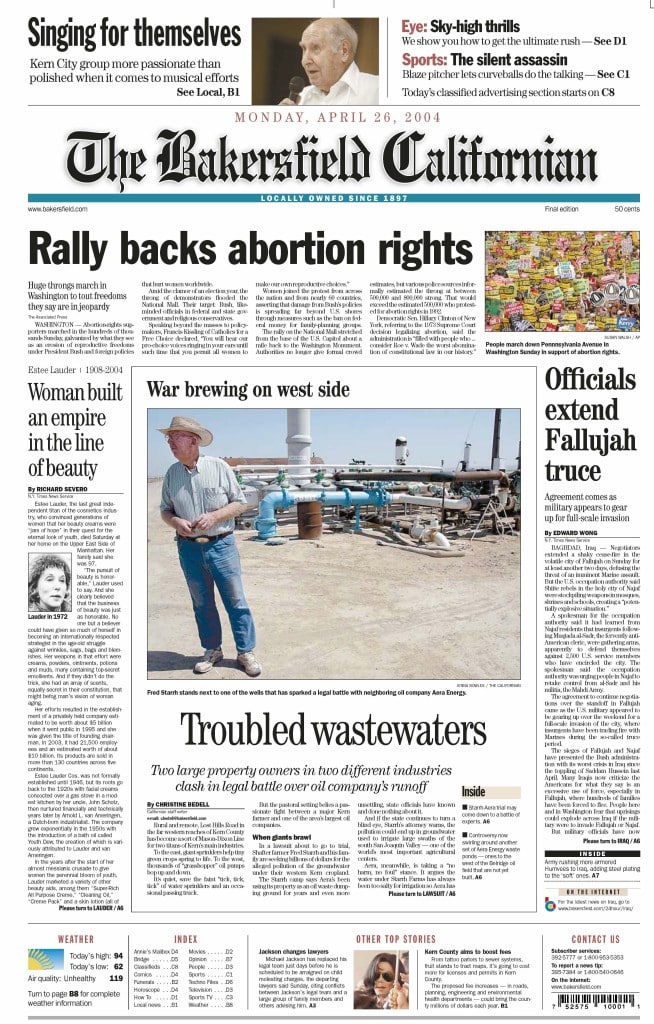
The late Fred Starrh sued the former Aera oil company (now owned by California Resources Corporation) in the early 2000s for dumping oilfield produced water in pits that tainted his irrigation water. A jury agreed Aera had damaged his water, but awarded him only $7 million in damages. He had sought hundreds of millions but after several more attempts in court, he was never allowed to seek those high dollar punitive damages.
Now, Kroeker, Starrh’s grandson, has found himself in a similar fight.
“Our objective is to stop the de-designation and prevent Valley Water from restarting wastewater disposal in these unlined percolation pits,” Kroeker said.
“Bowling ball for an umbrella”
To that end, he has been contacting a variety of different water organizations, including the Kern Water Collaborative, which is charged with monitoring and managing nitrate, salt, in potable groundwater.
The collaborative recently sought public comments on its nitrate management plan and Kroeker obliged.
“(The plan) contains no analysis of nitrate loading from oilfield wastewater disposal, no mapping or evaluation of oilfield wastewater disposal plumes, no assessment of historical cumulative impacts from decades of oilfield discharges, and no enforceable nitrate-reduction or source-control obligations imposed on oilfield disposal facilities,” Kroeker wrote in comments to the collaborative.
Instead, he wrote, the plan focuses almost entirely on drinking water replacement strategies.
“This approach functionally shields long-standing industrial nitrate dischargers from individual responsibility while shifting the practical burden of groundwater degradation onto rural families and communities that rely on local aquifers.”
He’s made presentations to the Kern County Farm Bureau, contacted environmental groups and talked to homeowners in the region.
Jay Kroeker, Brad Kroeker’s father and a director on the powerful Kern County Water Agency, brought the issue up to agency staff. But the agency isn’t considered a “stakeholder” in this issue.
Still, Brad Kroeker is determined to “wake people up.”
“I can’t fathom why the regional board, the only authority in charge of protecting groundwater, is allowing these ponds to continue operating,” Brad Kroeker said. “Yes, they do regulate them. But that’s like using a bowling ball as an umbrella: You’re holding something over your head, but you’re still getting wet.
“They aren’t addressing the real problem, which is that they are contaminating the groundwater.”