Lemoore to restart construction of water treatment plants four years after explosion derailed the project
The City of Lemoore opened the bidding process July 1 to finish a project to replace two water treatment plants six years after the project first got underway.
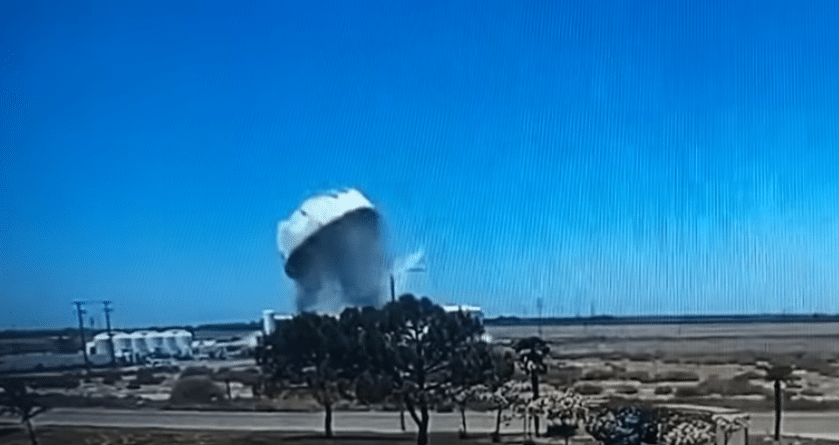
Work on the plants was about 75% complete in 2021 when an explosion launched a 1.5 million-gallon tank 70 feet in the air. A construction worker, 41-year-old welder Dian Jones, died in the accident.
The project stalled after Jones’ family sued Lemoore.
“The treatment project was paused because of the ongoing litigation,” Mayor Patricia Matthews confirmed. A case management conference is scheduled for Aug. 20 with a trial date set for May 20, 2026.
The treatment plants were budgeted to cost the city $22 million in 2019. It is unknown if costs have changed as city representatives did not respond to repeated requests by SJV Water for updated costs.
The new plants are needed in order to comply with state regulations to reduce levels of trihalomethanes (TTHMs) in the drinking water.
TTHMs are a byproduct of the water treatment process, forming when organic material reacts with chlorine, which is used to treat water. Aluminum, arsenic and lead have also been found in the Lemoore’s municipal wells.
Long-term exposure to high levels of TTHM can cause liver, kidney or central nervous system issues and an increased risk of cancer, according to the United States Environmental Protection Agency (EPA) website.
The city referred questions about the treatment plant and water contamination to Lemoore’s Finance Manager and former Public Works analyst, Randon Reeder.
“It’s more complicated than just looking for another contractor. There are bonds, insurance, warranty to worry about,” Reeder said about time lapse to re-start construction.
“No contractor will come and finish the work” of another contractor, Reeder said.
Residents have been informed about the contamination through the city’s annual consumer confidence reports, which are distributed each July 1.
But there hasn’t been a need to provide bottled water or other water sources as testing didn’t indicate an immediate risk to residents, according to the most recent city notifications.
Reeder acknowledged that testing for TTHMs shows Lemoore’s wells averaged 183% above the maximum level in 2024, but said it’s “…a minimal risk.”