Invasive mussels top bevy of topics at annual Kern water summit
Destructive, tiny golden mussels that hitched their way across the ocean into the Sacramento-San Joaquin Delta about two years ago are likely here to stay, according to panelists at this year’s annual Kern County Water Summit.
And, so far, no eradication, or even effective treatment, method has been discovered to keep the invasive mollusks from clogging up equipment and pipes in the state’s vast water delivery networks.
“Unfortunately there is no silver bullet,” said biologist Valerie Goodwin of Dudek setting a sober tone for the summit’s first panel.
Fellow Dudek biologist Stephen Burkholder compared the mussels to Kevlar, able to withstand a wide variety of water temperatures, flows and quality, and attach to any surface.
Water managers in Kern were dismayed to find the mussels had made their way from the delta into local water systems all the way to Arvin last November.
And getting them out of the delta, which Goodwin called “ground zero” for the mussels, will likely prove impossible.
“It’s hard to treat a natural water body like the Delta,” Goodwin said. “There are nooks and crannies where they can settle and grow. Every year, new veligers (offspring) will move their way down the state. They grow and settle so fast that there will always be a breeding population.
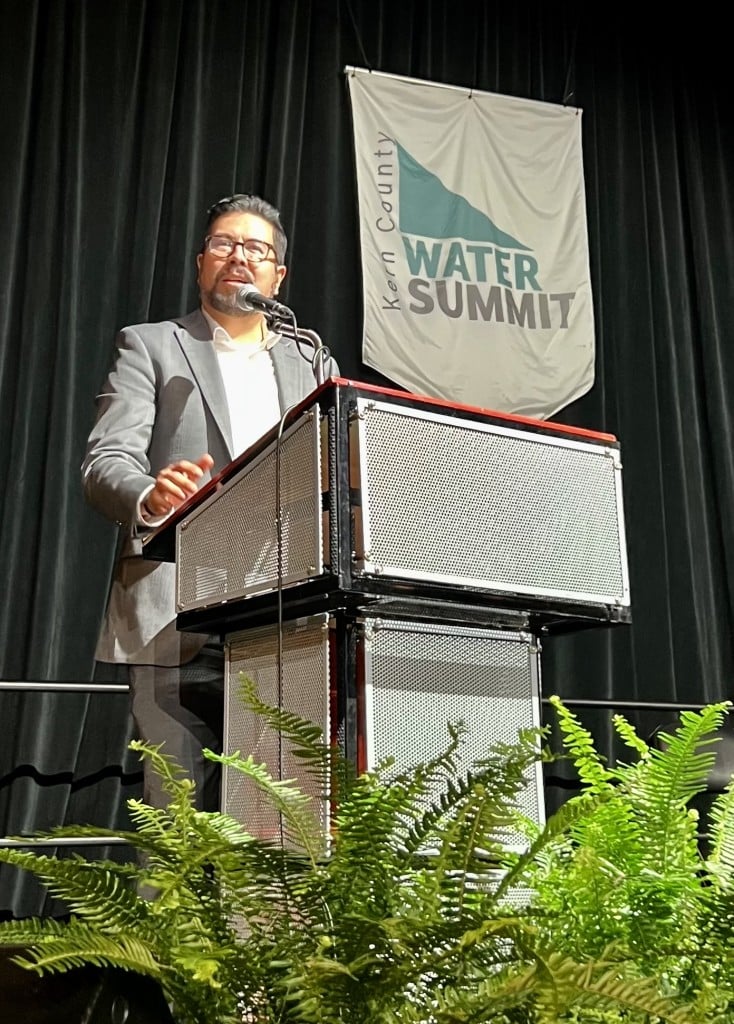
Though she hoped scientists would have a better handle on how to treat the mussels in a few years, it will likely be an ongoing maintenance headache for water managers into the future.
“We will most likely always have to deal with golden mussels.”
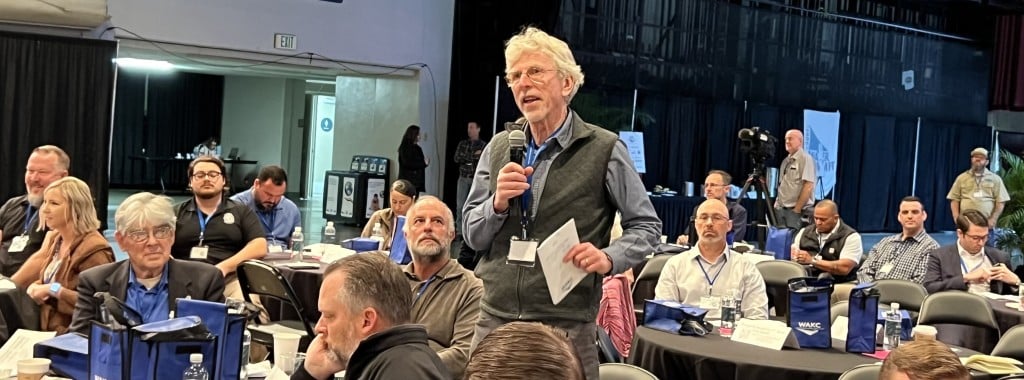
Agricultural realtor Jonathan Romero asked if any government assistance will be available to water agencies to pay for treatment.
“This all sounds really expensive,” he said.
Other audience questions focused on limiting future infestations from container ships. Golden mussels are native to Southeast Asia, and have spread throughout South America.
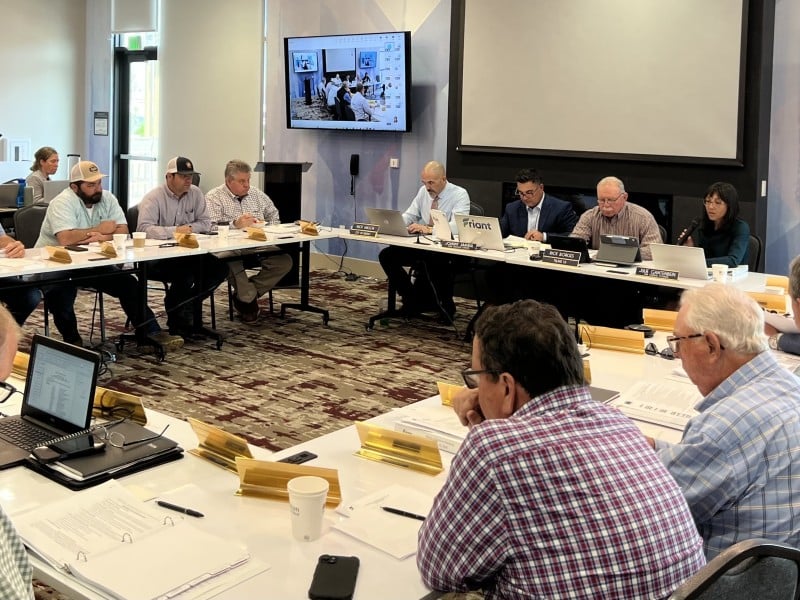
On a lighter note, new Friant Water Authority Executive Director Johnny Amaral kicked off the second panel with a discussion of how state and federal government agencies can work together to bring certainty to the state’s water supplies.
“Anything is possible,” he said before a backdrop of slides showing celebrity couple Julia Roberts and Lyle Lovett and the 1980 and 2026 USA Hockey gold medal wins.
Specifically, he referred to two executive orders, one issued by President Donald Trump and the other by Governor Gavin Newsom, that helped maximize water deliveries from the delta and gave locals the ability to capture and store more storm water during floods.
“We can work together and we have the receipts to prove it,” Amaral said. “When they say their interests are fixing the woes of California water, then it’s up to us to hold their feet to the fire.”
Keynote speaker Joaquin Esquivel, chairman of the Water Resources Control Board, focused on the “herculean effort” Kern water managers made over the last few years to develop an acceptable groundwater plan and avoid having the region placed on probation, which comes with expensive sanctions on farmers.
He was most proud of drinking water solutions found for many of Kern County’s disadvantaged communities, including Lamont.
Paul Gosselin, deputy director of the Department of Water Resources Sustainable Groundwater Management Act, added his praise for Kern’s work on its groundwater plan.
But now, he said, it’s time to implement that plan with everyone marching in the same direction.
“Be aware of what’s happening locally because it will affect you all,” he said.