Expert urges action on invasive golden mussels now
The time to act on golden mussels is yesterday. If not yesterday, then now, an expert on invasive mollusks told attendees at the World Ag Expo in Tulare Wednesday. The Expo continues Thursday.
These things are “quagga mussel on steroids” said David Hammond, a senior scientist at Earth Science Labs.
He urged irrigation and water district managers at the seminar to enact immediate preventative measures, or their entire conveyance systems would be at risk of being overrun by the tiny, rapidly multiplying mussels.
“The fact that they have moved 400 miles in one year is astounding,” Hammond said after the seminar, which he proposed to Ag Expo organizers more than six months ago. “I foresaw this problem being timely for farmers and districts.”
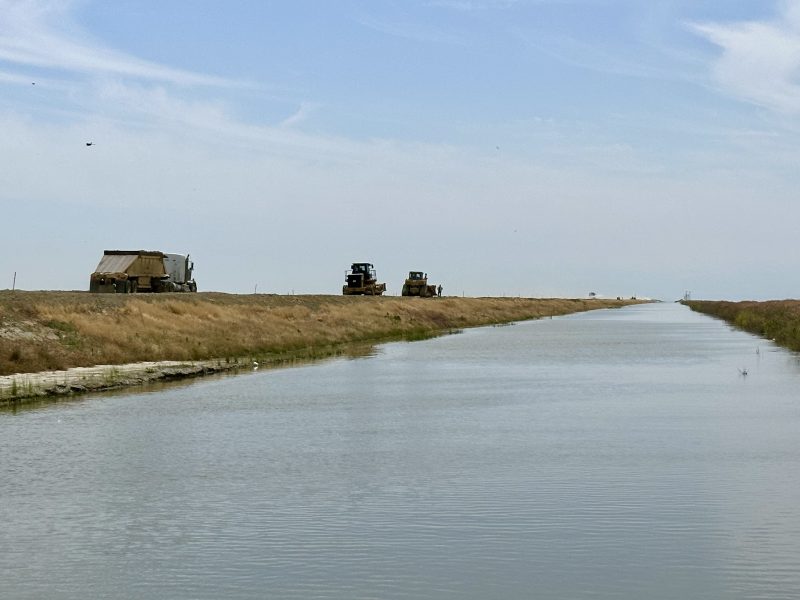
He was referring to the fact that golden mussels, native to Southeast Asia and a cousin to quagga and zebra mussels, were first discovered in the Sacramento-San Joaquin Delta in 2024. And in less than a year, have traveled the length of the state, clogging infrastructure as they rapidly multiply.
In December, golden mussels were discovered in the lower reaches of the 152-mile Friant-Kern Canal and Friant Water Authority is awaiting environmental DNA tests to see how far the mussel has spread.
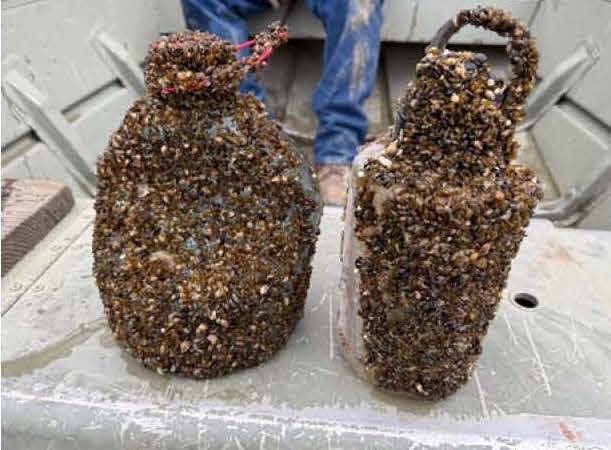
Hammond studied the golden mussels’ spread throughout South America in the early 2000s and knew if they made it to California, they would spread quickly thanks to their extremely high tolerance of chemicals, calcium and water temperatures. They can attach to nearly anything, including native mussels, which they end up smothering and killing.
Hammond developed a liquid ionic copper treatment called EarthTec QZ (short for Quagga Zebra) that has been deployed around the world for about 15 years to prevent the spread of quagga, zebra and now golden mussels. It is one of just a few chemicals approved for use for golden mussels in California. The same chemical solution, marketed under the name Earth Tec, is also approved to treat aquatic weeds.
Hammond noted that a double dose of EarthTec QZ is needed to kill golden mussels, or about 300 parts-per-billion. He is working with various government agencies, including the Department of Water Resources, to research why that is.
“That’s part of the science of these mussels, they have the ability to store the chemical and we don’t know why,” he said.
“This year will be the worst. It’s best not to wait to treat because it will get really bad, and it won’t save money or your headaches.”
– David Hammond, a senior scientist at Earth Science Labs, on attacking golden mussels sooner rather than later
Hammond said the “bread and butter” of his company is protecting infrastructure, and included successful examples of canals, pipelines and water treatment plants around the country in his hour-long presentation.
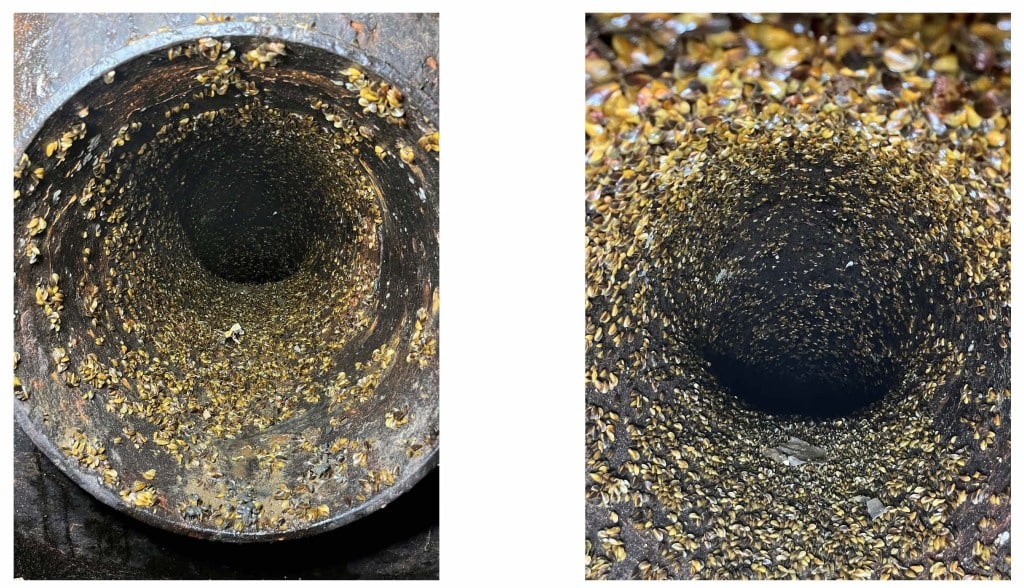
Hammond displayed photos of various pieces of infrastructure completely covered in thick layers of the mollusks, which at maturity are less than two inches long.
“They have the ability to turn a screen meant to catch trash into a wall,” he said.
In recent work with a local irrigation district, Hammond looked at pictures of their infrastructure and pointed out that several other species, including sponges and bryozoans, which are tiny aquatic invertebrates that form slimy, gel-like surfaces, had piggybacked with the mussels and covered underwater screens.
“I pointed out all the other mucky stuff and they thought it was secretions from the mussels,” he said.
Hammond discussed the various treatment methods that were deployed in South America, including chlorine, UV radiation, copper sulfate, ultrasound, among others.
In the United States, the rising cost of chlorine and the amount needed to kill golden mussels do not pencil out, mostly because the treatment’s byproducts create a water quality issue, a dealbreaker for municipal water suppliers. The same applies to copper sulfate, used by water districts to treat aquatic weeds.
Hammond said his research has revealed the most effective way to eradicate mussels is to treat them chemically immediately after spawning, when they’re worn out from preparing to reproduce offspring, called veligers. Spawning cycles vary depending on the golden mussels’ environment.
“We’ll have to see what the golden mussels do in California,” he said. “In warm environments like Arizona, they’ve spawned up to 13 times.”
He urged managers in the room to consider low-dose, regular treatments of their systems.
“This year will be the worst,” he said. “It’s best not to wait to treat because it will get really bad, and it won’t save money or your headaches.”
Exeter and Ivanhoe irrigation districts manager Gene Kilgore attended the seminar with his son, Chad, an employee at Kaweah Delta Water Conservation District.
He said the seminar helped allay some fears, and even gave him some hope. As Friant Water Authority contractors, Kilgore said his districts will continue promoting a united attack on golden mussels as part of their normal maintenance operations.
A draft golden mussel strategy budget issued by Friant Water Authority during an executive committee meeting on Monday estimates 2026 costs at $485,000.
“At first, it was like the sky was falling,” Kilgore said. “This helped bring down the temperature a bit.”
He said small districts like his need state agencies to provide leadership.
“I just wish the state would be more proactive,” he said. “This is going to be part of our life, and I would hope the government would help us rather than it coming down to each farmer. But if they won’t help, then we will do it ourselves.”