Constitutional questions flow through Kern River case
Briefs and replies are piling up in the Kern River case pending review by the state Supreme Court.
The court agreed to look at an appellate decision that tossed out an 2023 court order to keep water flowing in the river through Bakersfield.
There are two central questions in this fray: Can a Fish and Game statute be applied as it’s written under the state constitution? And who has the burden to prove that either way?
Statutes and the Constitution
Fish and Game Code Section 5937 states that the owner of any dam must allow enough water to pass the structure to keep fish downstream in good condition.
Article X, Section 2 of the California Constitution states that stream flows “shall be limited to such water as shall be reasonably required for beneficial use” and that unreasonable uses aren’t allowed. It adds that “the Legislature may also enact in furtherance of the policy.”
River advocates say 5937 is unambiguous in its intent, that it was, in fact, enacted in furtherance of Article X, Section 2 and flows for fish are, thereby, already considered reasonable.
The City of Bakersfield and several agricultural water districts with rights to river water disagree.
They submitted briefs to the court that state the plaintiffs are reading more into 5937 than is there and that fish flows are still subject to a reasonable use balancing test as outlined in Article X, Section 2.
The appellate court opinion before the Supreme Court sided with the City and ag districts that a balancing test was needed.
Further, the plaintiffs’ opening brief to the Supreme Court states, the opinion requires them to show that applying 5937 is in compliance with Article X, Section 2 rather than forcing defendants to prove that it isn’t. That’s backwards, according to the brief.
“The party contesting enforcement bears a heavy burden to show that the statute is unconstitutional…” the plaintiffs brief states.
Because 5937 has been used in several other river conservation cases throughout California, the Supreme Court’s decision on this issue is being closely watched.

How we got here
For background, Kern County Superior Court Judge Gregory Pulskamp issued a preliminary injunction in fall of 2023 mandating Bakersfield keep enough water flowing in the river for fish. He did not state how much water should flow in the river, instead leaving that up to Bakersfield and the plaintiffs to work out.
The ag districts, which aren’t defendants but “real parties in interest” in the case, appealed and the Fifth District Court of Appeal reversed that injunction in April 2025.
Justices stated Pulskamp erred by not putting the fish flows through a “reasonableness” test per Article X, Section 2.
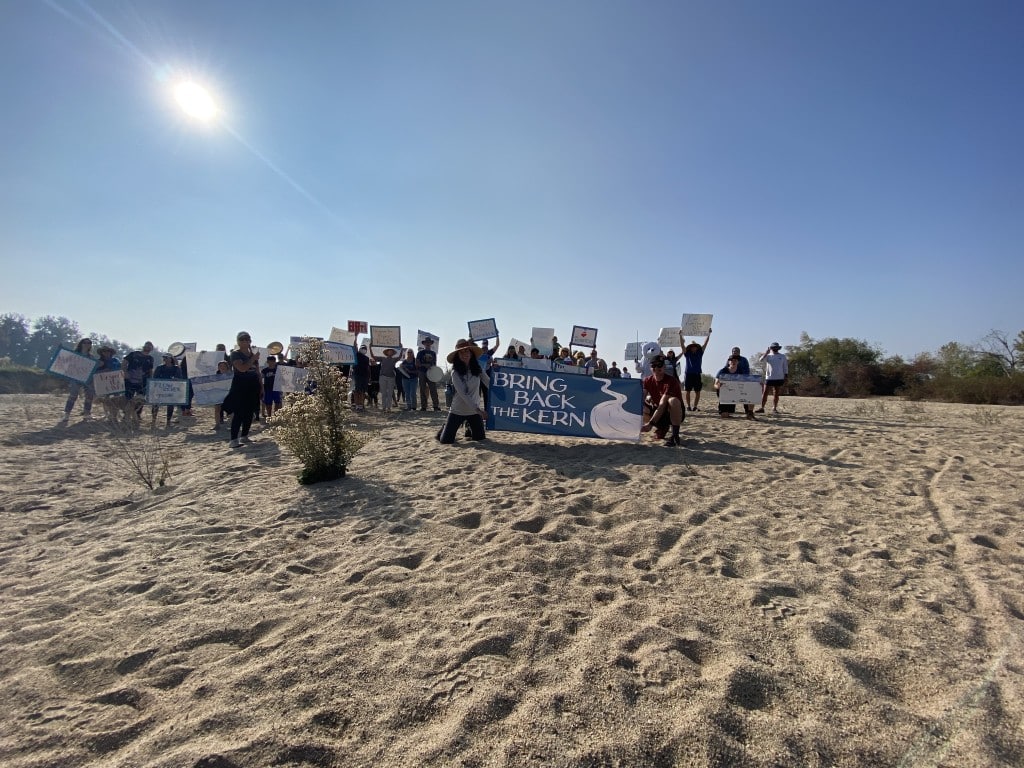
The plaintiffs, Water Audit California, Bring Back the Kern and several other public interest groups, appealed the Fifth District’s reversal to the state Supreme Court, which agreed in July 2025 to review the decision.
Now, the briefs have begun flowing in as all sides gear up for a hearing, which likely won’t happen until sometime in 2027, at the earliest.
Opening salvo
The plaintiffs filed first with an opening brief that repeats many of their earlier arguments.
“The Legislature has repeatedly reaffirmed and substantively expanded Section 5937 following Section 2’s adoption,” the plaintiff’s brief states. “ In so doing, the Legislature has already ‘balanced’ competing interests and mandated protection for fish.”
Far from clashing, 5937 and Article X, Section 2 are compatible, according to plaintiffs.
In fact, the brief states, the Fifth District’s opinion requiring a reasonableness test on every application of 5937 would render the statute effectively unconstitutional.
The plaintiffs are seeking to have Supreme Court justices reinstate Pulskamp’s preliminary injunction so the parties can determine how much water is needed for fish, with the rest being divvied up under the existing rights framework.

Bakersfield, just the messenger
In response, the City of Bakersfield’s brief urges justices to uphold the Fifth District’s opinion, which would require the local court to look at the Kern River’s specific flow rates and rights structure to determine how much water may be available for fish flows.
The city also reiterates its concerns that by focusing only the city, not the ag districts with river rights, the plaintiffs are mistakenly attacking “the messenger” in the Kern’s complex rights structure.
“Kern River flows have primarily diminished and disappeared due to decisions made by the (real parties in interest) to hold water in storage behind Isabella Dam, and to release water only for immediate diversion,” the city’s brief states. “Bakersfield’s use and operation of ‘by-pass’ diversion structures, or weirs, in the Kern River, primarily at the direction of the RPIs, only has a minimal, secondary, impact on Kern River flows, and supplies.”
Ag district arguments
In their own brief, the ag districts state plaintiffs are wrong for a wide variety of reasons.
Like the city, they agree with the Fifth District opinion that Pulskamp should have first determined how much water was required for fish and then balanced that demand against all other existing uses under the reasonableness test enshrined in Article X, Section 2 of the state constitution.
Because there was no reasonableness test by the lower court, their brief states, the appellate court never got to questions of which side must prove 5937’s constitutional compatibility. In any event, they urge Supreme Court justices to place that burden on the plaintiffs.
“When a court is asked to order public water agencies to change their operations under their water rights, the presumption of regularity applies and places the burden on the plaintiff to show that change is required,” the ag districts’ brief states.
They also contest the idea that 5937 was intended as a “furtherance” of Article X, Section 2 based, in part, on a 1959 Water Code enacted to clarify existing Fish and Game statutes in order to “…remove any doubt which may exist now or in the future concerning the beneficial use status of water for fish and wildlife.”
“If the Legislature had determined, in 1937 (when 5937 was amended), that fish maintenance was not only a beneficial use but categorically the ‘a priori’ most reasonable use, no such statute would have been needed,” the brief states about the 1959 clarifying effort.
“Presumptively unreasonable”
In fact, the ag districts’ brief states, private plaintiffs can’t sue under 5937 at all. A state wildlife agency must find the city in violation of 5937, which would then lead to three options including building a fishway, a hatchery or fish planting program, the brief states.
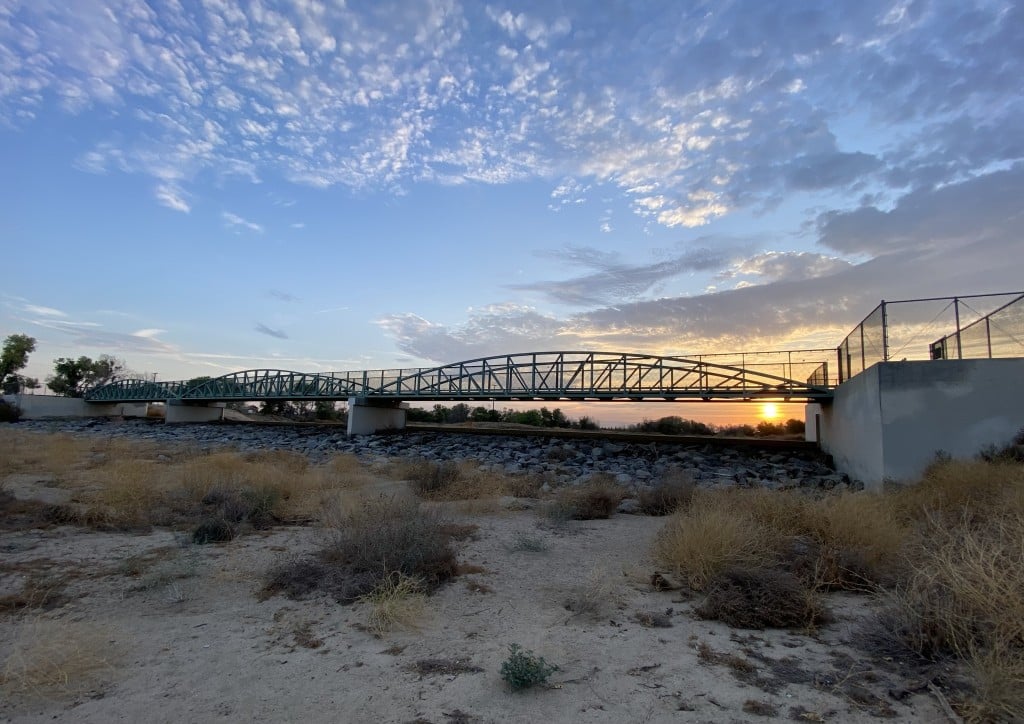
It doesn’t address how those options could be implemented given that the lower Kern River is dry from about Manor Street through Bakersfield most of the time due to agricultural diversions.
The plaintiffs’ opening brief does touch on that issue stating that while fish flows are “presumptively reasonable” under 5937, it has a flip side.
“Section 5937 also establishes a corollary rule: leaving no water at all in the river is presumptively unreasonable.”
While the Supreme Court process runs its course, the underlying lawsuit continues in Kern County superior court but has been delayed in deference of a possible Supreme Court ruling. The next court date is Aug. 10 for a case management conference.