Alpaugh students win second in statewide science competition for land restoration project
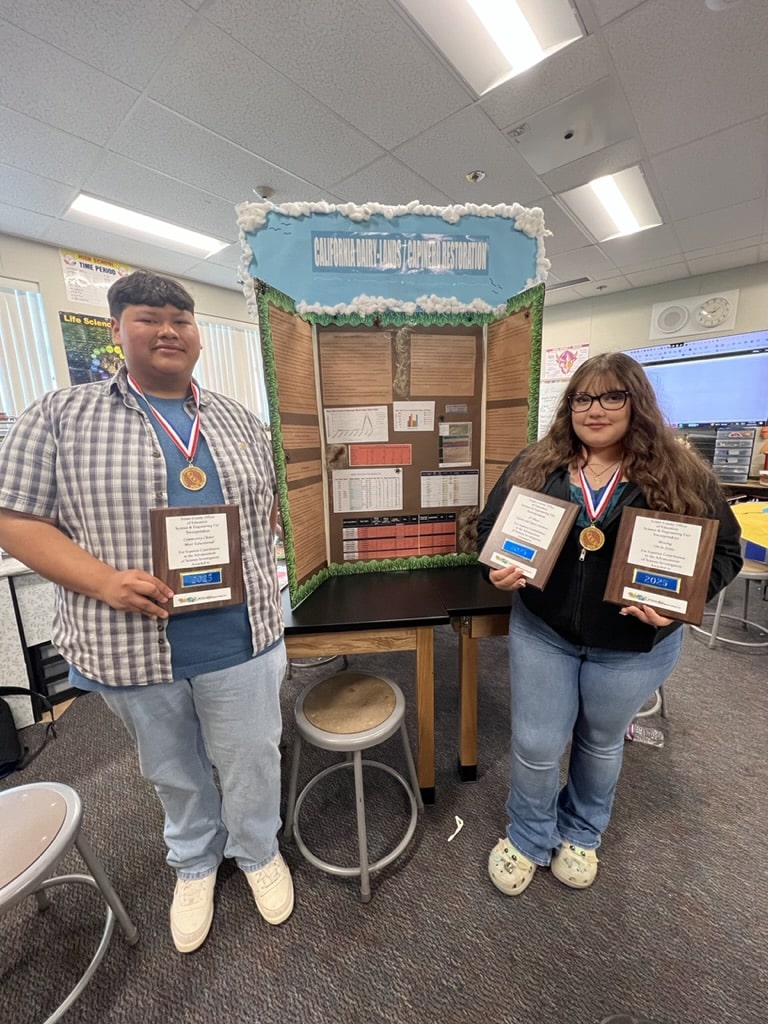
Two Alpaugh High School students who created a science project about the transformation of a dairy back to native San Joaquin Valley habitat won second place at the California Science and Engineering Fair.
Edwin Marquez and Estrella Chaidez, who are wrapping up their junior years this week, wowed judges with their presentation “Restoration of California Dairy Lands at Capinero Creek.”
The Capinero restoration effort is one of several spearheaded by the Tule Basin Land & Water Conservation Trust that aims to retire less productive farm land in order to save its associated groundwater for both farming and the ecosystem.
More than 800 students from 351 schools across the state participated in the 74th annual fair, held April 12-13 at California Lutheran University in Thousand Oaks.
Marquez and Chaidez, who earned their spot in the state competition after winning the Tulare County Office of Education Science and Engineering Fair, competed in the Earth and Environment category. Over the course of two years, the duo and more than 30 of their classmates analyzed soil health, water quality, air quality and biodiversity at the former dairy, where its 500 acres are slowly evolving into a diverse habitat with native plants and animals.
During an interview on campus with fellow classmates and teacher Tejinder Kaur, Marquez and Chaidez spoke excitedly about the state competition.
“We were shocked when some of the students, teachers and judges who looked at our project didn’t even know what a dairy was,” Chaidez said. “We needed a minute to process that.”
Dairies dot the landscape in this portion of southwestern Tulare County. But as the San Joaquin Valley reduces its groundwater use, that landscape will change including in the Tule subbasin, where Alpaugh High sits.
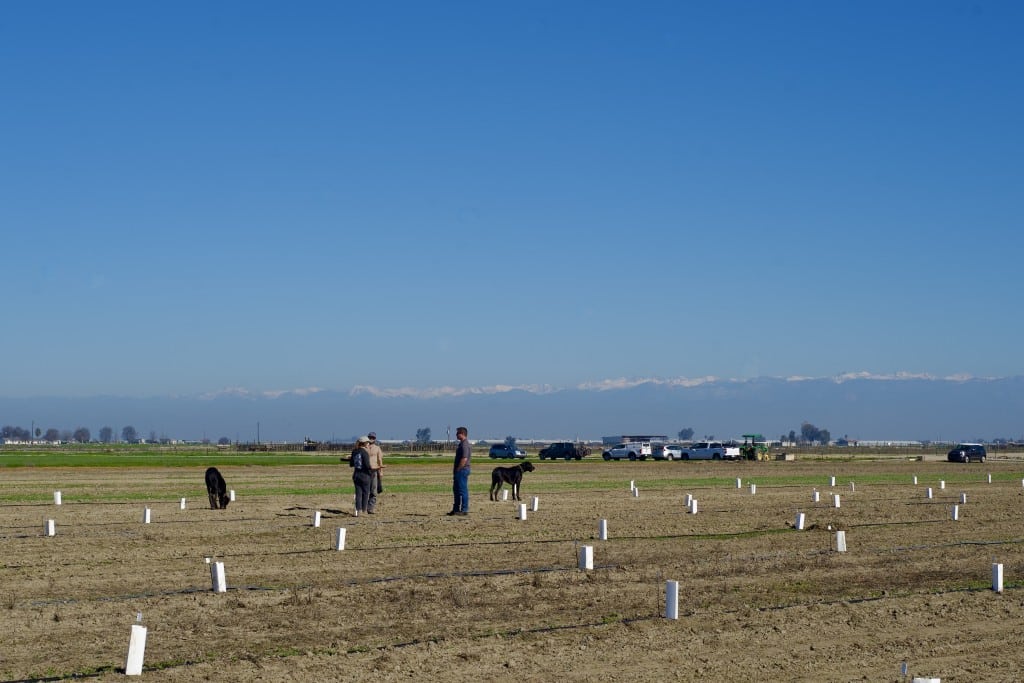
Water managers anticipate at least 70,000 acres will be fallowed, some replaced with conservation projects such as Capinero Creek.
Thanks to their science project, Marquez said he now understands how land restoration unfolds over time. And it has shifted his own education trajectory.
“Before this project, I was interested in becoming a teacher,” he said. “Now, I know there is so much to learn and change for our future.”
Marquez plans to apply to the University of California at Santa Cruz in the fall to study biology.
Two years of observation
The students’ project had its genesis several years ago.
The Tule Land & Water Conservation Trust acquired the property with the help of a $5 million grant from the Bureau of Reclamation, funding from Union Pacific and the state’s Multibenefit Land Repurposing Program. The trust approached The Nature Conservancy to oversee restoration of alkali scrub habitat for threatened and endangered species endemic to the region. Since then, The Nature Conservancy has coordinated restoration with River Partners and fostered community engagement with nonprofit SEEN, SocioEnvironmental and Education Network (SEEN).
SEEN provided curriculum and funding for multiple field trips for Kaur’s students. They traveled twice to Blue Oak Preserve, a verdant, established preserve in the foothills of Springville, and twice to Capinero, taking water and soil samples using various testing kits provided by SEEN.
“Just the fact that they won at the state level from a high school in the middle of nowhere in California speaks volumes to these types of programs and their potential. These students are representing the Valley and they’re totally capable.”
Daniel Toews, Capinero Creek Restoration Project Manager for The Nature Conservancy
They compared differences between Blue Oak’s restored, healthy habitat and the Capinero land after decades of dairy operations, which left high levels of nitrate and topsoil degradation, which in turn affects water absorption rates.
Students also learned about the benefits that dairies provide to the economy and food chain. They ventured to Calgren in Pixley, where methane gas from dairies is converted into ethanol, a renewable natural gas that can fuel vehicles.
“Dairies give us a lot of good stuff, like milk and cheese,” Marquez said. “So, it was good to see how dairy waste can be turned into something good like reusable energy.”
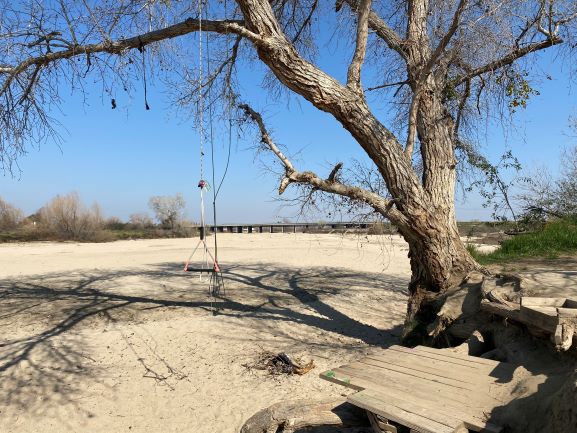
A portion of the curriculum from SEEN introduces students to the hydrology of the Tulare Lake Basin. Students experienced that first-hand in March 2023 when Alpaugh, which sits in the old Tulare Lake bed, was surrounded by floodwaters.
Their school closed for six weeks and the prom was delayed. A simple trip to the grocery store turned into a four-hour journey as their families navigated road closures around the rising lake.
“We would have thought it just rained too much, but we could connect how land use affects water absorption,” Chaidez said.
SEEN has established similar partnerships with Earlimart, Allensworth and Delano high schools.
‘Field’ trip
The students joked that their first trip to the Capinero Creek Restoration Project in 2023 gave a new meaning to the phrase field trip.
“It was underwhelming,” said classmate Carlos Hernandez. “I said to myself, ‘What is this place? It’s just a field.’”
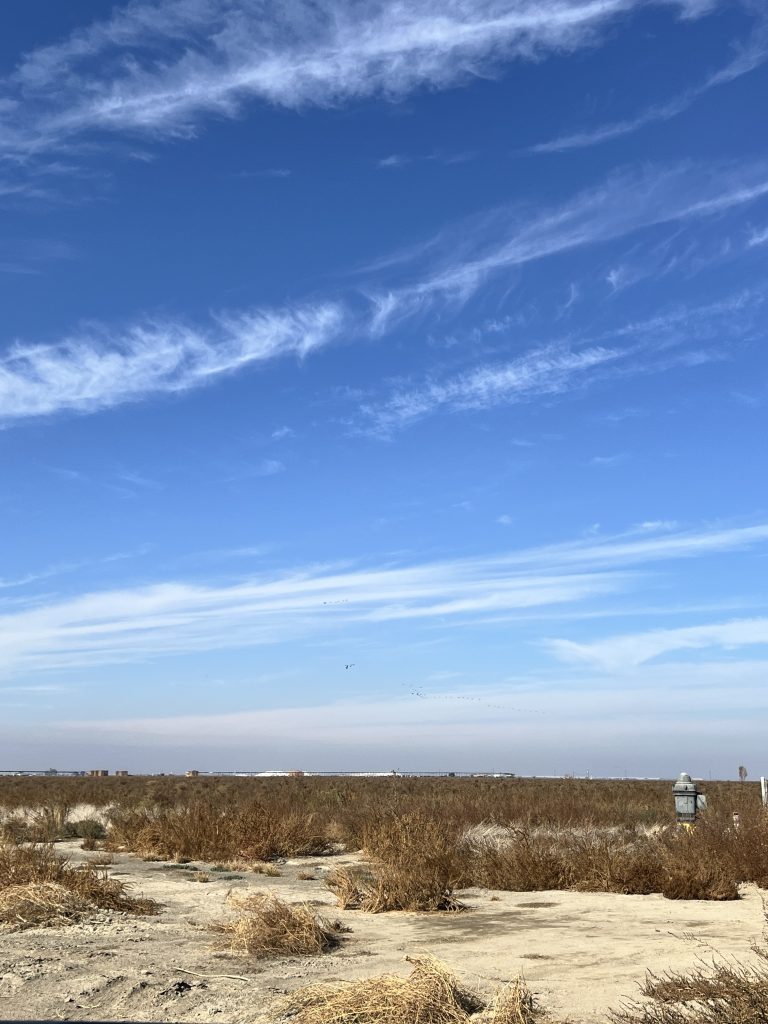
But returning in spring 2024, after hundreds of native plants had been planted, students found an evolving landscape and traces of wildlife, including coyotes, Swainson’s hawks, kangaroo rats and snakes. Soil health had improved as well as water absorption rates.
Daniel Toews is Capinero’s Strategic Restoration Project Manager and works for The Nature Conservancy. He said experiences like this are critical for the next generation.
“This is building environmental awareness by getting the students out into the natural world,” he said. “This is the reality of the San Joaquin Valley if lands come out of production at the scale that is projected. It will change the workforce. Experiences like this open doors to students that they didn’t even know existed.”
Toews also said the students’ success speaks for itself.
“Just the fact that they won at the state level from a high school in the middle of nowhere in California speaks volumes to these types of programs and their potential,” he said. “These students are representing the Valley and they’re totally capable
Teacher Tejinder Kaur, entering her 10th year at Alpaugh High, said she plans to start the two-year project again in the new school year.
“It is a wonderful opportunity and gives students more chances to explore their world outside of Alpaugh,” she said. “It’s been a great success to get to the state level of competition.”