Lawyers allowed to question Kern River historian. So, lets talk about Col. Baker…
Lawyers fighting for more flows in the Kern River got the green light to question a noted river historian and author per a court ruling issued Friday afternoon.
It may seem like a “No duh” objective to pick the brain of someone steeped in the history of the Kern River in a trial about the Kern River, but lawyers representing a local agricultural water district had concerns about the breadth and nature of questions that would be posed to Douglas R. Littlefield, Phd.
Kern County Judge Gregory Pulskamp agreed with both sides and allowed the questioning but limited what Littlefield could be asked.
That’s because the Buena Vista Water Storage District has hired Littlefield as an “expert” witness in this and previous legal actions. So, he’s not just someone who knows basic facts. He’s also potentially privvy to Buena Vista’s legal strategies.
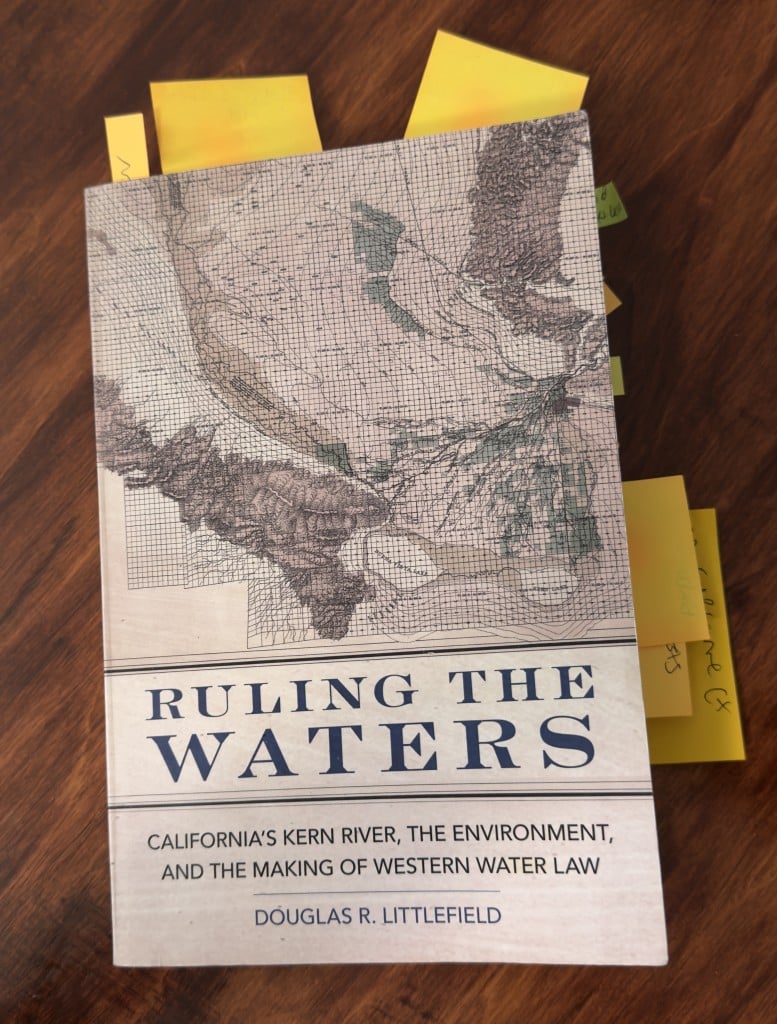
Littlefield has testified on the river before the state Water Resources Control Board. And he wrote “Ruling the Waters,” a near encyclopedic book about the many legal twists and turns of the Kern River going back to the 1850s. But all of that is considered “hearsay” and not admissible in court. Littlefield has to be examined directly by both sides.
Buena Vista, along with four other ag water districts, is a “real party in interest” in the current Kern River lawsuit filed by Bring Back the Kern, Water Audit California and several other public interest groups.
The groups sued the City of Bakersfield in 2022 for its river operations, which are based on the many legal settlements, contracts and agreements Littlefield writes about in “Ruling the Waters.”
While Pulskamp allowed the deposition, he barred attorneys from asking Littlefield about his opinions on the current litigation or the nature of his work with Buena Vista.
The trial was pushed back to Feb. 8, 2027, primarily because the California Supreme Court is looking at one aspect that could have implications on the rest of the case.
The high court will review a ruling by the 5th District Court of Appeal that overturned a preliminary injunction issued by Pulskamp in fall 2023 ordering the city to keep enough water in the Kern River for fish.
Now, about Col. Baker
Meanwhile, Littlefield’s book should be required reading for anyone interested in how the sausage was made when California was still in its infancy.
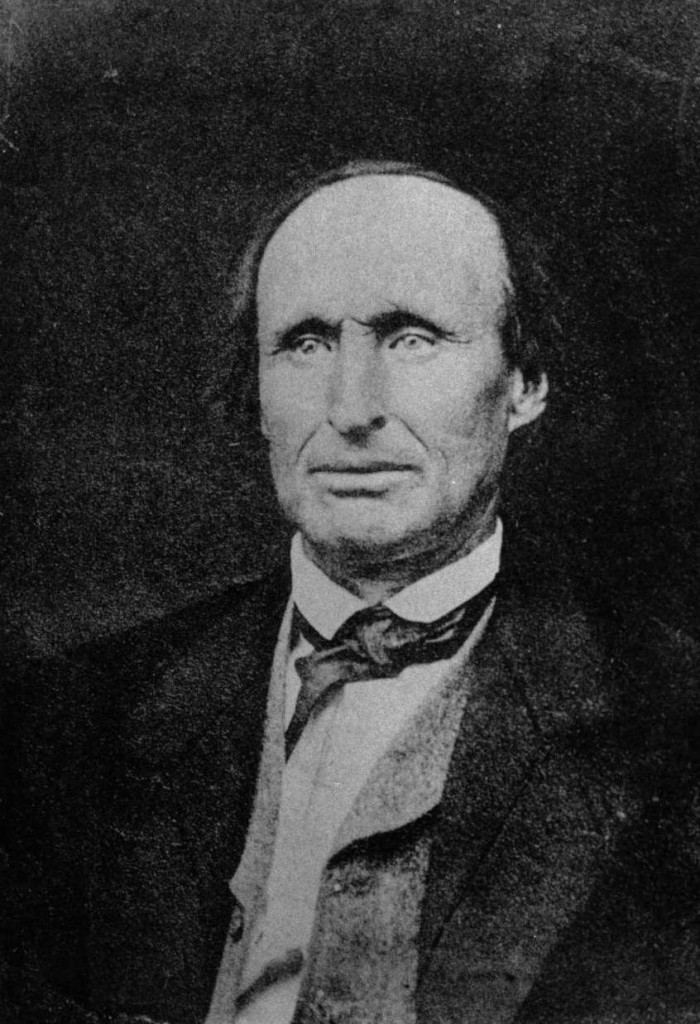
Particularly the part about how Col. Thomas Baker, Bakersfield’s namesake, was able to use the notoriously mercurial flows of the Kern River to obtain nearly 90,000 acres and jumpstart a town.
Col. Baker came to California from Ohio in the 1850s. He settled in Visalia and was elected to the California Senate in the 1860s.
In 1861, he became a partner in the Visalia Canal and Transportation Company, which had bought out the interests of another company with a highly lucrative state land contract.
That land contract promised the company 400,000 acres in the then swampy heart of the San Joaquin Valley if it could drain the region and build navigable canals from Tulare Lake to the San Joaquin River.
It was a massive and, ultimately, impossible task.
In 1862, Col. Baker – in his position as a Senator – supported a modification to the land contract that would make it easier to fulfill. Considering his ownership stake in the company that bought out the land contract, Littlefield writes, Col. Baker’s advocacy prompted side-eye from some fellow lawmakers as a conflict of interest.
According to Littlefield, Col. Baker gave ambiguously reassuring answers to those concerns and the modification to the land contract was passed.
Sedition detour
The work was stalled for a year, however, after Col Baker was thrown in Alcatraz, then a federal military prison, for making a speech espousing the legitimacy of the Confederacy, Littlefield writes.
Col. Baker was tried for treason and acquitted, then moved to Kern County in 1863 to, literally, drain the swamp.
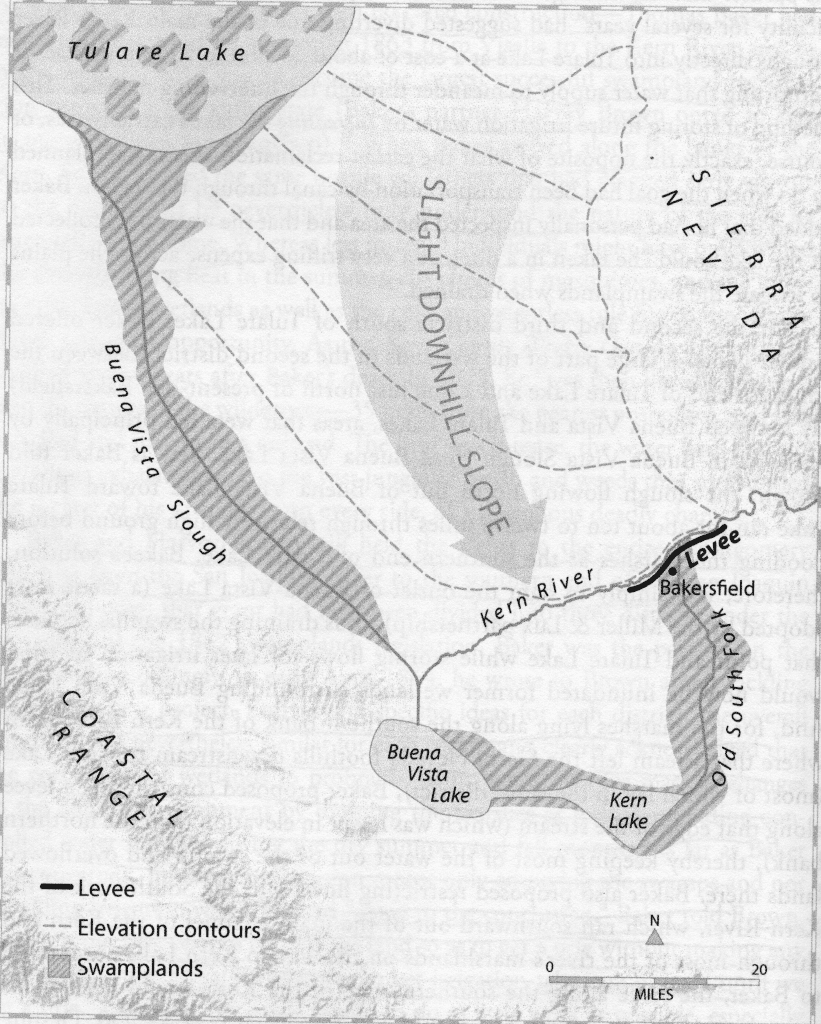
Conveniently, the Legislature passed another modification to the land contract removing the “navigable canal” requirement. The deal was still to drain the entire region from the Kern to the San Joaquin rivers, however.
Col. Baker spent the next two years building two levees: One on the Kern River where it had historically branched to the south filling Kern Lake; And the other on Buena Vista Lake where it overflowed into a marshy channel headed toward Tulare Lake.
The levee and headgate on the Kern River, which Littlefield notes cost about $2,000, was especially important to Col. Baker’s plans as he was already optioning lands along the South Fork that he promised would come with controlled irrigation supplies.
Littlefield recounts how Col. Baker reported to his partner, Harvey Brown, “I think I can sell land enough to build it,” and later that “…this is one of the greatest schemes in the world according to the capital to be expended.”
Talk about timing
On June 15, 1865, Baker declared the job done and sent word to state authorities that he was ready to receive title to the 400,000 acres.
The state instead sent engineer Andrew R. Jackson to check on Baker’s work.
In his report, Jackson noted that nothing had been done to tame the swamps from Tulare Lake north. But the Kern River marshlands were, indeed, dry. It was a drought year in 1865.
“…in truth, nature did the work on Kern River with but a trifling modification,” Jackson wrote in his report to the state, according to “Ruling the Waters.”
Still, the levees had been built and appeared to be doing their job, Jackson wrote. So, Col. Baker had lived up to at least part of his end of the bargain.
Littlefield writes that Governor Fredrick Low was more than a bit annoyed by the whole affair and said of it: “We must regret the legislation which has disposed of so large an amount of land for so small a consideration.”

He wouldn’t give up the full 400,000 acres. But in 1866 the state did, grudgingly, give Col. Baker title to 89,120 acres in what would later become Bakersfield and Kern County.
Col. Baker was later elected County Surveyor while also running his own real estate office, among many other things.
In the winter of 1867-68, just a year after the state approved his work, both of Col. Baker’s levees were destroyed in a massive flood.
The ferocity of the floods shifted the course of the Kern River to its current east-west trajectory and “…filled the mouth of Baker’s headgate on the South Fork with sand, thus blocking future irrigation flows,” Littlefield writes.
Col. Baker died in 1872 of typhoid fever at the age of 62.
And that was just the beginning of the Kern River’s modern day tale.
MORE: Click to view the video from our previous series “Who Owns the Kern River”
Author