Public asked for comments on proposal to address dry wells by Kings County groundwater agency
Editor’s note: Monserrat Solis covers Kings County water issues for SJV Water through the California Local News Fellowship initiative.
Northern Kings County residents and landowners are being asked to have a say in how a local groundwater agency responds to domestic wells going dry.
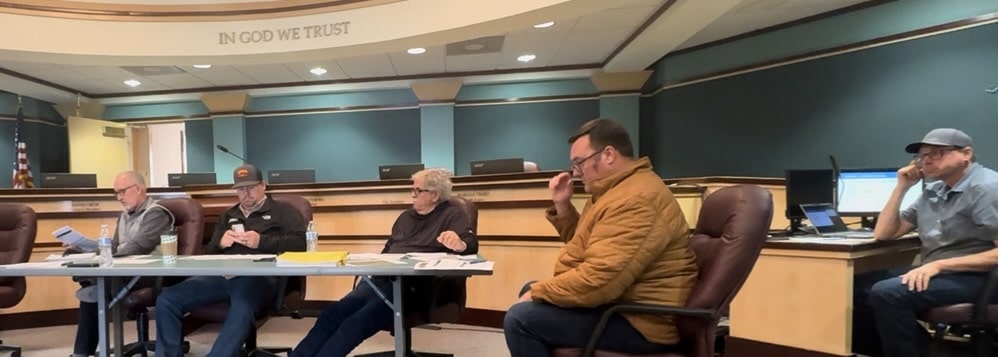
At its Nov. 6 special meeting, the South Fork Kings Groundwater Sustainability Agency (GSA) board approved releasing a draft of its $1.5 million well mitigation program for public comment for 30 days beginning Nov. 10.
The draft program will aid domestic well owners, well dependent-communities and industrial well owners whose wells have gone dry or whose water quality has suffered due to excessive pumping. Routine electrical and mechanical issues would not be covered.
The proposed program offers two tracks: One for domestic well owners and the second for municipal, industrial and community wells.
Well owners with fewer than four connections are considered domestic or multi-use domestic wells under the program.
Residential well owners under the program would receive emergency drinking water within 24 hours and an interim water supply within 72 hours once the GSA is notified if their wells go out.
Under the second track, small community wells, municipal wells and potable industrial wells will be offered up to $30,000 in technical assistance. That assistance could be helping with grant applications, designing a well or conducting feasibility studies.
To qualify for the program, a well owner must provide proof that negative impacts to their well occurred after Jan 1, 2015, the start of the Sustainable Groundwater Management Act (SGMA), which aims to have local entities bring aquifers into balance by 2040.
Well owners must register their wells with South Fork in order to apply for the program. South Fork’s well registration policy was passed in September 2024.
The program will be funded through pumping and land assessment fees, which are still to be decided by the board. A reserve fund of $1.5 million will be established by the end of 2026.
A draft of the proposed domestic well mitigation program can be viewed on the GSA’s website. The online public comment form can be found here.
Separately, South Fork has another policy out for public comment. That proposal involves its draft pumping allocation policy, which was released on Oct. 22.
The pumping allocation will dictate how much farmers can pump by allotting each acre a portion of what’s known as the aquifer’s “sustainable yield.” Sustainable yield is the amount that can be extracted without causing negative impacts.
South Fork set its sustainable yield at .66 acre feet of groundwater per acre of land.
Farmers will also be given a second allocation called transitional pumping, which is a buffer amount above sustainable yield that will decrease to 0 by 2040.
Public comments for the allocation policy can be made here. South Fork will also hold a workshop to explain the policy and answer questions on Nov. 14 at 1:30 p.m. at the Kings County agricultural commissioner’s conference room, 680 N. Campus Dr.
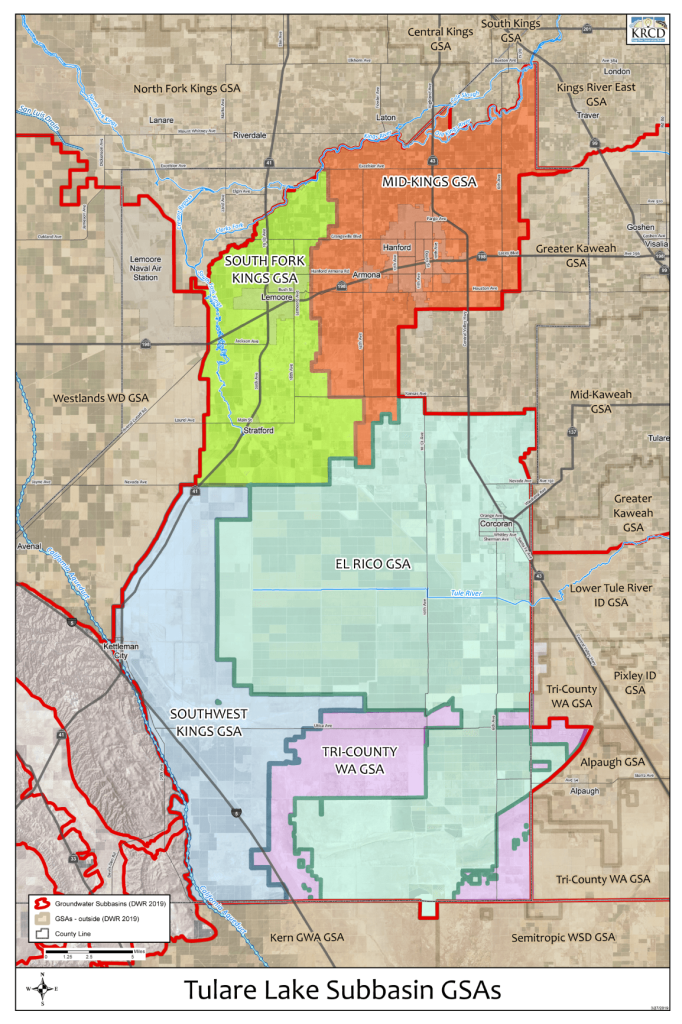
South Fork is one of five GSAs in the Tulare Lake subbasin, which covers most of Kings County. The region was placed on probation by the state Water Resources Control board in April 2024 for lacking a protective groundwater plan.
Under probation, farmers would have to meter and register their wells at $300 each, report extractions and pay the state $20 per acre foot pumped. Those sanctions were held at bay for more than a year after the Kings County Farm Bureau sued the Water Board and obtained a preliminary injunction against the sanctions.
That injunction was overturned by the 5th District Court of Appeal in October. The Water Board has already announced that Kings County farmers must begin reporting extractions May 1, 2026.
“I know we’re already in the 45 day comment period for the allocation. I understand that it’s confusing to have all this,” consulting engineer Amer Hussain said at the Nov. 6 meeting in reference to presenting the public with two complex groundwater policies. “If you’re going to beat the deadline for May 1, we’ve got to get things moving.”