View of Merced County flood recovery depends on whether you can go home at night
Where a home once stood, only roses – and a thousand memories – still bloom
By Lisa McEwen and Monserrat Solis
SJV Water
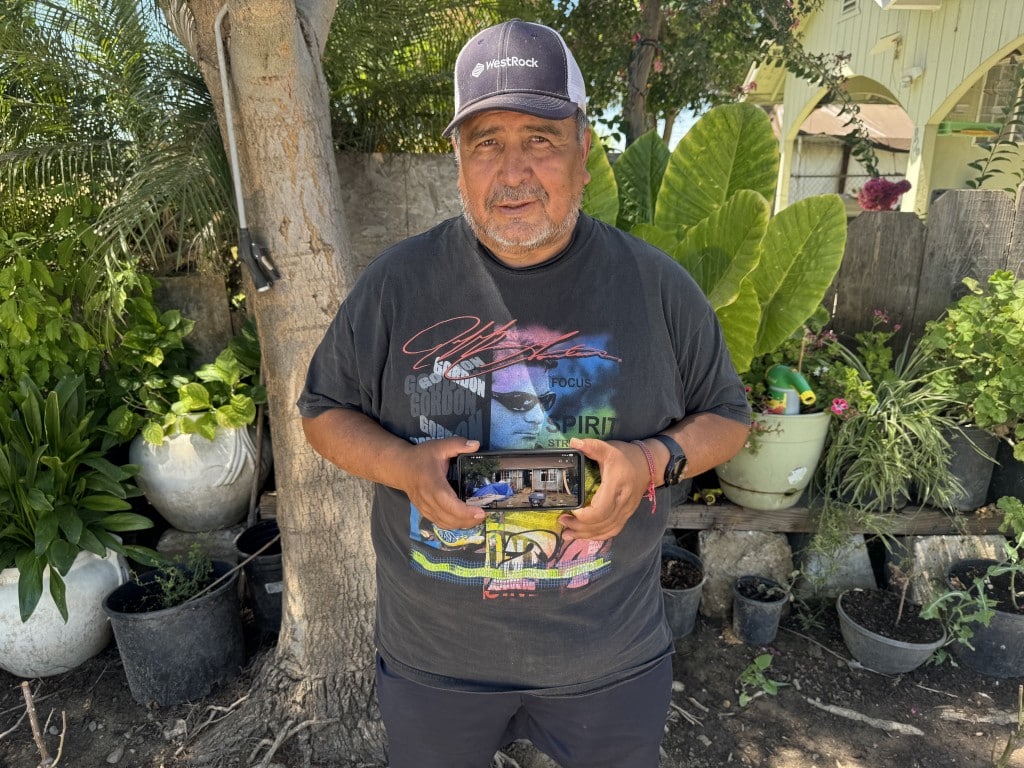
Grit and hard work helped Miguel Castillo pay off his home in Planada where he and his wife raised their five children and he happily hosted 16 grandchildren over 38 years.
It only took one night in February 2023 when Miles Creek busted through its banks to destroy it all.
Facing the devastation with determination, Castillo took out a $50,000 loan for a contractor to make repairs. But, after spending $25,000, the home was deemed “unlivable” and, ultimately, it was torn down in February.
As waves of emotion washed over him on a recent hot July day, Castillo couldn’t recall which agency ordered the demolition – the state, Merced County, Federal Emergency Management Agency.
“A lot of people came by,” Castillo said in Spanish. “(They) said the house had mold and lead.”
Anita Hellam, executive director of Habitat for Humanity of Merced and Stanislaus counties, said county inspectors labeled the Castillo home dangerous. The repairs done by the contractor Castillo hired caused the home to “teeter-totter.” Fearing that the home could collapse, it was red-tagged, Hellam said.
“I’ve been with him since day one,” Hellam said of Castillo. “We were willing to go after the contractor, but Mr. Castillo didn’t reveal them.”
For now, all that’s left on the lot is a tent holding some of the family’s salvaged items – and hope.
Castillo visits often, watering plants, including vibrant rosebushes that he replanted.
Castillo’s home will be rebuilt and brought up to 2025 standards, said Hellam. Habitat has been working in tandem with the County of Merced to help residents repair homes throughout Planada, overseeing $3 million of the $20 million Planada state aid package known as the Planada20M.
Hellam said a lack of understanding of the procedures that Habitat must follow, or the scope of repairs needed to be coordinated for the entire community, has been frustrating for homeowners.
“Maybe they feel like they’re not in good hands, but it is moving forward,” she said of recovery efforts. “Nothing is held up in the cogs. It’s understanding the process and having the right expectations.”
Habitat drafted house plans with Castillo, worked through three revisions, and is awaiting approval from the county.
“The goal is to break ground as soon as possible,” she said, but did not give a date.
Castillo said he was told construction on his new home would start in April, but that didn’t happen.
“Anita mentioned that there were many plans and processes that complicated the situation,” Castillo said over the phone. “But we’re still waiting.”
Anita, though, said there is a misunderstanding about the construction process.
“Construction has phases,” she said. “The second the house was approved by Mr. Castillo, we went into construction mode. There are some people that are frustrated but it’s not necessarily reflecting what’s happening on the ground.”
Such as getting plans approved by the county, which can be a lengthy process.
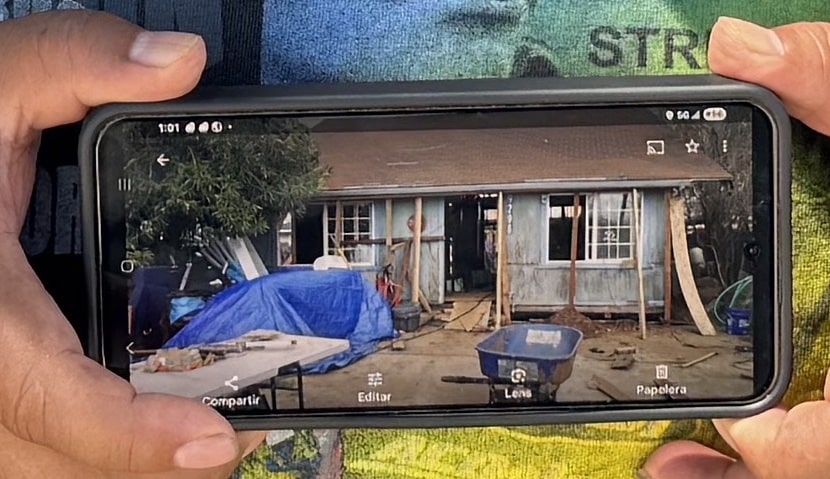
Complicating things, many homes in Planada, including Castillos, didn’t come up to current codes. For instance, the Castillo home rested on cinder blocks instead of a foundation. And per Habitat’s guidelines, if repairs equal more than half of the value of the original structure, the home must be brought above the floodplain.
“We live in a completely different world than when the home was built,” she said. “It’s been difficult to help residents understand that.”
For now, the Castillos are renting a home down the street for $1,400, not counting utilities.
Castillo said that county Supervisors visited the community in June and promised the impacted homes would be rebuilt, residents would receive help to pay their rent and they’d be placed in temporary housing.
“Since then, I haven’t heard anything about getting help,” he said.
Castillo arrived in Planada in 1987 and started working at Foster Farms, a chicken processing plant in Livingston. He worked at the plant for 33 years before he injured his right knee while cleaning his property after the flood. He tried to go back to work but had to retire.
He vividly recalls the day his life was turned upside down.
He was on his way home at 5:30 a.m. after his shift at the plant.
“It was raining really hard on the freeway driving back home,” Castillo said. “By the time I arrived home, the water was pretty high. I saw the water flowing down the street and I thought the water would have somewhere to escape.”
In a few hours, though, the water was flowing into his house.
“When we stepped out, the water was just below our knees and things from the yard were swimming in the water,” Castillo said. “I looked one way and I saw water and I looked the other way and saw more water.”
The family waded in waist-deep water to a nearby church to meet one of Castillo’s sons.
“We left in fear.”
After three days, they returned.
The home, the family’s personal items, furniture, and his sons’ cars were destroyed.
Two years later, sitting on a plastic chair near the remains of nearly 40 years of family history, Castillo said he felt he lost everything in the flood.
“I remember the memories of my children, my grandchildren in this house and right now, it’s gone.”
Flood of lawsuits follow in water’s wake
By Lisa McEwen
SJV Water
The legal fallout from the 2023 floods is large and ongoing.
In Merced County alone, there have been six cases filed so far.
One case, Merced City versus the California Department of Fish and Wildlife, is set for trial Jan. 27, 2026.
This case alleges the CDFW ignored years of requests by the city for permits to clean out channels of local creek beds that had become overgrown and filled with debris.
CDFW is in charge of those permits.
Repeated attempts by SJV Water to reach CDFW for comment were unsuccessful.
Three other cases, filed on behalf of Tony Borba, Maria Perez-Ramirez and Cortney Glenn, are against the County and City of Merced, Merced Irrigation District and CDFW.
Those cases seek to identify which agencies are to blame for the lack of channel maintenance in various creeks and streambeds throughout Merced County, according to attorney Shant Karnikian with Kabateck LLP.
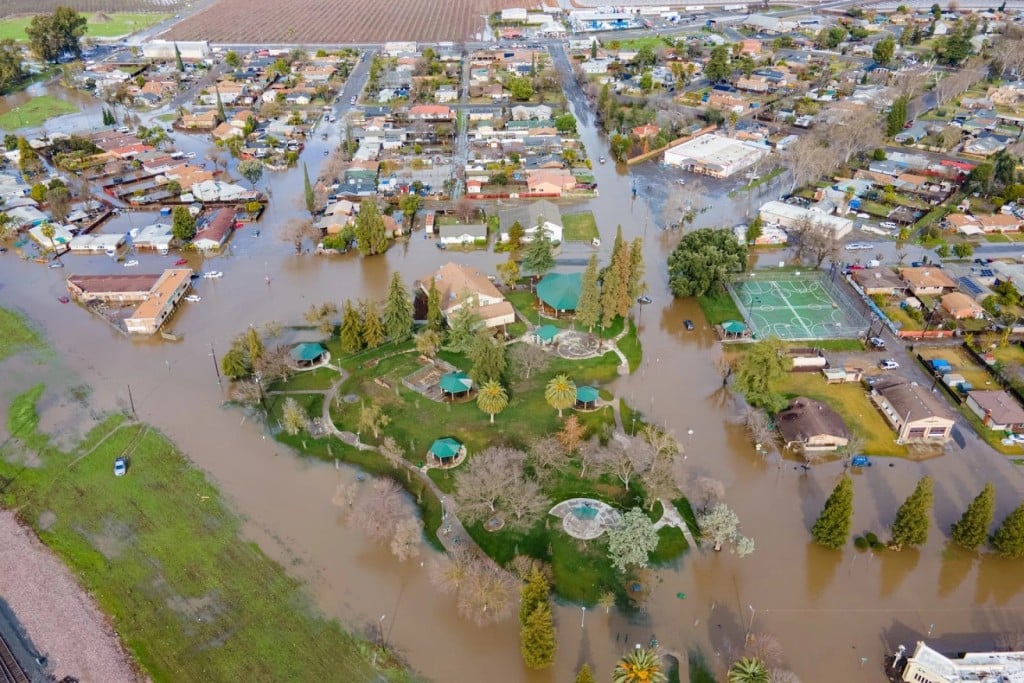
When a string of atmospheric rivers hit in early 2023, the waters rose, the debris created bottlenecks and the water busted through banks flooding out hundreds of homes and businesses. Almost the entire community of Planada was swamped when the banks of Miles Creek burst open.
“Planada is especially significant considering the socioeconomic conditions of the people there,” Karnikian said. He added that while residents are grateful for the $20 million secured in the 2023-24 state budget by Senator Anna Caballero (D-Merced) and Assemblywoman Esmeralda Soria (D-Fresno) the funds are “a drop in the bucket” compared to the damages.
“This is the worst in terms of treatment,” he said.
Karnikian said the City of Merced, County of Merced and Merced Irrigation District have been very cooperative but the state has been “impossible to deal with.”
“The state has utterly failed to cooperate to do this in an organized manner,” he said.
Other Merced County cases include:
- Public Risk Innovations, Solutions and Management, et al. v. Merced Irrigation District, et al. (an insurance case)
- County of Merced v. CDFW (filed but not served)
Other areas of the state suffered flood damage in 2023 as well.
Karnikian has also filed lawsuits on behalf of residents in Woodlake, in Tulare County, as well as communities in Monterey and Santa Cruz counties.
There is a common theme among all the cases, he said.
“(The flooding damage) is a sad byproduct of the aging infrastructure that we have in the state. It is no secret that’s an issue,” he said. “They failed before and they’re going to fail again. These are preventable disasters. It is the job of elected officials and the government to take care of these things. That’s why we pay taxes and that is the fight to be had.” vernment to take care of these things. That’s why we pay taxes and that is the fight to be had.”
“Guardian angel” helped restore community’s beloved bakery
By Monserrat Solis and Lisa McEwen
SJV Water
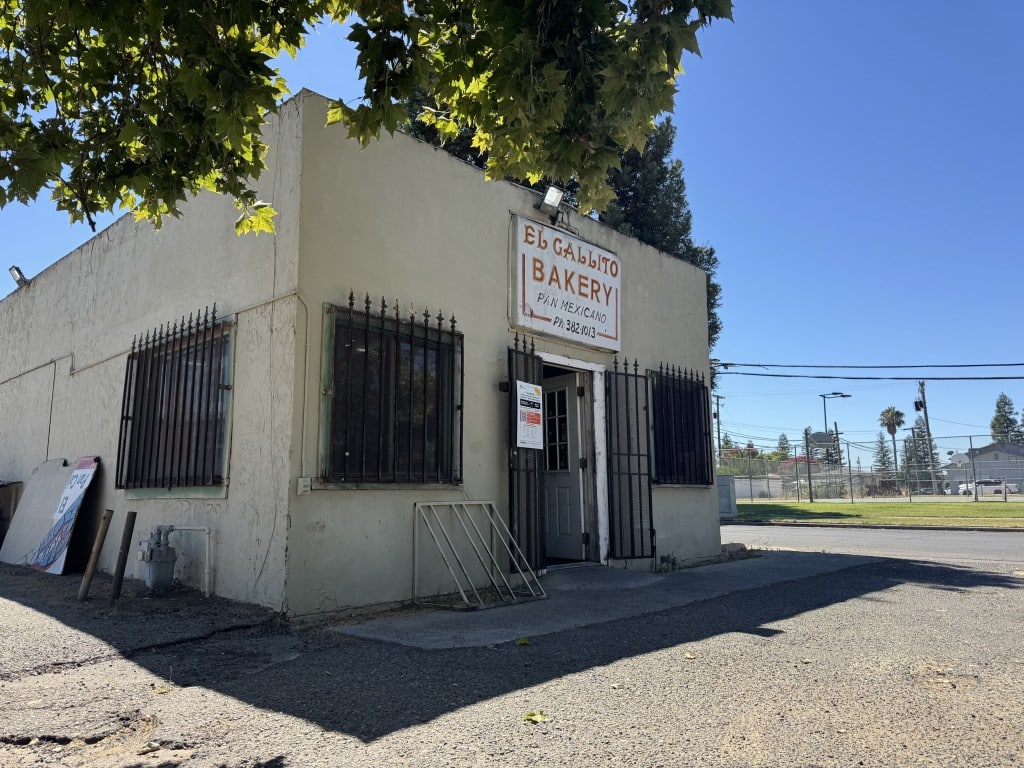
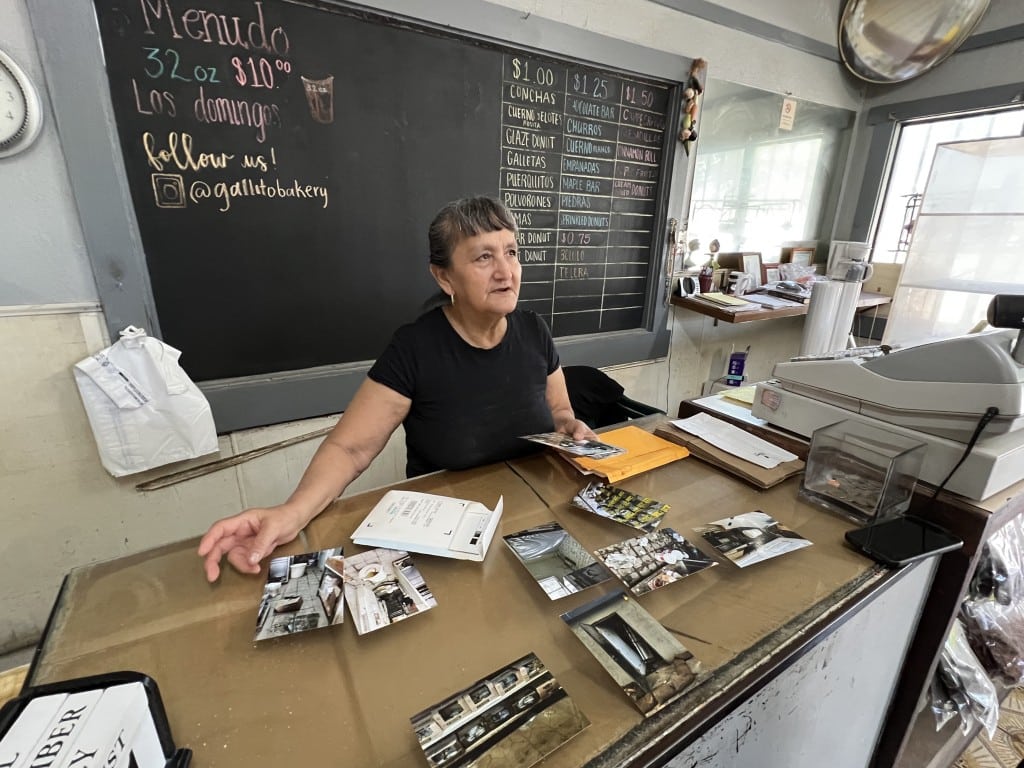
Estella Villagomez has a stack of photos next to the cash register in the tiny El Gallito bakery in Planada.
It’s hard to believe this is the same structure as the one in the photos, inundated by flood water.
Equally amazing is how the bakery was repaired almost single-handedly by a man identified by Villagomez only as “Shawn” who she said ran a nearby boating business.
“One man was our guardian angel here in Planada,” she said. “He fixed everything that was flooded for free.”
Estella and her husband Luis bought a new chest freezer with a credit card, but Shawn did the rest, replacing floors and walls.
Now a steady stream of customers comes through the bakery, picking up fresh conchas and bolillo from El Gallito’s cases.
Bianca Zaragoza, a native Planada resident and Atwater Elementary School District counselor, was paying for her pan dulce at the register and shared that the flood had a major impact on the community and the children.
“I think emotionally, I’m sure they were very worried,” she said. “There was a lot of support, especially mental health support after the flood.”
Villagomez says if it wasn’t for the man Shawn, getting back to business would have been nearly impossible.
“We didn’t receive any aid for our bakery,” Villagomez said of the county and state funding. “They told me there was no help for the businesses.”
“We lost everything in the flood.”
Which is why she repeatedly calls Shawn her “guardian angel.”
On the one hand, state and federal agencies pledged more than $40 million to the recovery and future protection of Planada, the tiny farm town swamped by floods in 2023.
Multiple agencies and helping organizations were mobilized and tasked with rebuilding the 840 homes lost after Miles Creek busted its banks south of Merced.
On the other hand, more than two years is a long time to wait to get back home. Add to that what some say has been poor communication and a lack of transparency and residents are frustrated.
“It feels like we’ve been put in a corner and disregarded,” said Liza Espinoza, a Planada resident who lived with her husband Steve and four other family members in a three-bedroom home where repairs and clean up work has only recently begun. “I’m fighting for everybody here.”
Espinoza has been a vocal advocate for her family and neighbors throughout the past two years, speaking out at various community meetings.
“This is our forever home,” she said. “We are still paying the mortgage every month. We have a lot to lose if our home isn’t safe to live in.”
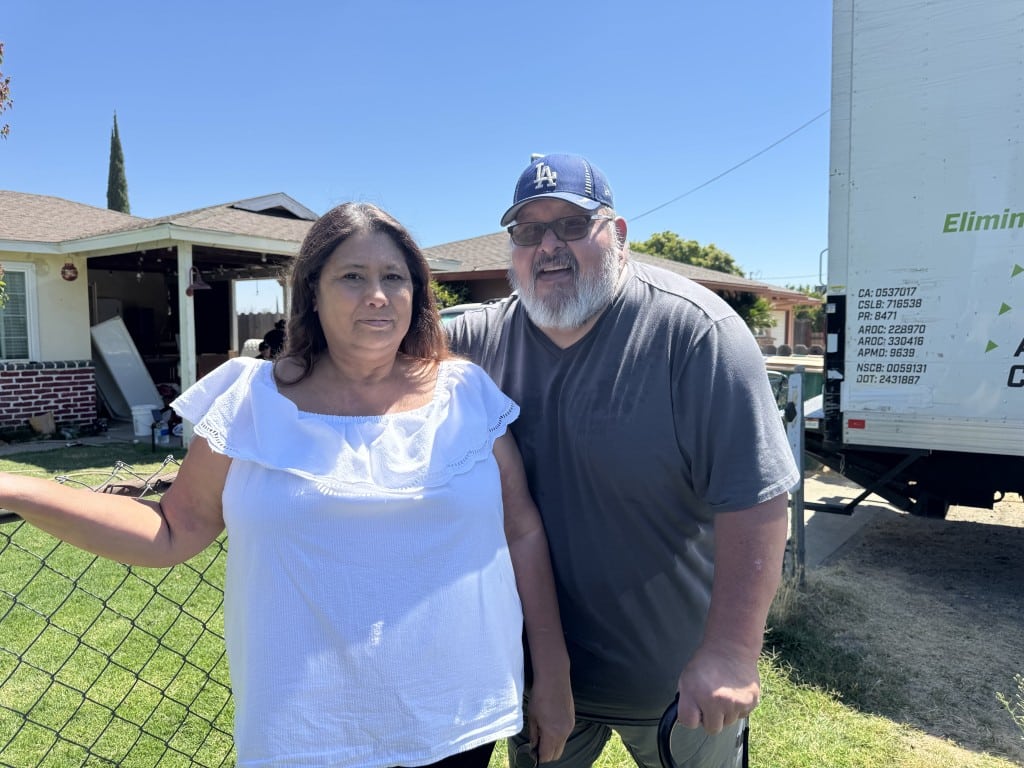
On top of their long, frustrating wait, residents fear they could be flooded out again if Miles Creek isn’t kept clear and the region is hit by another string of atmospheric rivers.
County of Merced officials said a section of Miles Creek has been cleared and they have funding to clear more of the channel pending permits with the California Department of Fish and Wildlife.
SJV Water asked for comment from CDFW but did not hear back.
The lack of state permits to clear creekbeds spurred one lawsuit by the City of Merced against CDFW, alleging the state agency ignored permit requests to clear Miles and other local creek channels for years.
Two other suits have been filed against CDFW, the City and County of Merced and Merced Irrigation District in the flooding aftermath. Some Planada residents have signed up as plaintiffs.
Meanwhile, the recovery process has been achingly slow and complex, despite substantial funding.
The Federal Emergency Management Agency designated $18.7 million for the town of Planada. It also slated $5.7 million for water control facility projects along the Bear, Black Rascal, Mariposa and Miles creeks.
And the state created a $20 million fund specifically for Planada residents, known as the Planada20M fund secured by state Senator Anna Caballero (D-Merced) and Assemblywoman Esmeralda Soria (D-Fresno).
From residents’ viewpoint, though, much of that money has been stuck in the slow lane.
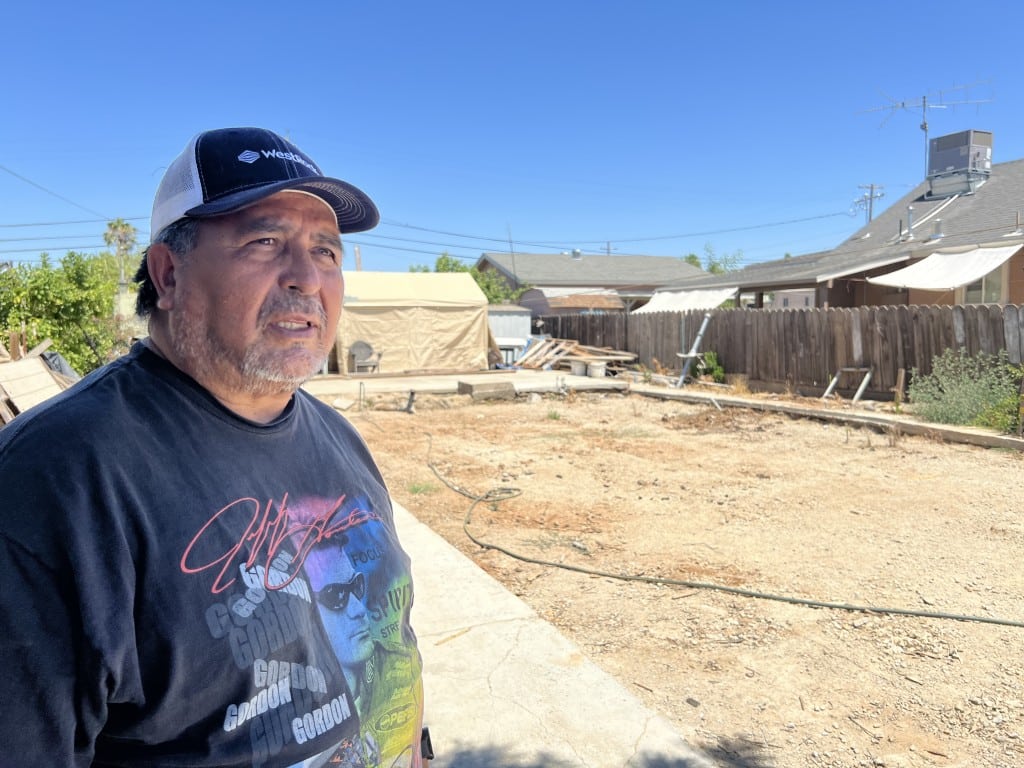
Fund administrators — the County of Merced and Habitat for Humanity — say progress is steady and picking up pace. Local contractors have been added to accelerate repairs and temporary housing at local hotels has been secured.
A public website, Planada20M.com, is updated biweekly in Spanish and English.
County of Merced spokesman Mike North said the state recovery fund has paid $12 million in direct assistance to residents for lost wages and lost business so far.
“The housing component requires more time due to necessary detailed inspections for issues such as mold, foundation damage, and asbestos, as well as structural engineering needs in some cases,” he wrote in an email.
This is where residents’ patience is being tested.
Out of 352 applications for $8 million in housing repair assistance from the Planada20M fund, 225 homes were eligible. To be eligible, repairs have to be flood-related.
Since work began, more than 70 homes have been completed, about 107 are in the pipeline for repairs and 40, lower-priority residences, are pending approval.
As of Aug. 1, about $7.5 million remains of the $20 million, which must be spent by the end of December.
Even if every dime of the $20 million had already been spent in Planada, it wouldn’t be enough, said attorney Shant Karnikian, who’s representing 100 residents in one of the flood lawsuits.
“The $20 million is a drop in the bucket compared to the damages these people have suffered,” he said.
He also feared some residents were being taken advantage of because of language barriers.
“What’s worse is people are being asked to sign paperwork that is painfully vague,” he said.
Karnikian recently sent a letter to the County of Merced asking that any communication with his Planada clients be coordinated through his office.
The County’s North declined to comment citing pending litigation.
Meanwhile, Habitat for Humanity of Merced and Stanislaus counties, which was contracted to oversee $3 million in repairs, is asking for a contract extension and more money, according to Executive Director Anita Hellam.
Hellam said she recognizes residents’ frustrations and has quadrupled her staff to handle the Planada cases. It took several months to build up the organization to handle all the requests for help.
She credits residents for how they banded together in the wake of the disaster.
“This is a story of courage, collaboration and partnership,” Hellam said.
Homes in Planada are a critical piece of the affordable housing picture in Merced County but often require more work than what has been approved.
“Some of these homes need so much more than flood repairs. They might also need a new roof or improved ventilation. And until these items are addressed, they’ll continue to have problems.”
For now, reconstruction continues.
Bright green moving containers sit awkwardly in Planada’s streets and driveways. They hold furniture, family photos, clothing and other remnants of life before the flood.
Vans from mold remediation companies transport workers in hazmat suits to and from the community daily.
While some homes sport lawn signs announcing completed repairs, many residents continue to live in homes where the only constant is the stench of mold that won’t stop growing.
Up until a few weeks ago, Espinoza and her husband navigated that construction zone daily. The family of six is staying in a hotel in Merced for several weeks while work continues in their home.
During an interview in late July, the couple watched as workers labored to remove mold that had spread from floor to ceiling in their home. It discolored baseboards and windowsills and even occupied beveled edges of picture frames.

Of the workers in her home, Espinoza said, “I’m glad they are protected, but we’ve been living in this for two years without protection. I’ve been cleaning constantly to help take care of my family, but nothing would stop the mold.”
Espinoza cares for her husband and a disabled son, and her own health has suffered because of the extended period of stress and foul air. An itchy rash has surfaced on her face, arms, abdomen and legs. To top it off, she lost her job as a medical receptionist when the position was terminated.
“It’s been a long, frustrating road,” she said. “All I want is to move back into my home and know it is safe.”