Knives are out for nascent groundwater agency struggling to govern its own “dead men walking” in Tulare County
The Tule East Groundwater Sustainability Agency in southern Tulare County just can’t seem to put a foot right.
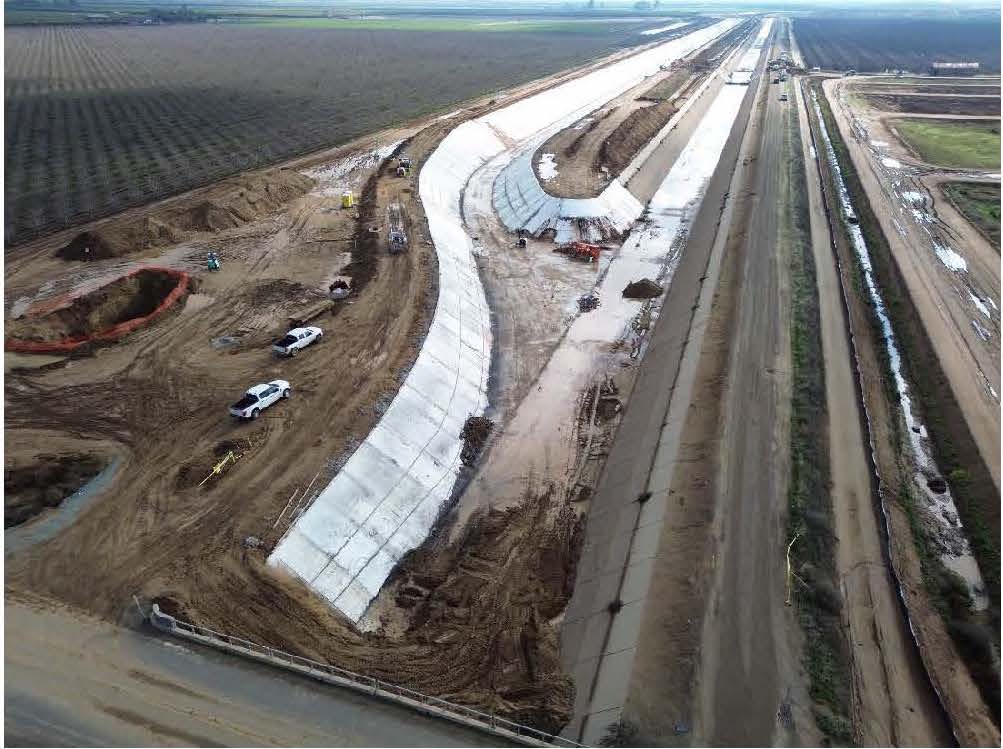
The state is bearing down, demanding an end to overpumping that has sunk huge swaths of land – taking the critical Friant-Kern Canal with it.
Surrounding farmers and water managers want action and they want it now.
Tule East directors and staff are still dotting the “i”s to create a legitimate governing agency.
Meanwhile, Tule East farmers have apparently abandoned all restraint and are “pumping like it’s the wild west.”
The situation is a mess, according to someone familiar with the process and the players who agreed to talk with SJV Water.
“What is left of Tule East is now just white area landowners,” they said, referring to land that isn’t covered by a water district, so is totally groundwater dependent.
“I mean they’re dead men walking. Why should they walk any faster?”
State plan in the wings
The rest of the subbasin, though, wants those farmers sprinting as the state Water Resources Control Board is readying its own pumping plan to be released this fall and potentially imposed by January.
The key feature of that plan is a total pumping moratorium on land within two miles of the Friant-Kern Canal. The Water Board then plans to impose pumping reductions throughout the rest of the subbasin, which covers the southern half of Tulare County’s flatlands.
This would be on top of probationary measures in place since 2024 under which farmers must meter and register their wells at $300 each, report their extractions and pay the state $20 per acre foot pumped. Under the new plan being drafted, the state would bump that to $35 per acre foot.
The spectre of a pumping moratorium momentarily spurred Tule subbasin water managers to come together to work on some kind of collaborative plan.
But that effort ran off the rails a few weeks ago.
There is, apparently, a disconnect between the technical people dealing with the numbers – how much groundwater can be pumped without causing damage – and the policy people dealing with the political fallout of crimping ag, the region’s main economic driver.
“It’s frustrating when the technical staff make progress only to be told by the policy people that ‘If this is what you guys are gonna come up with, then we’re just going to go to litigation,” our source told us.
Coming up short
In all the finger pointing, though, managers have lost sight of who the real arbiter is in this drama – the Friant Water Authority.
If Friant sees groundwater agencies making progress on pumping reductions, recharge, or other actions that it feels will protect its canal, that’s the brass ring.
“If you can convince Friant Water Authority, then that goes a long way to the state saying ‘this works,’” the source said.
But that means Tule subbasin groundwater agencies also have to work with and persuade their fellow water users, other Friant contractors down the line who’ve suffered as the canal sank, reducing its carrying capacity by 60%, and had to pay a share of the $326 million it took to rebuild one section of the canal only to see it sink again thanks to continued excessive pumping.
“You gotta convince them that what you come up with will work. And so far, they said, ‘No, we’re not going along with it,’” SJV Water’s source said.
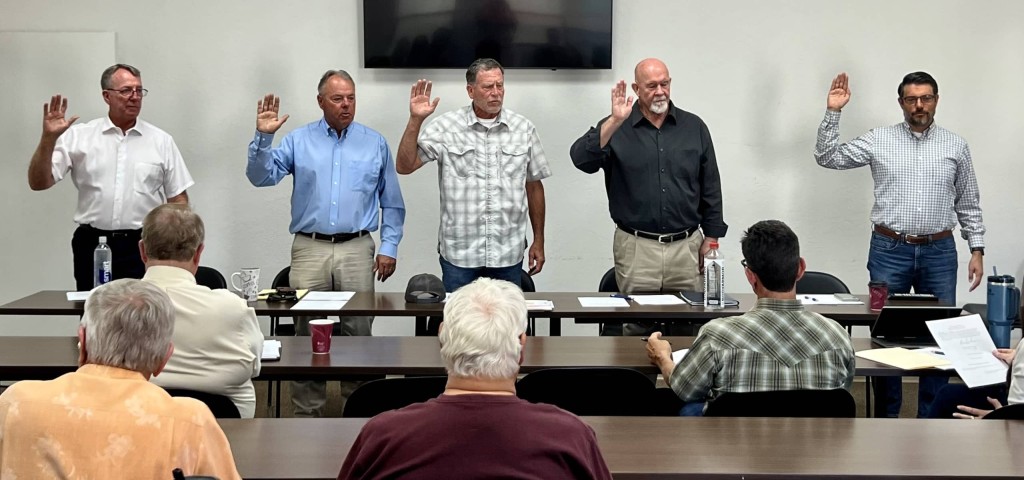
Mike George, president of the beleaguered Tule East board, knows what his fellow water managers think. He’s been accused of “slow-rolling this thing,” he said at the GSA’s packed Sept. 2 meeting referring to pumping limits.
“We’ve made a lot of progress in just a few short months. And I know it’s frustrating as we work through these weighty issues that have a huge effect on all of us as landowners,” he said, noting that Tule East’s predecessor agency, the Eastern Tule GSA, left nothing in place for the new organization to work with, no plans, no funding, nothing.
So far, Tule East has a board and staff and it passed a land assessment fee expected to bring in needed money. For now, it’s operating on what’s left of a $500,000 loan from Tulare County.
Work harder, work faster
Those realities haven’t softened calls for Tule East to establish strict pumping limits and a transparent groundwater accounting method.
“We are starting the rules and regulations discussion after today’s board meeting,” Tule East attorney Lauren Layne said at the Sept. 2 meeting. “Obviously, we cannot implement many of those items until we have the unified (groundwater plan) in place.”
George would like a little grace from his fellow water managers, and the state, to put those and other measures in place.
That includes innovative efforts beyond just pumping limits.
For instance, the Hope Water District recently formed an improvement district and passed an assessment to fund a $12 million pipeline system to bring surface water off the Friant-Kern Canal to about 3,000 acres.
It will help address a “subsidence warm spot” within three miles of the canal, Hope president and Tule East board member Matt Konda said at the Sept. 2 meeting.
But if the state’s moratorium goes through, farmers would be banned from pumping in that area and with no crops, the Hope plan would be dead.
“No worse spot”
After all the years of acrimony and recriminations that have roiled the Tule subbasin, is it too late for locals to change the region’s trajectory?
According to our source: “The Tule subbasin was doomed by a lack of big picture thinking. Too many players were focused on protecting their territory and not seeing how groundwater is a connected resource that does not care about political boundaries.”
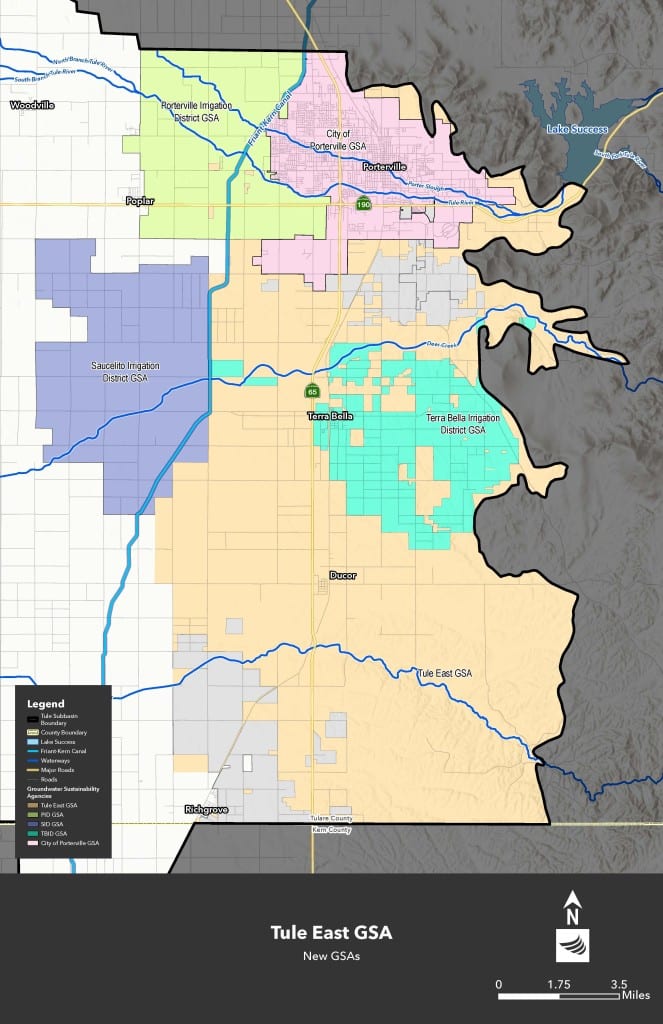
Along with significant built-in challenges, such as an abundance of groundwater-only white lands, the Tule also had challenges of human nature.
Our source recalled how some board members saw the state requirement to monitor and account for groundwater as a potential “cash cow.” He referred to the former Eastern Tule GSA that instituted a groundwater accounting system that created a lucrative market for certain landowners and did nothing to reduce pumping.
“That was never going to end well,” SJV Water’s source said.
Indeed, that accounting system was specifically questioned by the Water Board during a 2024 hearing that resulted in probation for the Tule subbasin.
“There are smart and well-intended landowners and professionals in the Tule subbasin, their vision can win the day,” our source said. “It’s not too late, but we are deep in the 9th inning, and the score is not in our favor.”
For now though: “There’s no worse spot to be in California ag than the Tule subbasin, and it shouldn’t be that way.”