Kings County judge allows state to move ahead with groundwater fees for most farmers in the region
Invoices for state groundwater pumping fees could be headed to the mailboxes of most Kings County farmers in the near future after a judge’s ruling last week.
Fees of $20 per acre foot pumped had been in limbo pending the outcome of a second preliminary injunction request made by the Kings County Farm Bureau as part of its ongoing lawsuit alleging the Water Resources Control Board exceeded its authority when it placed the Tulare Lake subbasin on probation in 2024.
“If we win at the hearing on the good actor clause, it has implications for the whole subbasin and the entire probationary designation.”
– Dusty Ference, Executive Director of the Kings County Farm Bureau
This latest ruling allows the Water Board to begin charging fees to most farmers in the subbasin, which covers most of Kings County. That doesn’t include those pumping less than 20 acre feet a year, who were excluded from probationary measures by the Water Board last March.
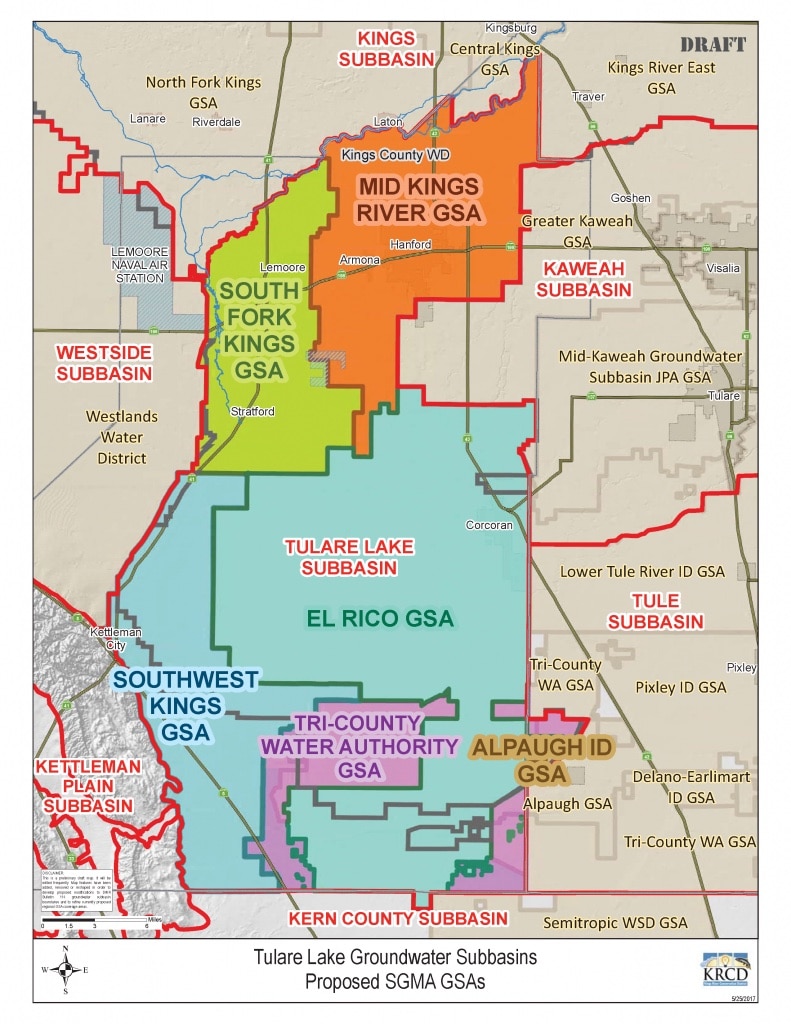
But the Water Board is barred from imposing any probationary measures – including fees – on farmers in two specific groundwater agencies, the Tri-County Water Authority and Southwest Kings Groundwater Sustainability Agency (GSA), according to the ruling.
This could all change with the outcome of the next hearing on Oct. 6. That hearing will focus on the merits of the lawsuit and whether it can proceed.
In the meantime, Kings County Superior Court Judge Shane Burns found that because the Water Board erred when it didn’t consider excluding Tri-County and Southwest Kings from probation in 2024, the Farm Bureau was likely to succeed on that claim. So, probationary measures can’t be enforced on those two agencies until the final outcome of the underlying lawsuit, according to his ruling.
Burns denied another part of the Farm Bureau’s request to prohibit the Water Board from imposing fees on farmers in the rest of the subbasin. His denial is based on California’s long standing “pay first” rule, which requires fees, or taxes, to be paid even while a court considers their legality.
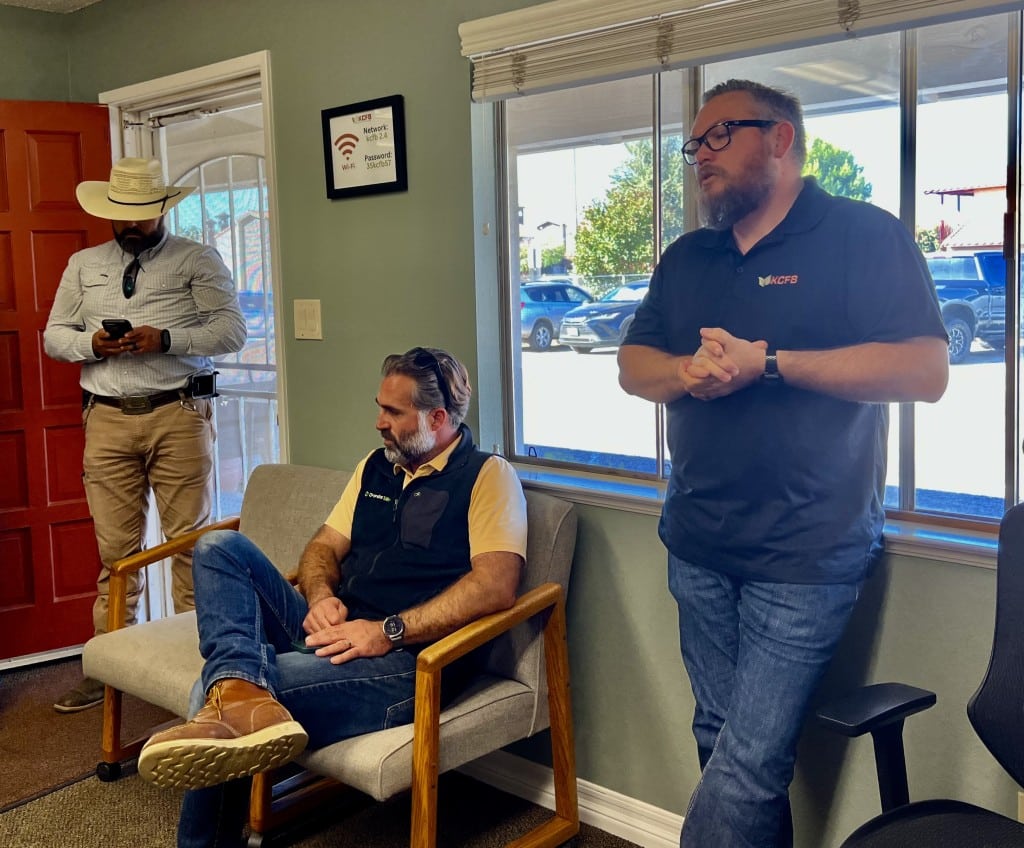
“The good news in this ruling is that we’re likely to win at trial on our claims that the state didn’t use the ‘good actor’ provision in the law,” said Dusty Ference, executive director of the Farm Bureau.
He referred to the Sustainable Groundwater Management Act (SGMA), which has a provision for agencies to be excluded from enforcement actions if they can show they are sustainable even if the rest of the subbasin isn’t.
But the Water Board denied Tri-County’s and Southwest Kings’ request to be considered under the good actor clause in 2024 because there was no comprehensive plan for the subbasin as a whole.
“If we win at the hearing on the good actor clause, it has implications for the whole subbasin and the entire probationary designation,” Ference said.
As for the other part of last week’s ruling allowing the state to charge fees to farmers in the subbasin’s three other GSAs, Ference said he isn’t sure what to expect.
“Now, it’s a waiting game to see what the state’s going to do,” he said. The Farm Bureau sent a letter to members giving them a heads up about the ruling.
The state’s take is that last Friday’s ruling is simply a “temporary pause” on some aspects of its SGMA enforcement.
“Practically, this means the (Water) Board will not invoice pumpers in the Tri-County Water Authority and Southwest Kings areas while the preliminary injunction is in effect,” wrote spokesman Edward Ortiz in an email. “We look forward to the case moving to hearing in October where we will address the legal issues regarding the exemption requests.”
SJV Water asked about the state’s timeline for invoicing farmers outside of the two excluded groundwater agencies but did not hear back before deadline.
Though Kings County farmers had escaped state fees to this point, they were required to report pumping amounts to the state which has led to a dispute over whether the state’s data is accurate.