Tulare County water districts kick in another $67,500 for PR campaign
Farmers in the Lower Tule River and Pixley groundwater sustainability agencies are paying $147,500 – including a recent addition of $67,500 – for a public relations campaign intended to convince state regulators they are tackling the region’s severe groundwater problems.
The campaign will emphasize unity in the Tule subbasin, according to Anja Raudabaugh, chief executive officer of Western United Dairies. The private trade group is also helping pay for the messaging effort by Sacramento firm Calkin Public Relations.
“We must brand ourselves as leaders, not tribes,” Raudabaugh said. “We need to pivot to the fact that you guys are ready to take the next step as a community.
“That’s the shiny object we’re trying to create here.”
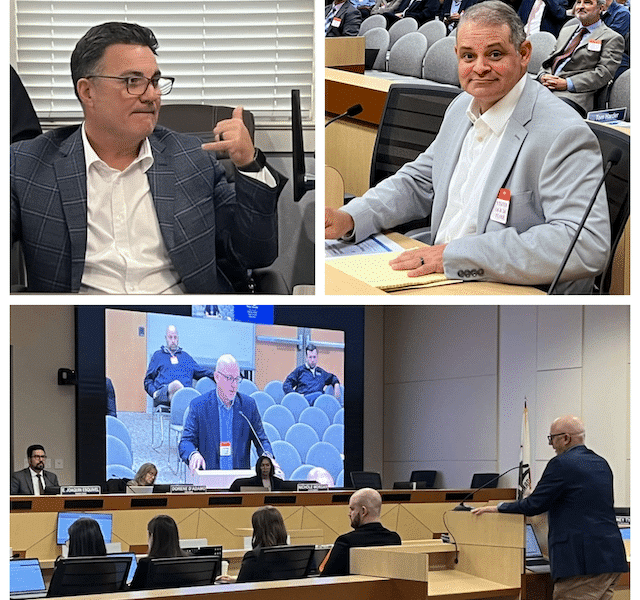
Raudabaugh urged the Lower Tule River and Pixley groundwater sustainability agencies to continue funding the campaign, which launched last October, at the GSAs’ May 22 meeting where the boards approved the additional $67,500.
“The hearings that we’ve been through left the impression that we’re not doing anything and we need to have that corrected.”
– Alex Peltzer, General Manager of Lower Tule River and Pixley irrigation districts and groundwater sustainability agencies
But Eric R. Quinley, general manager of Delano-Earlimart Irrigation District and GSA, said no amount of “messaging” will fix the Tule subbasin’s main problem: Subsidence due to excessive groundwater pumping.
PR alone won’t “… stabilize or raise groundwater levels, prevent subsidence or mitigate damage to critical infrastructure,” he said.
Quinley is not shy about beating the subsidence drum, armed with data that shows sinking from outside agencies threatens Delano-Earlimart’s 172-mile pipeline distribution system.
Instead of public relations, Quinley’s district has spent money – $50 million – building 1,000 acres of recharge basins. It also buys outside surface water and has instituted pumping limits on its growers.
Those measures earned Delano-Earlimart an exemption from reporting and fee requirements imposed on most other groundwater agencies in the Tule subbasin after the state Water Resources Control Board placed the region on probation.
Eight other GSAs in Tule, including Lower Tule and Pixley, were denied similar exemptions, largely because the Water Board felt not enough was being done to stem subsidence.
Disagreement over subsidence and efforts to control it was one of the reasons Pixley and Lower Tule launched their PR offensive last year.
“The hearings that we’ve been through left the impression that we’re not doing anything and we need to have that corrected,” General Manager Alex Peltzer said during the May 22 meeting. “This is a glide path to sustainability, not a crash landing. They (state regulators) don’t want to fund a glide path if you’re creating a crash landing yourself by not addressing the underlying problem.”
The Lower Tule and Pixley boards hope the PR effort will show that their growers are working toward solutions. And that may help shake loose funding from various sources including Proposition 4, which has $386 million earmarked for groundwater issues; cap-and-trade money; the state general fund or federal programs from the Natural Resources Conservation Service and the Bureau of Reclamation’s WaterSmart program.
Money is needed to support programs including farmland conversion as about 70,000 acres will have to come out of production across the Tule subbasin, 20,000 in Lower Tule/Pixley alone, to achieve the required goals under the Sustainable Groundwater Management Act (SGMA).
“Especially for Pixley, we will need a lot of assistance with the reduction in the footprint that we all know we’re going to have to have,” Peltzer said of outside funding. Pixley receives relatively little surface water, so its farmers are highly dependent on groundwater.
“Pixley will have the most fallowing because there’s no other option,” Peltzer said. “There’s a big impact from SGMA implementation not only to farmers but to communities.”
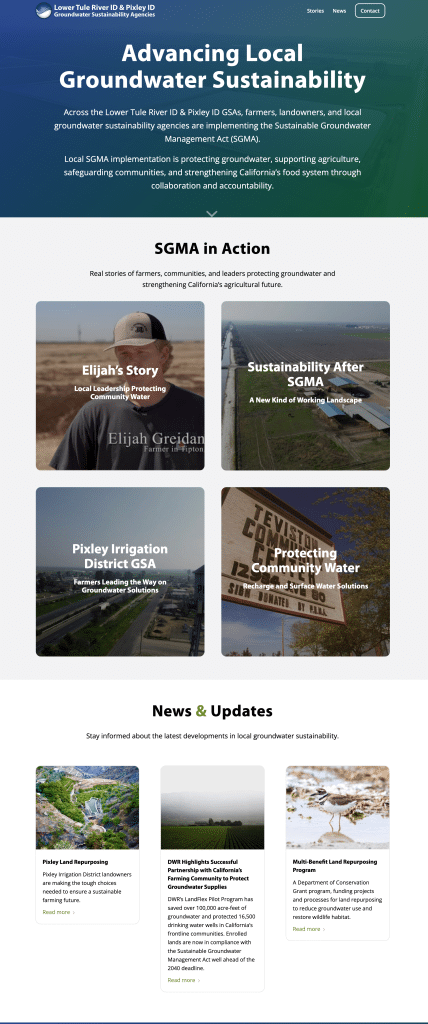
So far, the PR campaign has garnered 93,000 ad impressions and more than 900 click-throughs to the website, localsgma.com, Raudabaugh reported at the May 22 meeting.
Most of that was traced to staff within the Cal-EPA building in Sacramento, where state water board staff work, she said.
If the campaign works and the districts receive funding, Raudabaugh said locals need to be able to show results.
“There has to be an after,” she said. “What is the plan to guarantee that the Friant-Kern Canal won’t keep sinking? What is the plan to guarantee that anything close to (Highway) 99 won’t keep sinking?”
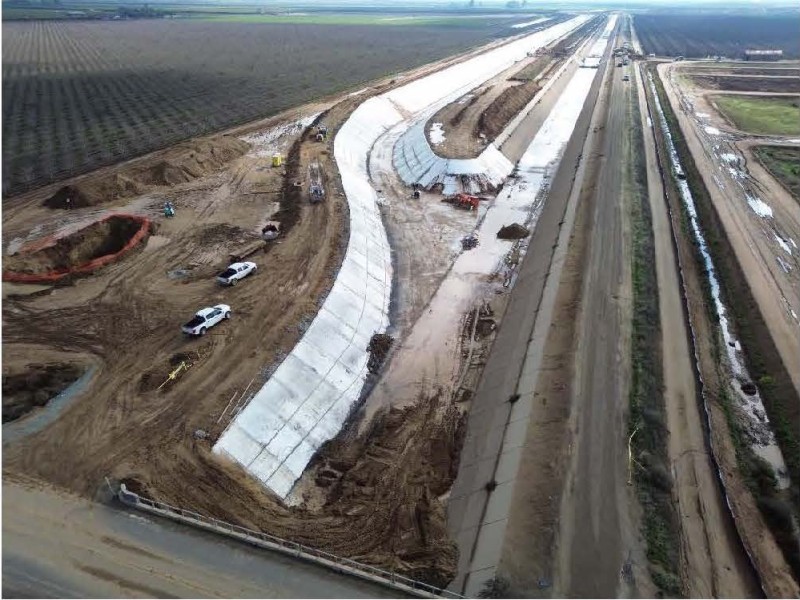
Friant Water Authority, which manages the Friant-Kern Canal, has spent more than $325 million to build a new 10-mile section of canal that had sagged so badly from subsidence caused by over pumping that its carrying capacity was cut by 60%.
More federal tax dollars were tapped this year aimed at water infrastructure repairs, including $200 million from the Big Beautiful Bill awarded in March and $65.8 million announced Friday by Congressman Jim Costa, even as the canal has continued to sink due to overpumping, according to Friant.